Daily sadaqah transforms small, consistent acts of giving into a lifetime of spiritual reward. You do not need a large budget. You do not need to wait for Ramadan. The Prophet Muhammad (peace be upon him) taught that the most beloved deeds to Allah are those done consistently, even if they are small. Setting up a daily sadaqah habit — whether through automated donations or free acts of kindness — brings barakah into your life and vital support to people who need it most.
This guide covers everything you need. You will learn what daily sadaqah means in Islamic tradition, discover free ways to give every single day, and find out how to set up an automated daily sadaqah donation by direct debit in the UK. Every pound you give through Your Impact Foundation reaches eligible recipients — including families facing malnutrition, communities without clean water, and those who cannot access basic healthcare.
What Is Daily Sadaqah and Why Does It Matter?
Daily sadaqah is any voluntary act of charity that you perform each day. Unlike zakat, sadaqah is not obligatory. It is a gift you give from your heart to seek Allah’s pleasure. The word sadaqah comes from the Arabic root “sidq,” which means truthfulness. When you give sadaqah, you show sincerity towards Allah.
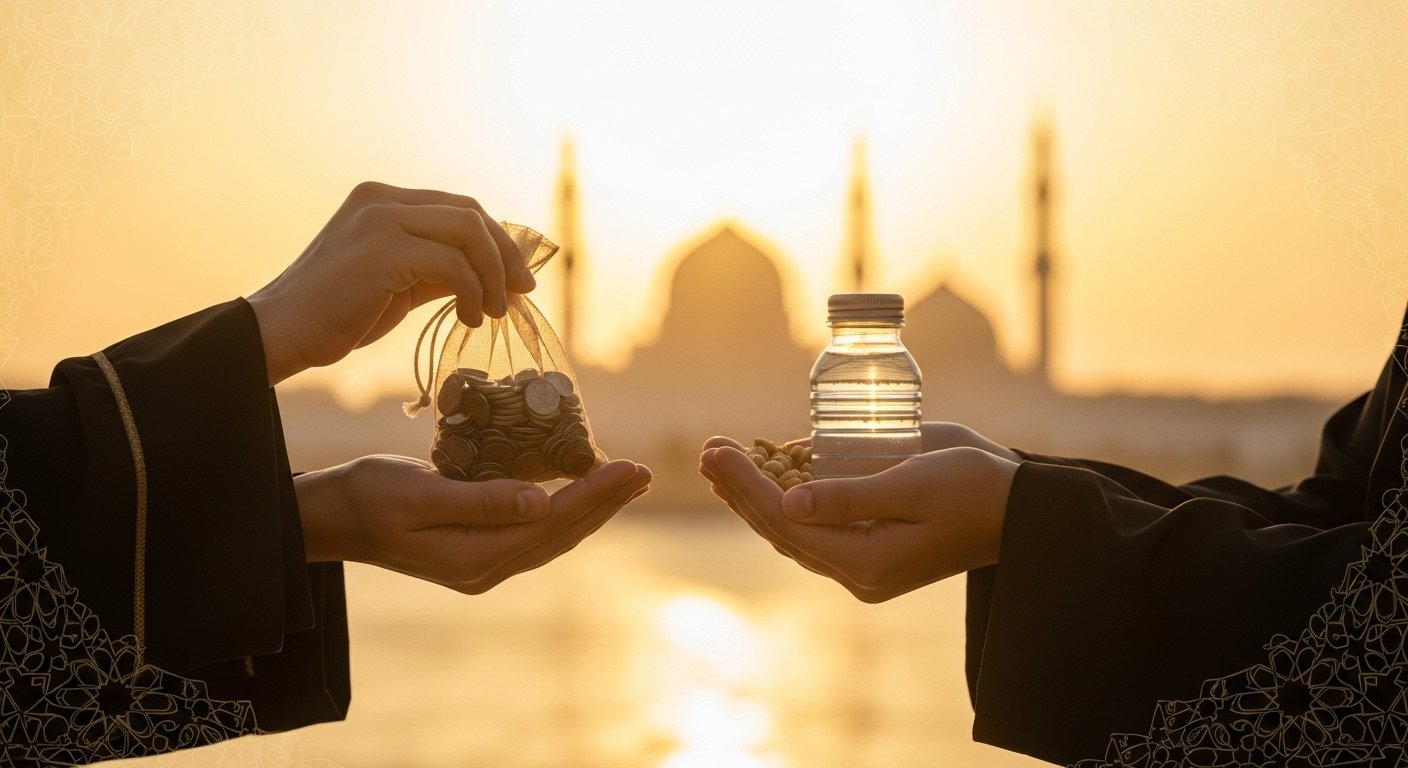
Allah promises immense reward for those who give regularly. The Quran says: “The example of those who spend their wealth in the way of Allah is like a seed of grain that sprouts seven ears; in every ear there are a hundred grains.” (Surah Al-Baqarah 2:261) This verse reveals something extraordinary. Your daily sadaqah does not simply leave your hands. Allah multiplies it beyond what you can imagine.
The Prophet Muhammad (peace be upon him) reinforced this promise. He said: “Charity does not decrease wealth.” (Sahih Muslim, 2588) When you give daily sadaqah, Allah replaces what you give and adds barakah — an unexplainable blessing — to what remains. Many UK Muslims who set up regular sadaqah report that their financial situation improves, not worsens. The benefits of giving sadaqah go far beyond the material. Sadaqah purifies your soul, softens your heart, and protects you from hardship in this life and the next.
What the Prophet Said About Daily Sadaqah
The evidence for daily sadaqah comes directly from the strongest sources in Islam. The Prophet Muhammad (peace be upon him) described an obligation of charity on every human being every single day.
He said: “Every joint of a person must perform a charity each day that the sun rises: to judge justly between two people is a charity; to help a man mount his animal is a charity; to lift his luggage onto it is a charity; a good word is a charity; every step you take towards prayer is a charity; and removing a harmful thing from the road is a charity.” (Sahih al-Bukhari, 2989; Sahih Muslim, 720)
This hadith proves that charity is not a once-a-year event. The human body has 360 joints, and the Prophet (peace be upon him) assigned a charitable act to each one — every single day. Most of these acts cost nothing. A kind word, removing a stone from the path, helping someone load their shopping — all of these count as daily sadaqah. The message is clear. Islam expects you to give something every day, no matter how small.
The Prophet (peace be upon him) also emphasised consistency. He said: “The most beloved of deeds to Allah are those that are consistent, even if they are small.” (Sahih al-Bukhari, 6464) A £1 daily sadaqah donation that you maintain for ten years carries more weight in Allah’s sight than a one-off £3,650 payment. Consistency is the key.
7 Free Ways to Give Daily Sadaqah Without Money
You can practise daily sadaqah right now without spending a single pound. The Prophet (peace be upon him) broadened the meaning of charity far beyond financial donations.
1. Smile at your fellow Muslims. The Prophet (peace be upon him) said: “Your smile for your brother is sadaqah.” (Jami at-Tirmidhi, 1956) This is perhaps the easiest daily sadaqah of all. It costs nothing, takes a second, and earns you reward.
2. Say a sincere dua for someone. Make a heartfelt prayer for a friend, a colleague, or someone in difficulty. The Quran tells us that the believers pray for one another. Your dua for another person is a genuine act of sadaqah.
3. Remove something harmful from the path. A glass bottle on the pavement, a fallen branch, a slippery surface — clearing these dangers counts as sadaqah, as the hadith in Sahih al-Bukhari (2989) confirms.
4. Share beneficial knowledge. Teach someone something useful. Recommend a helpful article. Share an Islamic reminder. The Prophet (peace be upon him) said: “Whoever guides someone to goodness will have a reward like the one who did it.” (Sahih Muslim, 1893)
5. Speak a good word or reconcile between people. The hadith of the 360 joints specifically names just judgement and good words as charity. Defusing an argument between friends or colleagues earns you daily reward.
6. Feed your family with love and intention. The Prophet (peace be upon him) said: “Whatever you spend seeking Allah’s countenance, you will be rewarded for it — even the morsel of food you put in your wife’s mouth.” (Sahih al-Bukhari, 56)
7. Give a drink of water. Offering water to someone — a colleague at work, a guest in your home, or a stranger — is a sunnah of the Prophet (peace be upon him) and counts as sadaqah. You can extend this reward by helping build a water well in memory of loved ones, which becomes sadaqah jariyah.
How to Set Up a Daily Sadaqah Donation in the UK
Many Muslims want to combine free daily acts with a financial daily sadaqah donation. Setting up an automated payment makes this effortless. Here is how to do it in the UK.
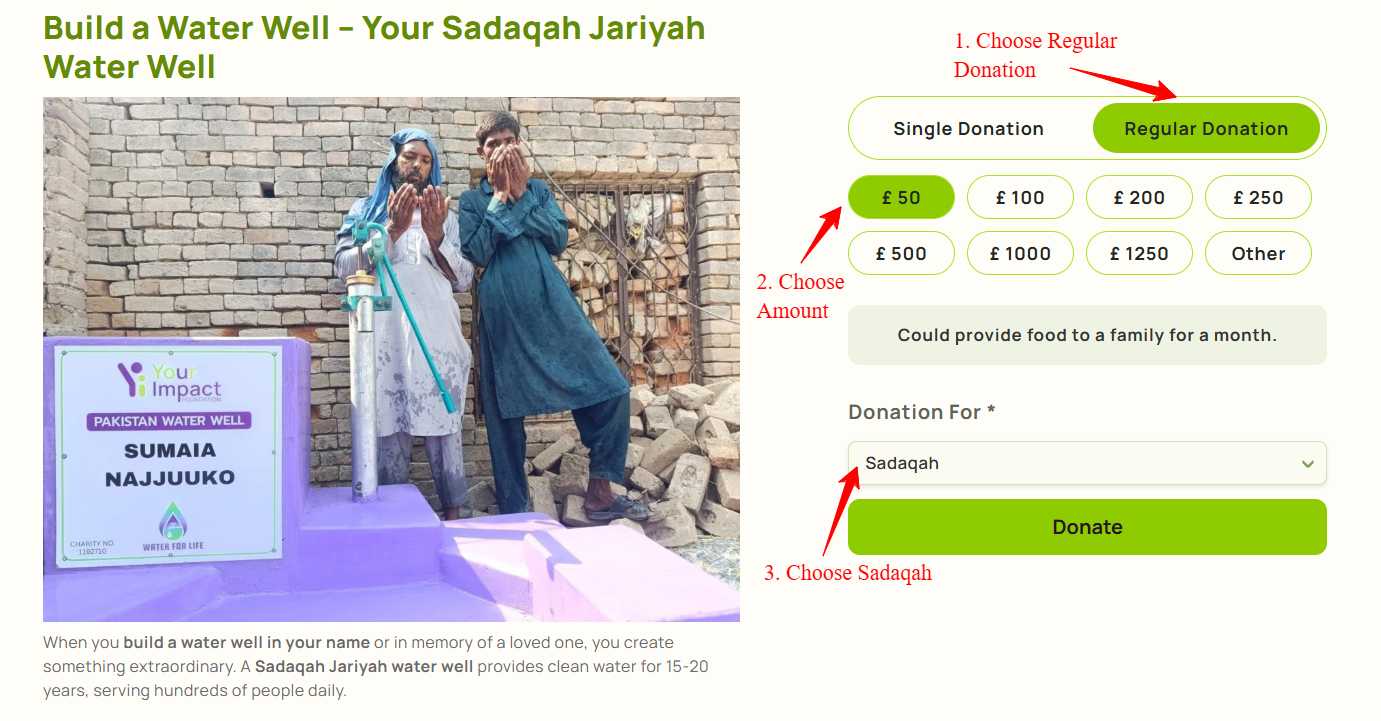
Choose your amount. Start small. Even £1 a day totals £365 a year — enough to provide emergency baby milk to families in crisis for months. Choose an amount that you can sustain comfortably. The Prophet (peace be upon him) said: “The best charity is that which is given when you have little.” (Abu Dawud, 1677)
Set up a direct debit or standing order. Most UK charities offer an online sadaqah direct debit option. A direct debit gives the charity permission to collect your chosen amount daily, weekly, or monthly from your bank account. A standing order sends the payment from your side. Both methods ensure your giving continues without you needing to remember each day.
Make your intention (niyyah). Before the first payment leaves your account, intend that this daily amount is sadaqah for the sake of Allah. Your intention transforms a routine bank transfer into an act of worship.
Track your impact. Many charities send regular updates showing how your donations help. Knowing that your daily £1 provides clean water, baby formula, or food to a specific person or community increases your sincerity and connection to the cause.
Setting up a daily sadaqah direct debit takes less than five minutes. Once it is active, you earn reward every single day — even on days when work, family, or life distracts you.
Daily Sadaqah in Ramadan: Why It Carries Extra Weight
Ramadan multiifies the reward of every good deed. The Prophet (peace be upon him) said: “Whoever draws nearer to Allah by performing any deed of goodness in it, it is as if he performed an obligatory deed at any other time.” (Sunan Ibn Majah, 1382) This makes daily sadaqah during Ramadan extraordinarily valuable.
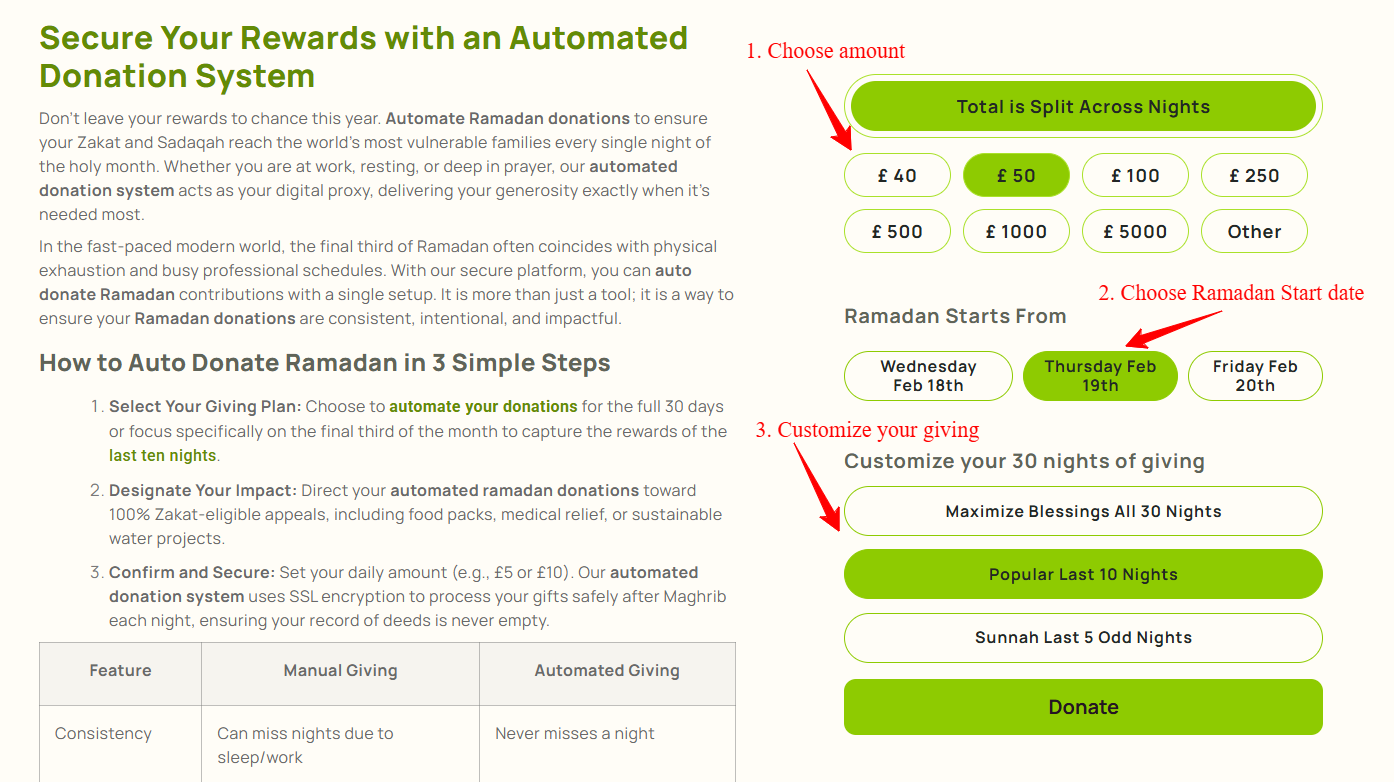
Many Muslims increase their giving during Ramadan but then stop after Eid. A better approach is to establish the daily habit during Ramadan and carry it forward throughout the year. If you set up a daily sadaqah donation during Ramadan — even a small amount — you lock in the habit while the spiritual motivation is strongest.
During Ramadan, consider channelling your daily sadaqah towards urgent causes. Providing baby milk to malnourished infants in Gaza is one of the most impactful ways to give. A daily donation of just £2 can help feed a baby for an entire day. When Ramadan ends, your direct debit continues, and your reward keeps accumulating.
Friday sadaqah carries its own special significance. The Prophet (peace be upon him) said that Friday is the best day on which the sun rises. Combining daily giving with an extra Friday donation creates a powerful rhythm of worship throughout the week.
From Daily Sadaqah to Sadaqah Jariyah: Making Your Giving Last
Daily sadaqah feeds your spiritual habit. Sadaqah jariyah makes that habit eternal. Sadaqah jariyah is ongoing charity — a good deed whose reward continues after you die. The Prophet (peace be upon him) said: “When a person dies, his deeds end except for three: ongoing charity, beneficial knowledge, or a righteous child who prays for him.” (Sahih Muslim, 1631)
You can elevate your daily sadaqah into sadaqah jariyah by supporting projects that generate continuous benefit. A water well serves a community for decades. A school educates children year after year. A sadaqah jariyah water well built in your parents’ memory provides clean water long after they have passed — and you earn reward for every drop someone drinks.
Even your regular daily sadaqah can carry jariyah elements. If you give towards medical supplies, each treatment funded by your donation becomes an ongoing source of healing. If you support orphan care, every meal that child eats because of your contribution earns you reward. The sadaqah jariyah FAQs explain these concepts in detail.
Some Muslims dedicate their daily sadaqah as sadaqah for shifa — healing for someone who is ill. The Prophet (peace be upon him) taught that sadaqah can be a means of cure. Combining daily financial giving with sincere dua for recovery creates a powerful act of worship that benefits both the giver and the person in need.
Online Sadaqah: How to Give Safely in the UK
The UK has strong regulations that protect online donors. When you set up a daily sadaqah direct debit, check a few things to ensure your donation reaches the right place.
Verify the charity’s registration. Every UK charity must display a registered charity number on its website. Your Impact Foundation is registered as UK Charity No. 1192710. You can verify any charity on the Charity Commission for England and Wales website.
Check for secure payments. Look for “https” in the donation page URL and a padlock icon in your browser. Reputable charities use encrypted payment processors that protect your bank details. Our guide on how to give sadaqah online safely in the UK covers this in full detail.
Understand Gift Aid. If you are a UK taxpayer, Gift Aid allows the charity to claim an extra 25p for every £1 you donate — at no extra cost to you. This means your daily £1 sadaqah becomes £1.25 for the charity. Tick the Gift Aid box when you set up your donation.
Manage your direct debit easily. UK banking rules give you full control. You can cancel or amend a direct debit at any time through your bank. The Direct Debit Guarantee scheme protects you from unauthorised payments. This means you can start a daily sadaqah habit with complete confidence.
Why Automating Your Sadaqah Changes Everything
Most Muslims intend to give charity regularly. But life gets busy. Bills pile up. Ramadan ends and the motivation fades. Automated daily sadaqah solves this problem completely.
When you set up a direct debit, your giving never stops. You earn reward on every single day — including the days you forget, the days you feel unmotivated, and the days you cannot afford a larger one-off donation. Automation turns a good intention into a consistent reality.
The Prophet (peace be upon him) warned against delaying charity. He said: “Protect yourself from the Hellfire, even with half a date in charity.” (Sahih al-Bukhari, 1417) This hadith reveals two important truths. First, even the smallest amount counts. Second, you should not wait. A daily automated donation ensures you never delay.
Your daily sadaqah also creates a ripple effect in the community. When charities receive predictable, regular income, they can plan long-term projects. They can commit to feeding a family for six months rather than one week. They can dig a well rather than truck in water. Your small, daily act makes sustainable change possible.
Give sadaqah to family members who are struggling — such as an elderly parent or a sibling facing hardship. This combines the reward of daily charity with the duty of maintaining family ties (silat al-rahim), which the Prophet (peace be upon him) described as a cause of increased provision and extended life.
FAQs: Daily Sadaqah, Automated Giving, and Rewards
Q1: What is daily sadaqah?
Daily sadaqah is any voluntary act of charity that you perform every day. It includes both financial donations — such as a £1 daily direct debit to a UK charity — and non-financial acts like smiling, removing harm from the road, saying a good word, or making dua for someone. The Prophet Muhammad (peace be upon him) said that charity is due on every joint of the human body each day the sun rises (Sahih al-Bukhari, 2989).
Q2: How much should I give as daily sadaqah?
There is no fixed amount. Give what you can sustain consistently. The Prophet (peace be upon him) said the best charity is given when you have little. Even £1 a day (£365 per year) provides meaningful support to families in need. Start with an amount that does not strain your budget. You can always increase it later. Consistency matters more than the amount.
Q3: Can I set up daily sadaqah by direct debit?
Yes. Most UK charities allow you to set up a direct debit or standing order for daily, weekly, or monthly donations. A direct debit collects your chosen amount automatically from your bank account. You remain in full control and can cancel or amend it at any time. The UK Direct Debit Guarantee scheme protects you from unauthorised payments.
Q4: What are some free daily sadaqah ideas that cost nothing?
The Prophet (peace be upon him) taught that smiling is sadaqah (Jami at-Tirmidhi, 1956). Other free daily acts include: removing something harmful from the road, saying a good word, sharing beneficial knowledge, making dua for someone, feeding your family with love, reconciling between two people, and offering water to a drinker. All of these earn you reward without costing any money.
Q5: Is daily sadaqah different from zakat?
Yes. Zakat is a mandatory 2.5% payment on wealth held above the nisab threshold for one lunar year. Sadaqah is entirely voluntary — there is no fixed percentage, no minimum threshold, and no specific due date. You can give sadaqah at any time, in any amount. Daily sadaqah builds on this flexibility by making giving a consistent daily habit.
Q6: Does daily sadaqah in Ramadan carry more reward?
Yes. Good deeds in Ramadan carry greater reward than at any other time of the year. The Prophet (peace be upon him) said that whoever draws nearer to Allah with a good deed in Ramadan earns the reward of an obligatory deed at any other time (Sunan Ibn Majah, 1382). Setting up a daily sadaqah habit during Ramadan and maintaining it year-round captures both the Ramadan multiplier and the consistency that Allah loves most.
Q7: Can my daily sadaqah become sadaqah jariyah?
Yes. Sadaqah jariyah is ongoing charity whose reward continues after you die. If your daily sadaqah funds a water well, a school, or medical supplies that people use repeatedly, you earn continuous reward. Even a daily donation towards baby milk for malnourished infants carries ongoing reward because each feed made possible by your donation counts as a separate act of sadaqah for you.