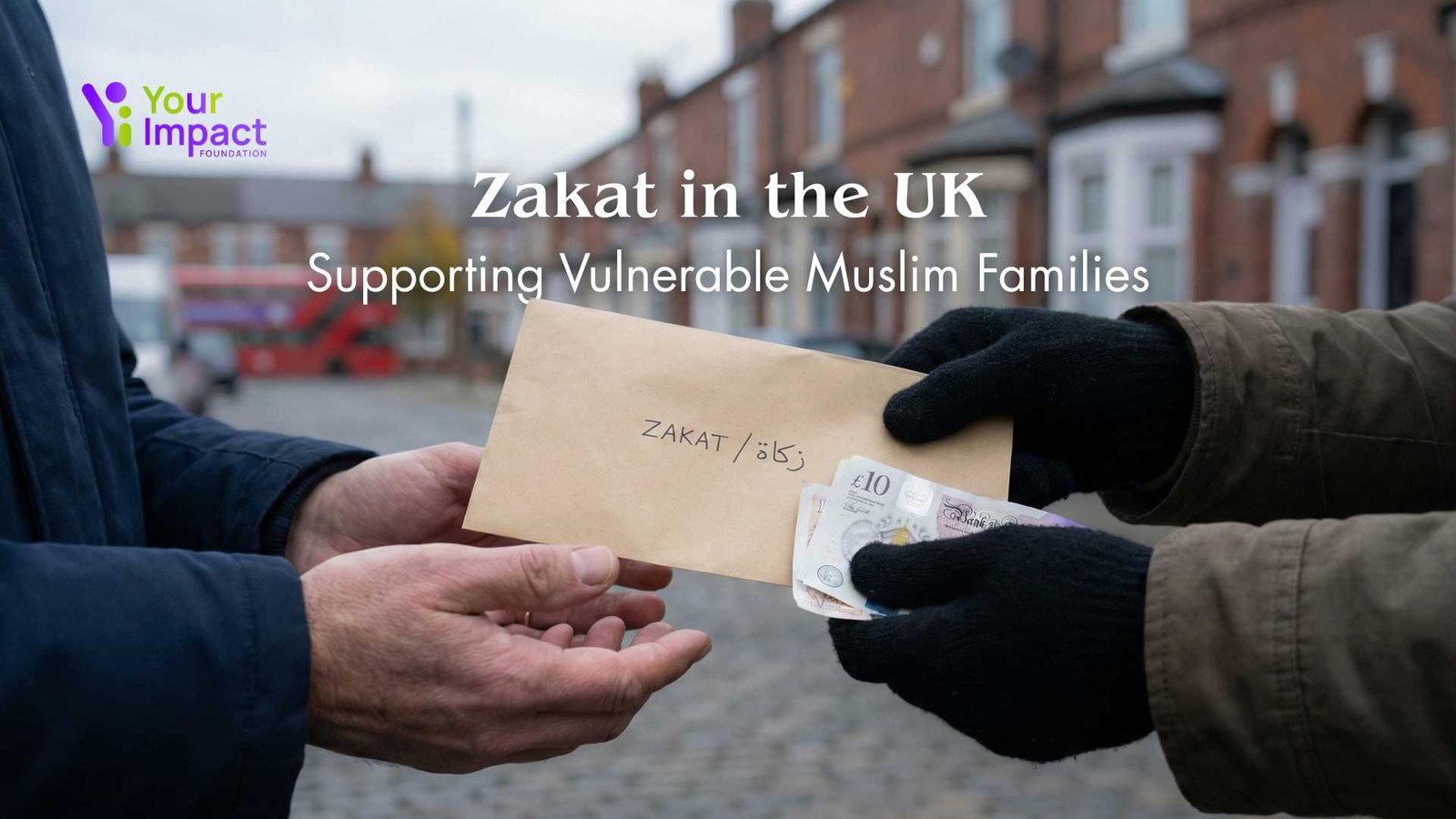
Zakat is one of the most powerful pillars of Islam, designed to uplift those facing hardship and strengthen the bonds of compassion within the Ummah. In the UK, many Muslim families continue to struggle with rising living costs, poverty, financial instability, and limited access to essential services. Through Zakat, we have the opportunity to provide immediate relief, restore dignity, and help families rebuild their lives.
This article explores the importance of Zakat in the UK, the challenges faced by vulnerable Muslim households, and how your Zakat can make a meaningful, lasting impact.
Understanding Zakat: A Foundation of Islamic Giving
What Is Zakat and Why Is It Important?
Zakat is a compulsory act of charity required from eligible Muslims. The word itself means purification and growth, symbolizing that by giving a portion of your wealth (typically 2.5%), you purify the rest. Zakat ensures that wealth circulates fairly within society and provides essential support to those who need it most. It is both a spiritual obligation and a social responsibility, designed to protect the vulnerable and strengthen community wellbeing.
Zakat as One of the Five Pillars of Islam
As one of the Five Pillars of Islam, Zakat sits alongside prayer, fasting, pilgrimage, and faith. While the other pillars focus on personal devotion, Zakat uniquely emphasizes communal welfare, reinforcing the message that no individual should be left behind in times of hardship.
The Importance of Zakat for Vulnerable Communities in the UK
Ethical Principles of Giving in Islam
Islam encourages compassion, generosity, and social justice. Zakat reflects these values by redistributing wealth in a way that ensures equality and dignity for all. It is a trust from Allah, and fulfilling it helps to uplift disadvantaged families while strengthening the overall fabric of the Muslim community.
How Zakat Empowers Communities
Zakat is not only about providing immediate relief—it is also a tool for empowerment. When directed effectively, Zakat can help families access:
- stable housing
- vocational training
- education
- essential items
- emergency support
By addressing financial burdens and opening new opportunities, Zakat creates long-term resilience.
The Current Situation of Muslim Families in the UK
Economic Challenges
Studies consistently show that Muslim communities in the UK face some of the highest levels of poverty. Many households struggle with:
- low income
- job insecurity
- underemployment
- rising living costs
- limited access to financial assistance
For many families, basic needs such as rent, food, transport, and school supplies remain a daily challenge.
Social Barriers
Alongside financial pressure, many Muslim families also face:
- discrimination
- lack of access to quality education
- overcrowded or inadequate housing
- health inequalities
- social isolation
These issues often create long-term obstacles that are difficult to overcome without additional support.
How Zakat Helps Relieve Hardship
Direct Financial Support
Zakat provides immediate assistance with essential needs such as:
- food
- clothing
- medical expenses
- rent and utilities
- emergency support
For families trapped in financial stress, this support provides stability, dignity, and breathing space to rebuild their lives.
Education & Employment Support
Zakat can also be used to fund:
- student scholarships
- skills training
- career development
- small business support
By equipping people with knowledge and skills, Zakat helps break generational cycles of poverty.
Real-Life Impact: How Zakat Transforms Lives in the UK
Individual Journeys of Hope
Fatima, a single mother in Birmingham, struggled to provide for her children after losing her job. Through Zakat support, she secured stable accommodation and enrolled in vocational training. Today, she is employed and able to support her family independently.
Stories like these show how Zakat provides both relief and long-term empowerment.
Community Projects Powered by Zakat
Across the UK, Zakat funds have helped launch:
- community kitchens
- food distribution programmes
- after-school support
- emergency relief services
- mental health and wellbeing initiatives
These projects address immediate needs and build stronger, more connected communities.
How to Give Zakat in the UK
Local Charities and Trusted Organizations
Choosing a reliable, Shariah-compliant organization ensures your Zakat reaches those who are genuinely eligible. UK-based Islamic charities—including Your Impact Foundation, work directly with vulnerable Muslim families, ensuring transparency and proper distribution.
Online Zakat Donation Platforms
Digital giving has made Zakat donation easier than ever. Through secure online platforms, you can:
- Calculate your Zakat
- donate instantly
- track the impact of your contribution
- support specific projects
This convenience encourages consistent giving and ensures your Zakat reaches families quickly.
Common Challenges and Misconceptions About Zakat
Misunderstandings
Some people believe:
- Zakat is only for certain types of wealth
- Zakat must be given only once a year
- Zakat doesn’t apply to digital or modern finances
In reality, Zakat applies to all qualifying wealth, and it can be given whenever your eligibility is met.
Barriers to Giving
Many Muslims hesitate to give because they:
- worry about transparency
- struggle with Zakat calculation
- don’t know which charities to trust
- feel unsure if their Zakat will reach eligible recipients
Clear guidance and transparent organizations can help overcome these barriers.
The Future of Zakat in the UK
Innovative Zakat Solutions
New approaches are improving Zakat accessibility, such as:
- mobile Zakat calculators
- subscription-based monthly Zakat
- automated giving systems
- digital reporting dashboards
These innovations ensure accountability and make the process simpler for donors.
Building a Giving Culture Among Young Muslims
Increasing awareness among younger generations through:
- school programmes
- social media campaigns
- Community events help normalize Zakat as a lifelong commitment to compassion and social justice.
Conclusion
Zakat is more than an obligation—it is a lifeline for vulnerable Muslim families across the UK. By giving Zakat through trusted organizations, you become part of a collective effort to provide dignity, hope, and stability to those who need it most.
Your Zakat can change a life.
Give Zakat today and support vulnerable Muslim families in the UK through Your Impact Foundation.