
When disaster strikes—whether conflict, earthquake, flood, or famine—emergency aid represents the critical difference between life and death for millions of people worldwide. In those crucial first hours and days following a catastrophe, rapid humanitarian response saves lives, prevents further suffering, and lays the foundation for recovery. For those seeking to donate to charity UK and make a meaningful impact, understanding how emergency aid works ensures your contribution creates maximum benefit.
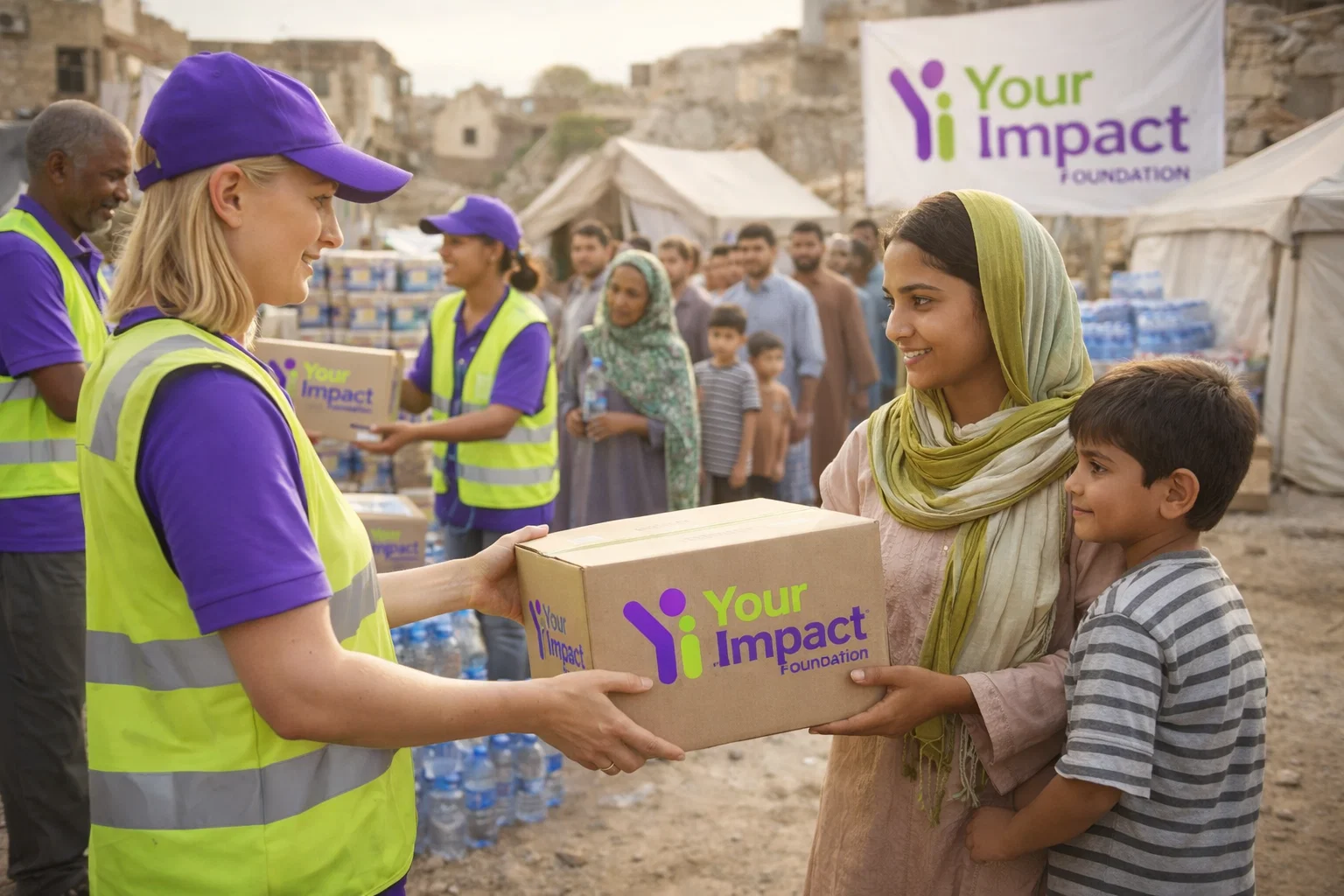
The increasing frequency and severity of global emergencies has made supporting disaster relief charities UK more important than ever. From the ongoing crisis in Syria to sudden-onset disasters requiring immediate crisis appeal response, the need for coordinated humanitarian action continues to grow. This comprehensive guide explains how emergency aid operates, where your support goes, and how you can contribute effectively when disaster strikes.
Understanding Emergency Aid: What It Means and Why It Matters
What is Emergency Aid?
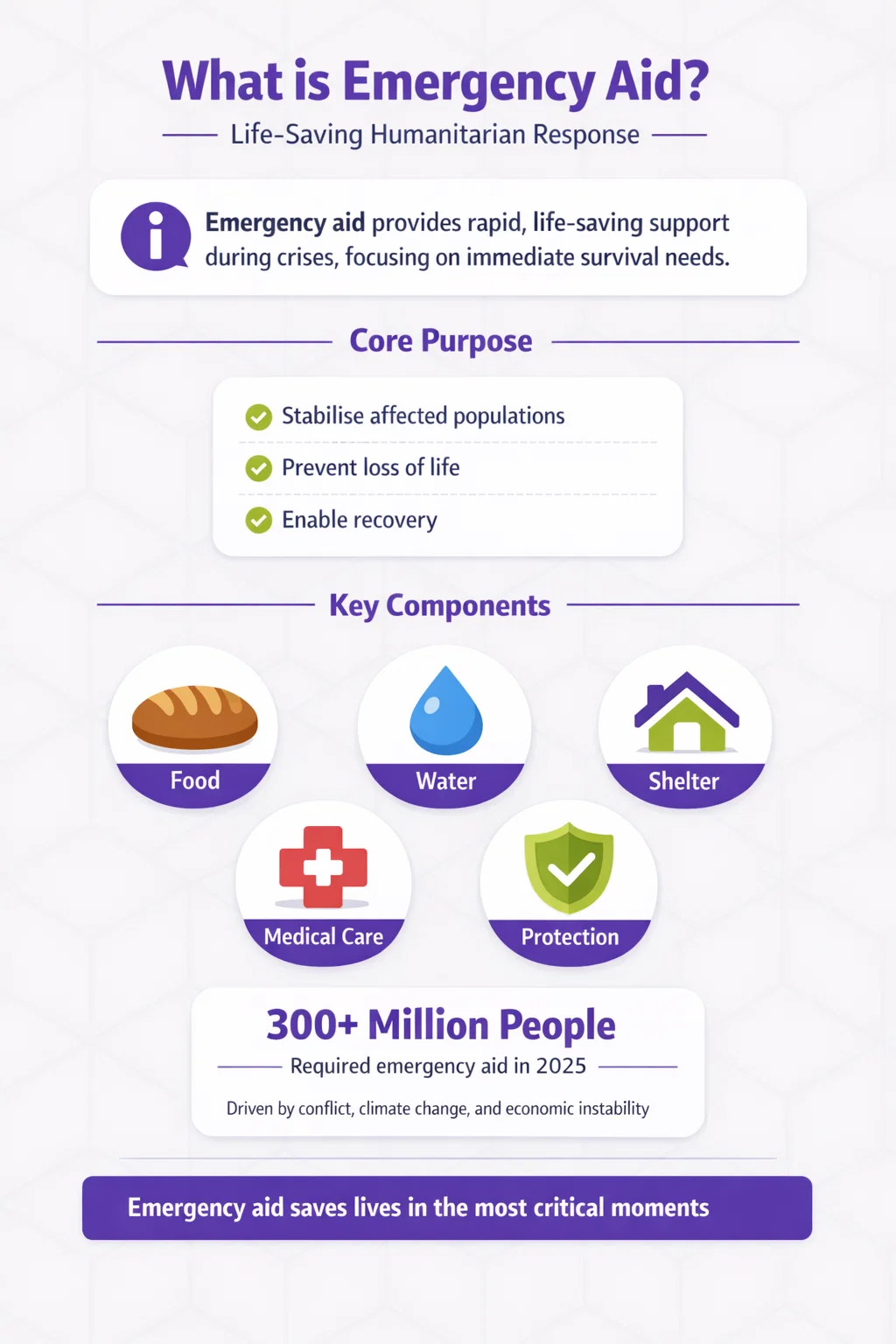
Emergency aid refers to the rapid provision of life-saving assistance to populations affected by sudden or ongoing humanitarian crises. Unlike long-term development programmes, emergency response focuses on immediate survival needs—food, water, shelter, medical care, and protection. The goal is to stabilise affected populations, prevent loss of life, and create conditions for eventual recovery.
According to the United Nations Office for the Coordination of Humanitarian Affairs (OCHA), global humanitarian needs reached unprecedented levels in 2025, with over 300 million people requiring emergency assistance. This represents a dramatic increase from previous decades, driven by the convergence of conflict, climate change, and economic instability.
Types of Humanitarian Emergencies
Disaster relief charities UK and worldwide respond to various types of emergencies, each requiring different response approaches:
| Emergency Type | Characteristics | Response Priority |
| Armed Conflict | Prolonged violence, displacement, infrastructure destruction | Protection, food, medical care |
| Natural Disasters | Earthquakes, floods, hurricanes, tsunamis | Immediate rescue, shelter, water |
| Climate Emergencies | Droughts, famines, extreme weather | Food security, water, livelihoods |
| Disease Outbreaks | Epidemics, pandemics | Medical care, prevention, containment |
| Complex Emergencies | Multiple factors combined | Comprehensive, coordinated response |
Each type of emergency presents unique challenges for disaster aid organisation efforts. The Syria crisis, for example, represents a complex emergency combining conflict, displacement, economic collapse, and now earthquake recovery—requiring sustained Syria emergency appeal support over more than a decade.
How Emergency Aid Works: The Response Mechanism
The Emergency Response Cycle
When a disaster emergency appeal is launched, humanitarian organisations follow an established cycle to maximise impact:
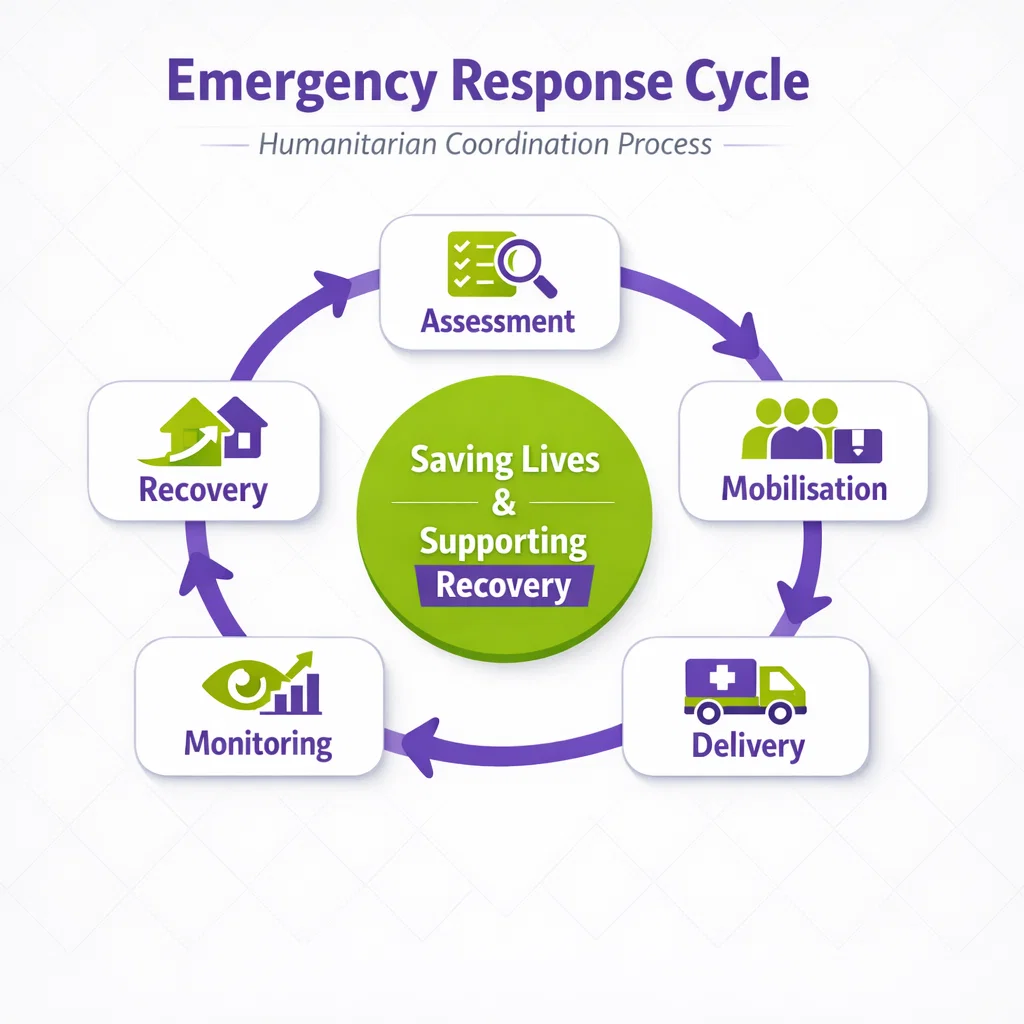
Phase 1: Rapid Assessment (0-72 hours)
Before emergency aid can be delivered, humanitarian teams assess the situation to understand:
- Scale of affected population
- Immediate life-saving needs
- Access constraints and security situation
- Available resources and capacity
- Coordination with other responders
The World Food Programme (WFP), the world’s largest humanitarian organisation, maintains emergency assessment teams ready to deploy within hours of a crisis declaration.
Phase 2: Resource Mobilisation (24-48 hours)
Once needs are identified, organisations launch crisis appeal campaigns and mobilise resources:
- Activating pre-positioned emergency stocks
- Launching public fundraising appeals
- Coordinating with government and UN agencies
- Deploying specialised personnel
- Establishing logistics and supply chains
Phase 3: Aid Delivery (Ongoing)
Disaster aid reaches affected populations through multiple channels:
- Direct distribution of food, water, and supplies
- Establishment of emergency shelters
- Mobile medical clinics and field hospitals
- Protection services for vulnerable groups
- Cash assistance programmes
Phase 4: Monitoring and Adaptation
Effective disaster relief charities continuously monitor their programmes:
- Tracking distribution and reach
- Assessing changing needs
- Adapting response strategies
- Ensuring accountability to beneficiaries
- Coordinating with other organisations
Phase 5: Transition to Recovery
As immediate crisis stabilises, focus shifts to:
- Rebuilding infrastructure
- Restoring livelihoods
- Long-term food security
- Psychosocial support
- Disaster risk reduction
Where Most Needed: The Power of Flexible Funding
Why “Where Most Needed” Donations Matter
When you see “where most needed” as a donation option, it refers to unrestricted funding that allows humanitarian organisations to direct resources to the areas of greatest urgency. This type of giving is often more valuable than designated contributions to specific programmes.
Benefits of unrestricted funding:
- Rapid Response: Organisations can deploy funds immediately when emergencies strike, without waiting for specific appeals to generate revenue.
- Flexibility: Funds can be directed to underfunded crises that don’t receive media attention but have equal or greater humanitarian need.
- Efficiency: Reduced administrative burden of tracking and reporting on restricted funds means more resources reach beneficiaries.
- Coverage: Ensures all affected populations receive support, not just those in high-profile emergencies.
According to Humanitarian Outcomes research, flexible funding enables humanitarian organisations to respond 40% faster to sudden-onset emergencies compared to restricted funding mechanisms.
Balancing Specific and General Giving
While where most needed donations provide crucial flexibility, many donors prefer contributing to specific disaster emergency appeal campaigns. Both approaches are valuable:
| Donation Type | Best For | Consider When |
| Where Most Needed | General support, underfunded crises | You trust the organisation’s judgement |
| Specific Emergency Appeal | High-profile crises, personal connection | You want to support a particular cause |
| Monthly Giving | Sustained impact, operational stability | You can commit to ongoing support |
| Zakat/Sadaqah | Religious obligation, specific eligibility | Fulfilling Islamic charitable duties |
Disaster Relief Charities UK: Choosing Where to Donate
What Makes an Effective Disaster Aid Organisation
When looking to donate to charity UK for emergency response, consider these factors to ensure your contribution creates maximum impact:
Registration and Oversight:
Reputable disaster relief charities UK are registered with the Charity Commission for England and Wales or equivalent Scottish and Northern Irish bodies. Registration provides:
- Public accountability through annual reports
- Financial transparency requirements
- Governance standards and oversight
- Complaint mechanisms for donors
Operational Capacity:
Effective disaster aid organisation capabilities include:
- Pre-positioned emergency supplies
- Trained emergency response teams
- Established logistics networks
- Local partnerships in crisis-prone regions
- Coordination with UN and government agencies
Transparency and Accountability:
Look for organisations that publish:
- Regular financial statements
- Impact reports with measurable outcomes
- Independent evaluations
- Beneficiary feedback mechanisms
- Clear breakdowns of how donations are used
Your Impact Foundation: UK Disaster Response
Your Impact Foundation (UK Charity No. 1192710) operates as a registered disaster relief charity UK with a 100% donation policy—every pound you give goes directly to emergency aid programmes.
Our emergency response capabilities include:
- Pre-positioned Supplies: Emergency stocks ready for rapid deployment
- Verified Partners: Established relationships with organisations in crisis regions
- Rapid Response Fund: Flexible funding for immediate deployment
- Specialised Programmes: Orphan support, food security, water, healthcare
- Transparency: Regular impact reporting and donor communication
Crisis Appeals: Responding to Specific Emergencies
Syria Emergency Appeal: A Decade of Humanitarian Response
The Syria emergency appeal represents one of the largest and longest-running humanitarian crises of our time. Since 2011, the conflict has displaced over 13 million people, created millions of refugees, and destroyed infrastructure across the country. The February 2023 earthquakes compounded existing suffering, affecting millions already struggling with conflict and displacement.
According to UNHCR data, over 16.7 million people inside Syria require humanitarian assistance in 2026—the largest number since the crisis began. This includes:
- 7 million internally displaced persons
- 5.5 million people facing food insecurity
- 2.4 million children out of school
- 12 million people lacking adequate healthcare

Gaza Crisis Appeal: Unprecedented Humanitarian Need
The ongoing crisis in Gaza represents one of the most severe disaster emergency appeal situations in modern history. The combination of conflict, famine conditions, infrastructure collapse, and restricted access has created an unprecedented humanitarian catastrophe.
Key statistics from UN OCHA:
- 1.9 million people displaced (90% of population)
- 1.6 million facing acute food insecurity
- 25,000+ children orphaned
- 80% of infrastructure damaged or destroyed
Other Current Crisis Appeals
Disaster relief charities UK are responding to multiple ongoing emergencies:
| Crisis | Affected Population | Primary Needs |
| Yemen | 21.6 million | Food, healthcare, water |
| Sudan | 24.7 million | Food, displacement support |
| Afghanistan | 23.7 million | Food, livelihoods, protection |
| Ukraine | 14.6 million | Shelter, food, protection |
| Somalia | 6.9 million | Food security, water, healthcare |
When considering a donation to charity, remember that crises receiving less media attention often have the greatest funding gaps. The concept of where most needed giving helps address this imbalance.
How to Donate to Charity UK: Practical Guidance
Methods of Giving
When you decide to donate online to charity, multiple options are available:
Online Donations:
Charity online donation platforms offer:
- Immediate processing and confirmation
- Secure payment options (card, PayPal, bank transfer)
- Automatic Gift Aid claims for UK taxpayers
- Recurring donation setup
- Digital receipts for tax purposes
Make a charity online donation today
Bank Transfer:
Direct bank transfers to disaster relief charities UK typically offer:
- Lower transaction fees for large donations
- Option to add Gift Aid reference
- Direct relationship with charity
- Suitable for Zakat and large contributions
Text and Mobile Giving:
Quick donation options for immediate response:
- SMS short codes for specific appeals
- Mobile payment apps
- Contactless giving terminals
- QR code scanning
Maximising Your Impact
Gift Aid:
UK taxpayers can add Gift Aid to their charitable donate contributions, increasing the value by 25% at no extra cost. For every £1 you give, the charity receives £1.25.
Monthly Giving:
Regular donations to disaster relief charities provide:
- Predictable funding for planning
- Lower fundraising costs
- Sustained impact over time
- Often include additional benefits
Zakat Contributions:
For Muslim donors, Zakat represents a significant opportunity to support emergency aid programmes. Most crisis-affected populations qualify as valid Zakat recipients.
Calculate and pay your Zakat for emergency aid
Avoiding Charity Scams
Unfortunately, disasters attract fraudulent fundraising. When you donate online, verify:
- Charity registration number
- Official website URL (not misspellings)
- Secure payment processing (https://)
- Clear contact information
- Published financial reports
The Charity Commission maintains a charity register where you can verify any UK-registered organisation before making a donation to charity.
The Islamic Perspective on Emergency Response
Rapid Response as Religious Obligation
For Muslims, responding to emergencies is not merely charitable—it is a religious obligation. The Quran and prophetic traditions emphasise the importance of helping those in distress, feeding the hungry, and caring for the vulnerable.
Quranic Foundation:
“And whatever you spend in good, it is for yourselves, when you spend not but seeking Allāh’s Countenance. And whatever you spend in good will be repaid to you in full, and you will not be wronged.” (Quran 2:272)
Prophetic Guidance:
The Prophet (peace be upon him) said:
“Give charity without delay, for it stands in the way of calamity.” (Al-Tirmidhi)
This hadith emphasises the protective nature of charity—both for the recipient and the giver. Emergency aid embodies this principle by preventing suffering before it escalates.
Sadaqah and Emergency Response
Charitable donate contributions in Islam include multiple forms:
- Sadaqah: Voluntary charity for any good cause
- Zakat: Obligatory annual alms for eligible recipients
- Fidyah: Compensation for missed religious obligations
- Kaffarah: Expiation for broken oaths or fasts
All these forms can be directed toward emergency aid programmes, with Zakat requiring verification of recipient eligibility.
FAQs About Emergency Aid
What is emergency aid?
Emergency aid is the rapid provision of life-saving assistance to people affected by humanitarian crises. It includes food, water, shelter, medical care, and protection services delivered in the immediate aftermath of disasters or during ongoing emergencies.
How do disaster relief charities UK operate?
Disaster relief charities UK are registered organisations that mobilise resources, coordinate with international agencies, and deliver humanitarian assistance. They operate under Charity Commission oversight, maintain transparency through published accounts, and work with partners in crisis-affected regions.
Where should I donate during a crisis?
Consider donating to established disaster aid organisation options with proven track records. Look for Charity Commission registration, transparent financial reporting, and operational capacity in the affected region. Where most needed donations provide flexible funding for maximum impact.
Is my emergency aid donation tax-deductible?
UK taxpayers can add Gift Aid to donations, increasing value by 25%. Higher rate taxpayers may claim additional relief. Check with your tax authority for rules in your jurisdiction.
Can I give Zakat to emergency appeals?
Yes, most crisis-affected populations qualify as valid Zakat recipients under categories including the poor, needy, and those in debt. Verify that your chosen organisation has appropriate Zakat distribution processes.
How quickly does emergency aid reach beneficiaries?
Response times vary by crisis type and location. Pre-positioned supplies can be distributed within hours of a disaster. Organisations with established local partnerships typically deliver disaster aid more rapidly than those without existing presence.
What’s the difference between emergency aid and development?
Emergency aid addresses immediate survival needs during crises. Development work focuses on long-term improvements in infrastructure, livelihoods, and institutions. Both are important, and effective organisations integrate both approaches.
Take Action: Support Emergency Aid Today
Every disaster emergency appeal represents an opportunity to save lives, alleviate suffering, and restore hope. Whether responding to sudden catastrophes or sustained crises like Syria and Gaza, your contribution makes a tangible difference in the lives of those facing unimaginable circumstances.
The choice to donate online to charity may seem small, but collectively, individual contributions form the backbone of humanitarian response. Every pound donated to disaster relief charities UK translates to food for the hungry, shelter for the displaced, medicine for the sick, and hope for the despairing.
When disaster strikes, the question is not whether to help, but how quickly we can act.
DONATE EMERGENCY AID TODAY
100% of your donation reaches those in crisis
UK Charity No. 1192710 | Gift Aid Eligible | Zakat Accepted
External Resources
For more information about global humanitarian needs and emergency response:
- UN OCHA: Global humanitarian coordination – unocha.org
- World Food Programme: Emergency food assistance – wfp.org
- UNHCR: Refugee and displacement data – unhcr.org
- Charity Commission: UK charity verification – gov.uk/charity-commission
- Humanitarian Outcomes: Research and analysis – humanitarianoutcomes.org