
The Gaza famine has emerged as one of the most devastating humanitarian catastrophes of the 21st century, with the formal famine declaration in Gaza marking a tragic milestone in the ongoing crisis. This comprehensive report presents verified facts, gaza famine statistics, and actionable ways you can contribute to relief efforts through a Gaza famine appeal that ensures your donation reaches those facing starvation.
The famine in Gaza did not occur overnight—it represents the culmination of prolonged conflict, systematic destruction of food infrastructure, and severe restrictions on humanitarian access. Understanding the facts behind this crisis is essential for anyone seeking to make an informed contribution to relief efforts. This article examines the evidence of famine in Gaza, the conditions that led to this catastrophe, and practical steps for those wishing to donate to Gaza famine relief.
Understanding the Gaza Famine: A Complete Report
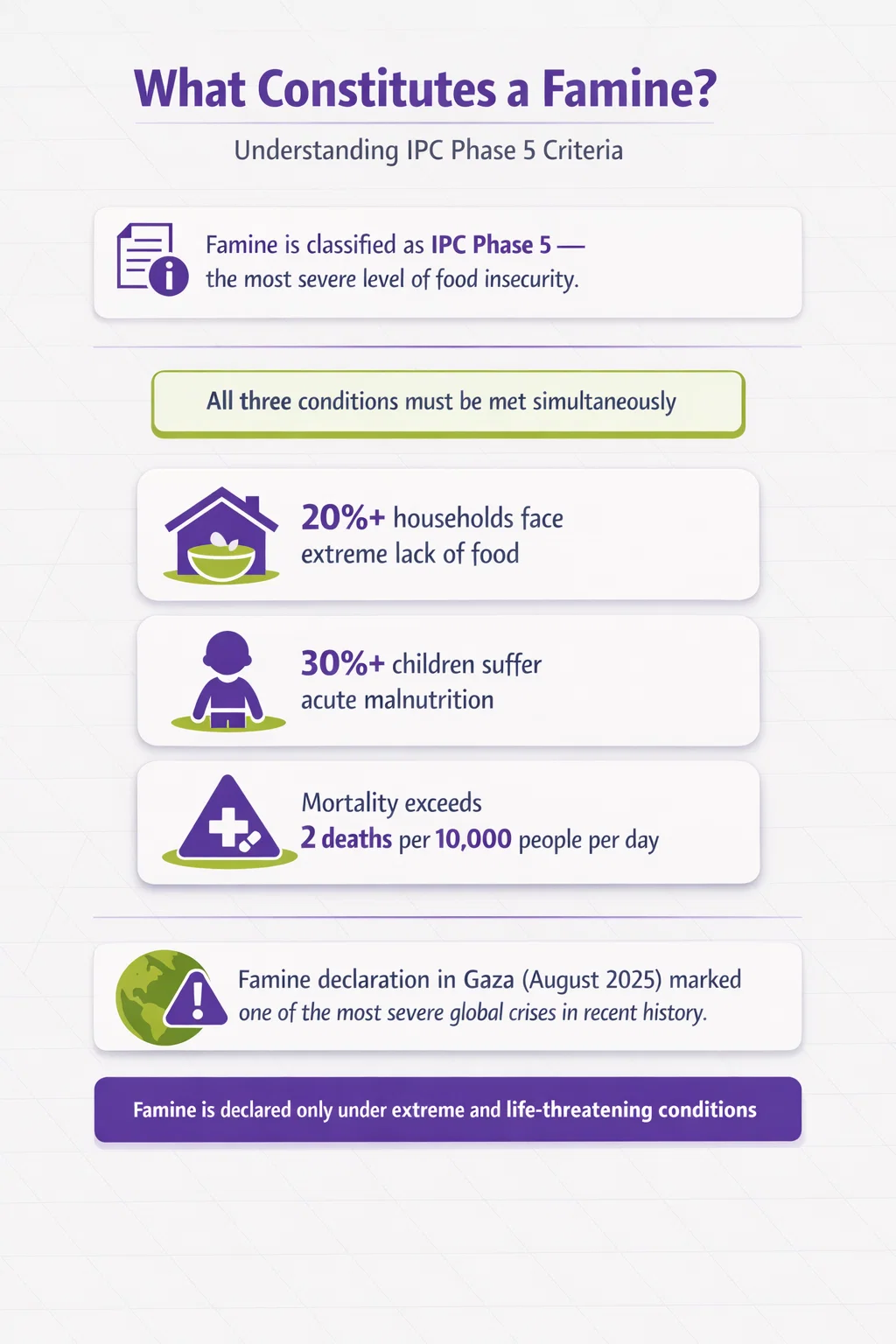
What Constitutes a Famine Declaration?
Before examining the specific situation, it is crucial to understand what qualifies as a famine according to internationally recognised standards. The Integrated Food Security Phase Classification (IPC) provides a rigorous framework for classifying food security situations, with famine (IPC Phase 5) representing the most severe category.
For a formal famine declaration, three specific criteria must be met simultaneously:
- At least 20% of households face an extreme lack of food
- Acute malnutrition in children exceeds 30%
- Mortality rates exceed 2 deaths per 10,000 people per day
When famine declared in Gaza was confirmed by the Famine Review Committee in August 2025, it marked only the second formal famine declaration of the 21st century, underscoring the unprecedented severity of the crisis.
The IPC Classification System
| IPC Phase | Classification | Description |
|---|---|---|
| Phase 1 | Minimal | Adequate food access without unsustainable coping |
| Phase 2 | Stressed | Minimal food consumption but unable to afford essential non-food needs |
| Phase 3 | Crisis | Significant food consumption gaps or depletion of livelihood assets |
| Phase 4 | Emergency | Large food consumption gaps with very high acute malnutrition |
| Phase 5 | Famine/Catastrophe | Extreme lack of food with evident starvation and death |
Gaza Famine Statistics: The Numbers Behind the Crisis
Gaza famine statistics reveal the magnitude of this humanitarian disaster. The following data, compiled from IPC reports, UN agencies, and verified humanitarian sources, provides a factual picture of the famine in Gaza:
| Indicator | Figure (2026) | Source |
|---|---|---|
| Population facing high acute food insecurity (IPC Phase 3+) | 1.6 million (77%) | IPC, Dec 2025 |
| Children facing catastrophic hunger | 4 out of 5 children | Save the Children |
| Children suffering acute malnutrition | 101,000+ | UN OCHA |
| Population in IPC Phase 5 (Catastrophe) | 345,000+ | IPC Analysis |
| Agricultural land destroyed | 40-50% | FAO Estimates |
| Bakeries destroyed or damaged | 90%+ | WFP Data |
| Gaza famine death toll from starvation | 440+ (incl. 147 children) | Multiple Sources |
These statistics are not merely numbers—they represent individual human beings suffering unimaginable hardship. Every figure in this gaza famine report reflects a family struggling to survive, a child going without adequate nutrition, or a community pushed to the brink of extinction.
Gaza Famine Death Toll: The Human Cost
The gaza famine death toll represents one of the most tragic aspects of this crisis. While exact figures remain difficult to verify due to ongoing conflict and collapsed healthcare systems, documented starvation deaths provide a minimum baseline for understanding the human cost.
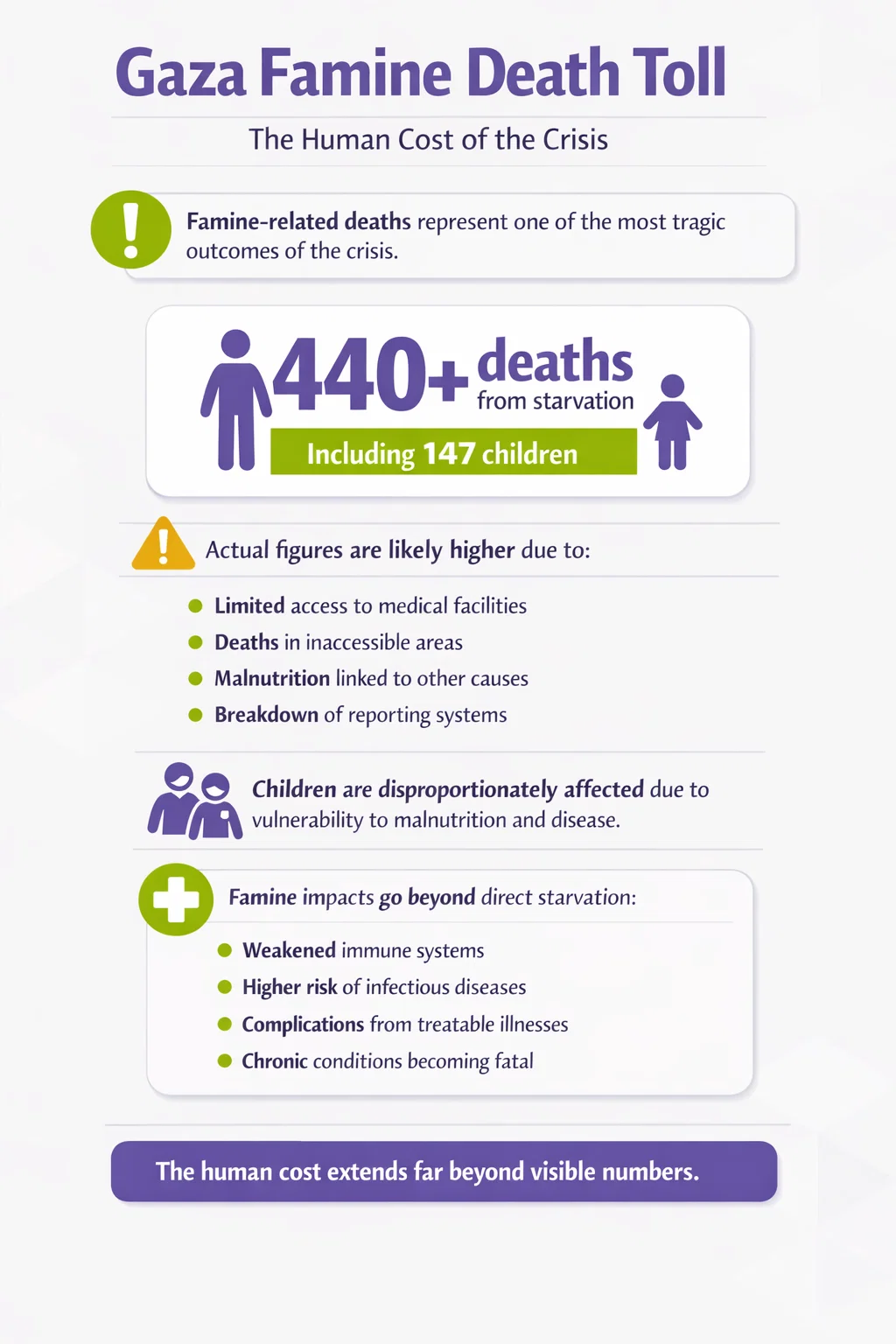
Documented Deaths from Starvation
As of early 2026, verified reports indicate that at least 440 people have died from starvation-related causes, including 147 children. However, humanitarian organisations warn that the actual figure is likely significantly higher due to:
- Inability to access medical facilities for proper death certification
- Deaths occurring in inaccessible areas
- Malnutrition contributing to deaths recorded under other causes
- Collapse of vital registration systems
The gaza famine death toll continues to rise as conditions persist. Children are disproportionately affected due to their heightened vulnerability to malnutrition and disease. The loss of an entire generation’s potential represents one of the most profound tragedies of this crisis.
Beyond Direct Starvation Deaths
The death toll from famine in Gaza extends beyond those who die directly from starvation. Malnutrition weakens immune systems, making people—especially children and the elderly—far more susceptible to:
- Infectious diseases that would normally be survivable
- Complications from common illnesses
- Chronic health conditions that become fatal without adequate nutrition
Evidence of Famine in Gaza: Documented Facts
For those seeking to fact check Gaza famine claims, the evidence is extensive and well-documented by international organisations. This section presents verified evidence of famine in Gaza from authoritative sources.
IPC Famine Review Committee Findings
The IPC Famine Review Committee, composed of independent food security and nutrition experts, conducted rigorous analysis before confirming famine declared in Gaza. Their findings included:
Food Consumption Indicators:
- Extreme food consumption gaps affecting over 20% of households in North Gaza
- Near-total collapse of market functioning
- Households surviving on minimal food rations for extended periods
- Reliance on humanitarian assistance as primary food source
Nutrition Indicators:
- Acute malnutrition rates in children exceeding emergency thresholds
- Significant increases in severe acute malnutrition (SAM) cases
- Collapse of nutrition treatment services
- Widespread micronutrient deficiencies
Mortality Indicators:
- Death rates exceeding famine thresholds in affected areas
- Starvation documented as cause of death
- Increased mortality from malnutrition-related complications
Independent Verification
Multiple independent sources have corroborated the evidence of famine in Gaza:
- The Lancet published peer-reviewed analysis documenting the famine conditions
- UN agencies including WFP, UNICEF, and WHO have verified food security data
- Humanitarian organisations operating on the ground have documented conditions
- Satellite imagery has confirmed destruction of agricultural land and food infrastructure
Gaza Famine Conditions: How Did We Get Here?
Man Made Famine Gaza: Understanding the Causes
The term man made famine Gaza accurately describes the origin of this crisis. Unlike famines caused by natural disasters such as drought or crop failure, the gaza famine resulted directly from human actions and policy decisions.
Systematic Destruction of Food Infrastructure
Gaza famine conditions were created through the systematic targeting of food systems:
Agricultural Destruction:
- 40-50% of agricultural land damaged or destroyed
- Greenhouses and irrigation systems targeted
- Livestock populations decimated
- Fishing boats and infrastructure destroyed
Market and Supply Chain Collapse:
- Over 90% of bakeries destroyed or damaged
- Food warehouses and storage facilities targeted
- Commercial supply routes severed
- Food processing facilities destroyed
Humanitarian Access Restrictions:
- Border crossings frequently closed or operating at reduced capacity
- Lengthy inspection procedures causing delays
- Restrictions on food items permitted entry
- Attacks on aid convoys and humanitarian workers
The characterisation as a man made famine Gaza is supported by extensive documentation showing that food was effectively used as a weapon of war, with devastating consequences for the civilian population.
Gaza Famine Appeal: How Your Donation Helps
A gaza famine appeal provides essential funding for humanitarian organisations working to address the crisis. When you donate to Gaza famine relief, your contribution supports multiple critical interventions.
What Your Donation Supports
Emergency Food Distribution:
- Food parcels containing staple items for families facing hunger
- Hot meal programmes serving displaced populations
- Specialised nutrition products for malnourished children
Nutrition Treatment:
- Therapeutic feeding centres for severely malnourished children
- Supplementary feeding programmes for moderate malnutrition
- Nutrition support for pregnant and breastfeeding women
Food Security Restoration:
- Seeds and tools for household food production
- Livestock replacement programmes
- Support for rebuilding food production capacity
Your Impact Foundation: Gaza Famine Donate
Your Impact Foundation (UK Charity No. 1192710) operates a gaza famine appeal with a 100% donation policy—every pound you give goes directly to food assistance programmes. As a UK-registered charity, we provide:
- Full transparency on fund allocation
- Regular impact reporting
- Gift Aid eligibility for UK taxpayers (adding 25% to your donation)
- Zakat-eligible programmes for Muslim donors
[Internal Link: Link to Gaza Emergency Appeal page with anchor “Gaza Famine Appeal – Donate Now”]
Fact Check Gaza Famine: Addressing Common Questions
Is the Gaza famine real?
Yes. The gaza famine has been independently verified by the IPC Famine Review Committee, UN agencies, and multiple humanitarian organisations. The famine declaration followed rigorous analysis of food consumption, malnutrition, and mortality data using internationally recognised standards.
What is the gaza famine death toll?
The documented gaza famine death toll exceeds 440 people, including 147 children, who have died from starvation-related causes. Humanitarian organisations believe the actual figure is higher due to difficulties in verification amid ongoing conflict and collapsed healthcare systems.
Who declared famine in Gaza?
Famine declared in Gaza was confirmed by the IPC Famine Review Committee—an independent, internationally recognised body of food security and nutrition experts. The IPC classification system is used globally to determine famine status and trigger international response.
How can I verify gaza famine statistics?
Gaza famine statistics can be verified through official IPC reports, UN agency publications (UN OCHA, WFP, UNICEF, WHO), and reputable humanitarian organisations. Always consult primary sources for the most accurate and up-to-date information.
Is this a man made famine?
Evidence supports the characterisation as a man made famine Gaza. The crisis resulted from conflict-related destruction of food systems, restrictions on humanitarian access, and policy decisions rather than natural causes such as drought or crop failure.