
Key Takeaways
- Organize your daily prayer schedule before the start of February and set clear intentions now.
- The Sahaba spent six months asking for the holy month to reach them as they prayed and studied.
- Prepare your body for fasting by reducing caffeine and shifting meal times in the weeks ahead.
- Your Ramadan donations bring hot meals and clean water to families in Gaza and Yemen this year.
To prepare for Ramadan 2026, you should begin by setting clear spiritual intentions and gradually adjusting your daily habits to align with the Sunnah. Effective Ramadan preparation involves a blend of physical readiness, such as shifting your meal times, and spiritual growth through increased prayer and charity.
By starting your preparing for Ramadan journey now, you ensure that the transition into the holy month is seamless and deeply rewarding.
Many people ask how do Muslims prepare for Ramadan while balancing a busy modern life. The best way to prepare for Ramadan is to treat the weeks leading up to it as a training ground. This means incorporating more voluntary fasts, like those on Mondays and Thursdays, to build stamina.
As you look toward preparing for Ramadan 2026, remember that this month is a rare opportunity to reset your character and fulfill your religious duties. Whether you are focusing on how to prepare to fast for Ramadan or planning your Zakat, early action is the secret to a successful month.
How Did the Sahaba Prepare for Ramadan?
The companions of the Prophet (PBUH) did not wait for the crescent moon to begin their devotion. Historical accounts from scholars like Ibn Rajab al-Hanbali reveal that the Sahaba prepared for Ramadan 6 months in advance.
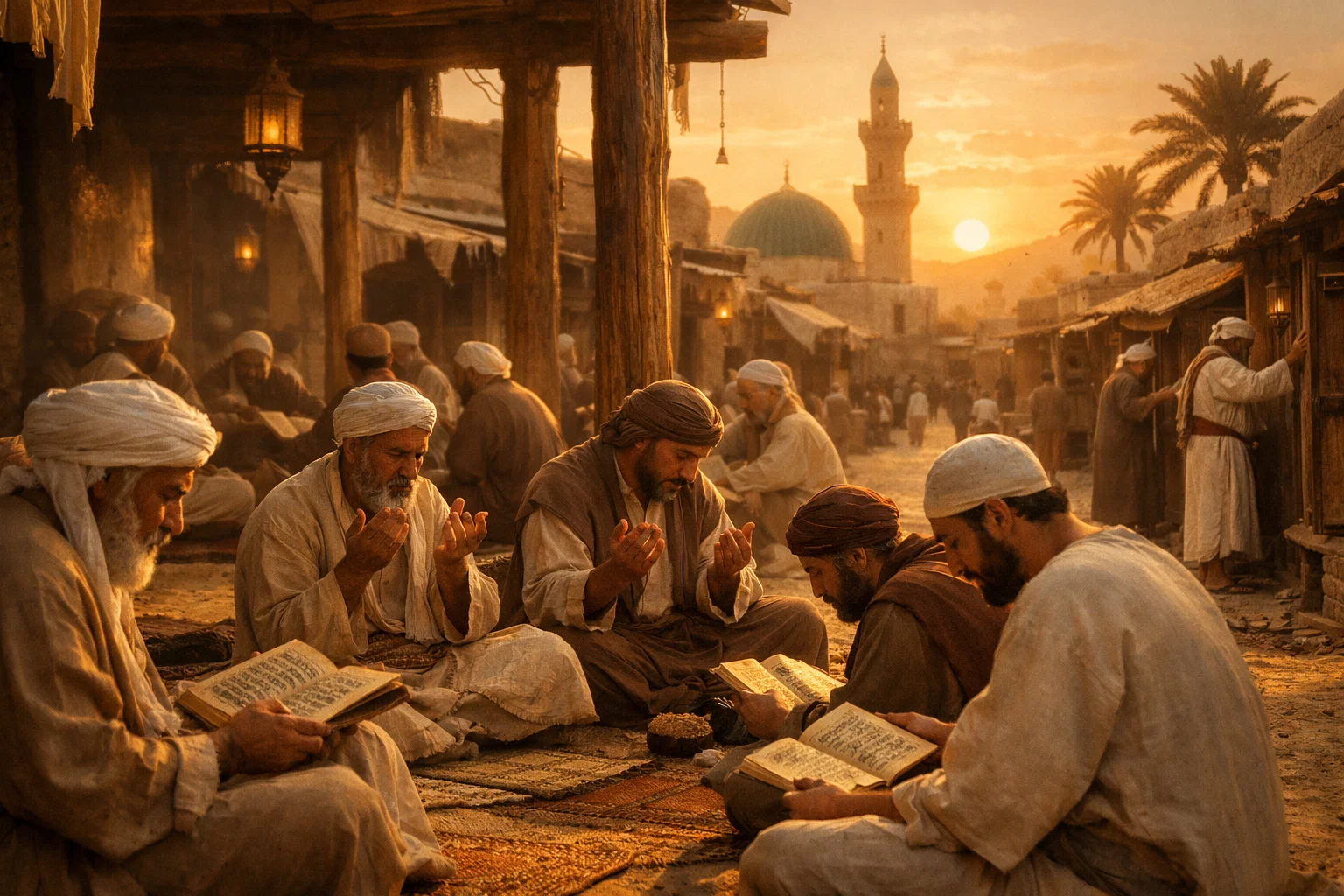
They would spend half the year supplicating, “O Allah, let us reach Ramadan,” and the following five months asking Allah to accept their deeds from the month that had passed. This constant state of spiritual longing shows how the Sahaba prepared for Ramadan with a level of seriousness that defined their entire year.
One famous incident involves the Sahaba increasing their recitation of the Qur’an as soon as the month of Sha’ban arrived. They called Sha’ban “the month of the reciters.”
Traders would close their shops and scholars would pause their general lessons to focus entirely on the Book of Allah. This wasn’t just about reading; it was about softening their hearts so that when the first night of Ramadan arrived, they were already in a state of deep submission.
Understanding how did the Sahaba prepare for Ramadan teaches us that the holy month is a harvest, and the months leading up to it are for sowing the seeds.
Hadith About Preparing for Ramadan
The Prophet (PBUH) used the weeks before the holy month to build physical and spiritual stamina.
A key Hadith about preparing for Ramadan comes from Aisha (RA), who reported that she never saw the Messenger of Allah fasting more in any month than he did in Sha’ban (Bukhari). This Sunnah acts as a bridge, helping the body transition into the daily fasts of Ramadan without the shock of a sudden change.
Another powerful narration reminds us of the immense value of this preparation. The Prophet (PBUH) said, “Rajab is the month of planting, Sha’ban is the month of irrigation, and Ramadan is the month of harvest” (Lataif al-Ma’arif).
This imagery provides the best way to prepare for Ramadan by showing that spiritual results require consistent effort over time. When we follow these prophetic guidelines for Ramadan preparation, we aren’t just waiting for a date on the calendar; we are actively inviting the blessings of Allah into our homes and hearts.
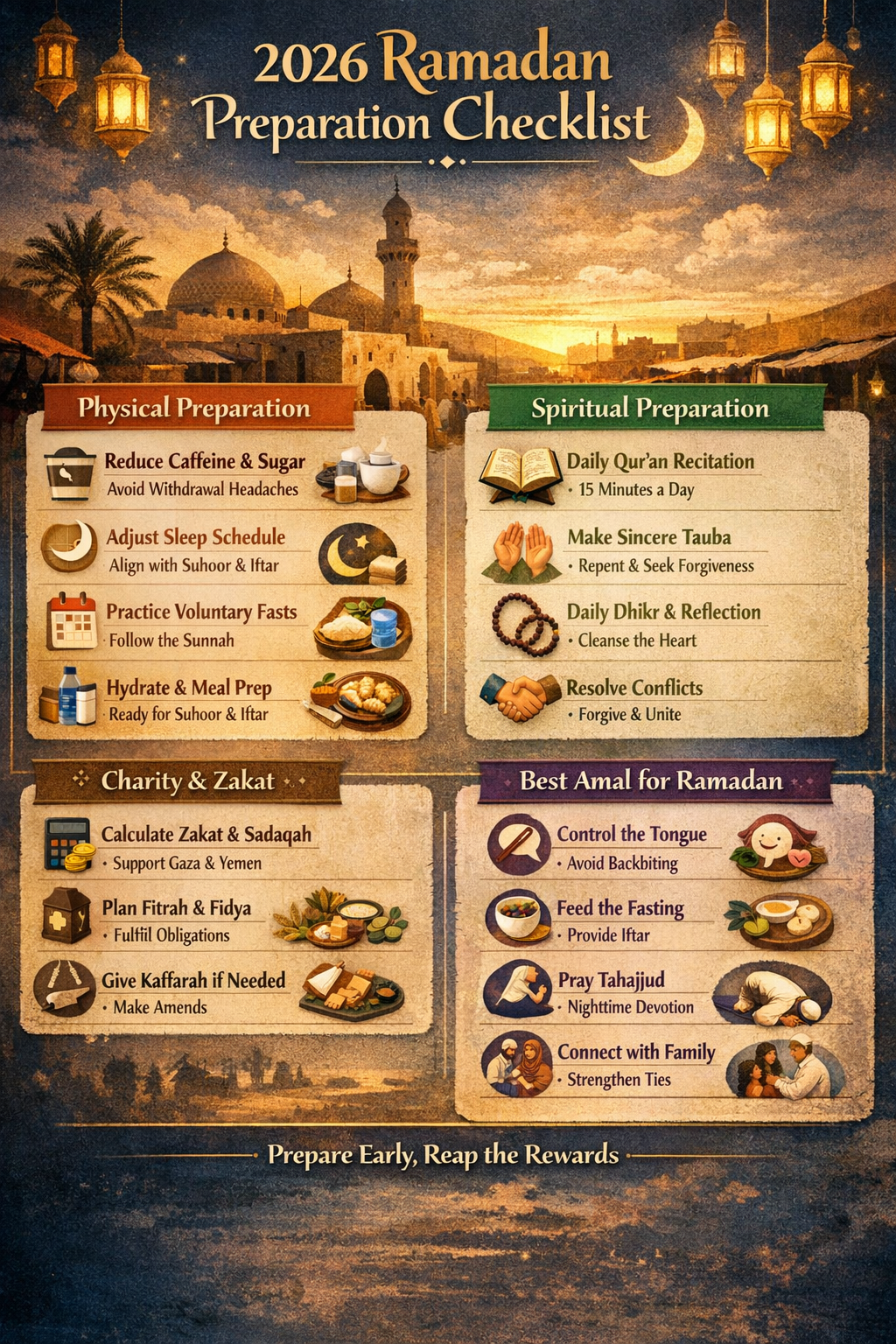
2026 Ramadan Preparation Checklist
| Category | Action Item | Goal |
| Physical | Reduce caffeine & sugar intake | Avoid withdrawal headaches |
| Spiritual | Daily Quran recitation (15 mins) | Build a consistent habit |
| Charity | Calculate Zakat & Sadaqah | Support Gaza & Yemen early |
| Health | Adjust sleep schedule | Align with Suhoor and Tahajjud |
| Nutrition | Meal prep for Suhoor & Iftar | Save time for Ibadah |
To ensure your Ramadan preparation is comprehensive, we have developed a structured checklist. This guide covers the physical, spiritual, and financial aspects of the holy month. Following a Ramadan preparation checklist helps you avoid the common “first-week fatigue” and allows you to focus entirely on worship from day one.
Physical Preparation: How to Prepare Your Body for Ramadan Fasting
The best way to prepare for Ramadan physically is to slowly shift your meal times closer to the hours of Suhoor and Iftar. If you are a heavy coffee or tea drinker, start reducing your intake two weeks before preparing for Ramadan 2026 to prevent severe migraines during the first few days of the fast.
Learning how to prepare your body for Ramadan fasting is essential for maintaining energy levels.
Additionally, understanding how to prepare to fast for Ramadan involves hydration. Increase your water intake during the evening hours in the weeks leading up to the month. This helps your kidneys and digestive system adjust.
Practicing voluntary fasts in the month of Sha’ban is the authentic Sunnah method for how do Muslims prepare for Ramadan, as it conditions the stomach for the long hours of abstinence ahead.
How to Spiritually Prepare for Ramadan
To spiritually prepare for Ramadan, focus on “cleaning the heart” before the month begins. This involves making sincere Tauba (repentance) and resolving conflicts with family and friends.
A key part of preparing for Ramadan 2026 is establishing a relationship with the Quran now, rather than waiting for the first night of Taraweeh.
Set a specific time each day for Dhikr and reflection. If you find it hard to concentrate, start with five minutes of focused supplication after each Fard prayer.
This gradual buildup is exactly how the Sahaba prepared for Ramadan, ensuring their hearts were soft and receptive to the blessings of the night of Qadr.
Fulfilling Religious Obligations and Charity In Ramadan
Ramadan is the month of giving, and managing your financial obligations is a core part of preparing for Ramadan. Ensure you understand the difference between the various forms of charity:
- Zakat: The compulsory 2.5% of your wealth given to the needy.
- Sadaqah: Voluntary charity given to gain extra rewards.
- Fidya: Payment made by those who cannot fast due to permanent illness or old age.
- Kaffarah: Restitution for broken fasts without a valid excuse.
- Fitrah (Zakat al-Fitr): A small amount given before Eid prayer so the poor can also celebrate.
At Your Impact Foundation, we maintain a 100% Zakat policy, ensuring your full donation reaches displaced families in Gaza and Yemen. By organizing these payments during your Ramadan preparation, you ensure that your wealth is purified and your brothers and sisters are fed.
Best Amal For Ramadan
The “Best Amal” (good deeds) are those done with consistency. While many focus on the quantity of prayers, the quality of your character is equally important. Focus on:
- Controlling the Tongue: Avoiding backbiting and anger.
- Feeding the Fasting: Providing Iftar for someone in need.
- Tahajjud: Waking up 15 minutes before Suhoor for private conversation with Allah.
- Connecting Ties: Reaching out to relatives you haven’t spoken to recently.
Important Days of Ramadan
While every moment of the holy month is filled with mercy, certain dates hold a higher status for those preparing for Ramadan 2026. Marking these on your calendar is the best way to prepare for Ramadan and ensure you do not miss the windows of immense reward.
- The First 10 Days (Mercy): This is the time to seek Allah’s Rahma and establish your new routine.
- The Middle 10 Days (Forgiveness): Focus on Istighfar (seeking forgiveness) and purifying your heart from past mistakes.
- The Last 10 Nights (Salvation): These are the most critical nights of the year. How do Muslims prepare for Ramadan‘s end? By increasing their worship in search of Laylatul Qadr (The Night of Power), which is better than a thousand months.
- The 27th Night: Traditionally observed by many as a likely date for Laylatul Qadr, though it can fall on any odd-numbered night in the final ten days.
- Eid al-Fitr: The celebration of breaking the fast, marking the successful completion of the month.
What do Muslims do in Ramadan?
If you are new to the faith or simply refining your Ramadan preparation, it is helpful to visualize the daily life of a believer during this month. Ramadan is not beyond just abstaining from food and drink. It is a total lifestyle shift aimed at God-consciousness (Taqwa).
A typical day starts with Suhoor, the pre-dawn meal, followed by the Fajr prayer. Throughout the day, Muslims continue their work or studies while maintaining a fast from dawn until sunset. This includes abstaining from water, food, smoking, and marital relations. The day is punctuated by the five daily prayers and constant Dhikr (remembrance of Allah).
At sunset, the fast is broken with Iftar, usually starting with dates and water as per the Sunnah. Families then gather for the Maghrib prayer and a shared meal.
The highlight of the evening is the Taraweeh prayer, a special voluntary prayer performed in congregation at the mosque, where the entire Qur’an is often recited over the course of the month.
Throughout this process, Ramadan preparation ensures that the believer has the physical energy and the spiritual focus to maintain this rigorous yet beautiful schedule.
Final Thought
As we approach the crescent moon of 2026, remember that the most successful Ramadan is the one you prepare for with a humble heart. Whether you are a seasoned observer or a new Muslim embarking on your first fast in the UK, the goal is the same: to grow closer to your Creator. By preparing your body, mind, and spirit today, you open the door to a month of transformative mercy.
Common Questions for Ramadan 2026
When does Ramadan 2026 start in the UK?
Ramadan is expected to begin on the evening of Wednesday, 18th February 2026, with the first day of fasting on Thursday, 19th February. The exact date depends on the local sighting of the new crescent moon.
Does swallowing spit/saliva break my fast?
No, swallowing your own saliva does not break the fast. It is a natural bodily function that is impossible to avoid. Scholars agree that this does not count as “drinking” and is perfectly permissible while fasting.
I am a new Muslim; what if I accidentally eat or drink?
If you eat or drink out of genuine forgetfulness, your fast remains valid. Simply stop as soon as you remember, rinse your mouth, and continue fasting until sunset. It is seen as a gift of nourishment from Allah.
How much is Fitrana (Zakat al-Fitr) for 2026 in the UK?
Fitrana is typically around £5 per person in the UK. It must be paid by every member of the household before the Eid al-Fitr prayer to ensure those in need can celebrate the holiday.
Can I brush my teeth while fasting?
Yes, you can brush your teeth, but you must be careful not to swallow any water or toothpaste. Many Muslims prefer to use a Miswak (natural tooth-stick) during the day to avoid the risk of breaking the fast.
What if I cannot fast due to health reasons?
Islam prioritizes your health. If you have a medical condition that makes fasting dangerous, you are exempt. Instead, you can pay Fidya, which is a small donation to provide two meals to a person in need for every day missed.