
The Significance of the Last 10 Nights of Ramadan
As Ramadan progresses, Muslims around the world turn their hearts and minds toward the last 10 nights of Ramadan. These final ten nights hold extraordinary significance in Islam, containing a night better than a thousand months. If you want to maximise your worship, charity, and spiritual rewards during this blessed period, this guide will show you exactly how to make the most of every moment.
The last 10 days of Ramadan represent the culmination of a month of fasting, prayer, and self-reflection. During this time, Muslims intensify their worship, seeking the Night of Power (Laylatul Qadr). The Prophet Muhammad (peace be upon him) would spend these nights in constant devotion, and his example guides us today. Understanding the importance of these nights helps us prepare our hearts, time, and resources for maximum spiritual benefit.
For UK Muslims balancing work, family, and worship, planning for the last ten nights requires intention and preparation. This guide covers everything you need to know: the significance of Laylatul Qadr, when these nights occur in 2026, how to structure your worship, and practical ways to ensure your charity reaches those in need even while you sleep. Let us begin this journey together.
When Are the Last 10 Nights of Ramadan 2026?
The last ten nights of Ramadan begin on the 21st night of Ramadan and continue through the 30th night. Since the Islamic calendar follows the moon, exact dates depend on the sighting of the moon in your locality. For UK Muslims in 2026, the last ten nights are expected to begin around late March, but you should confirm with your local mosque closer to the time.
Expected Dates for 2026
Based on astronomical calculations and historical patterns, Ramadan 2026 is expected to begin in late February or early March. This means the last ten nights would fall in late March. However, always verify with your local mosque or Islamic centre, as moon sighting can vary by a day. The most important practice is to prepare your heart and schedule before these nights arrive, so you can focus entirely on worship when they come.
The Odd Nights and Laylatul Qadr
The Night of Power (Laylatul Qadr) is most likely to occur on the odd nights during the last ten nights: the 21st, 23rd, 25th, 27th, or 29th night of Ramadan. Many scholars consider the 27th night particularly special, but the exact night remains unknown by divine wisdom. This uncertainty encourages Muslims to worship sincerely throughout all ten nights, seeking the reward of Laylatul Qadr on each one.
Aisha (may Allah be pleased with her) reported that the Prophet Muhammad (peace be upon him) said: “Seek Laylatul Qadr in the odd nights of the last ten nights of Ramadan.” (Sahih Bukhari). This hadith guides Muslims to concentrate their efforts on these specific nights while not neglecting any of the ten. The beauty of this teaching is that it maximises our opportunity to catch this blessed night.
Understanding Laylatul Qadr: The Night of Power
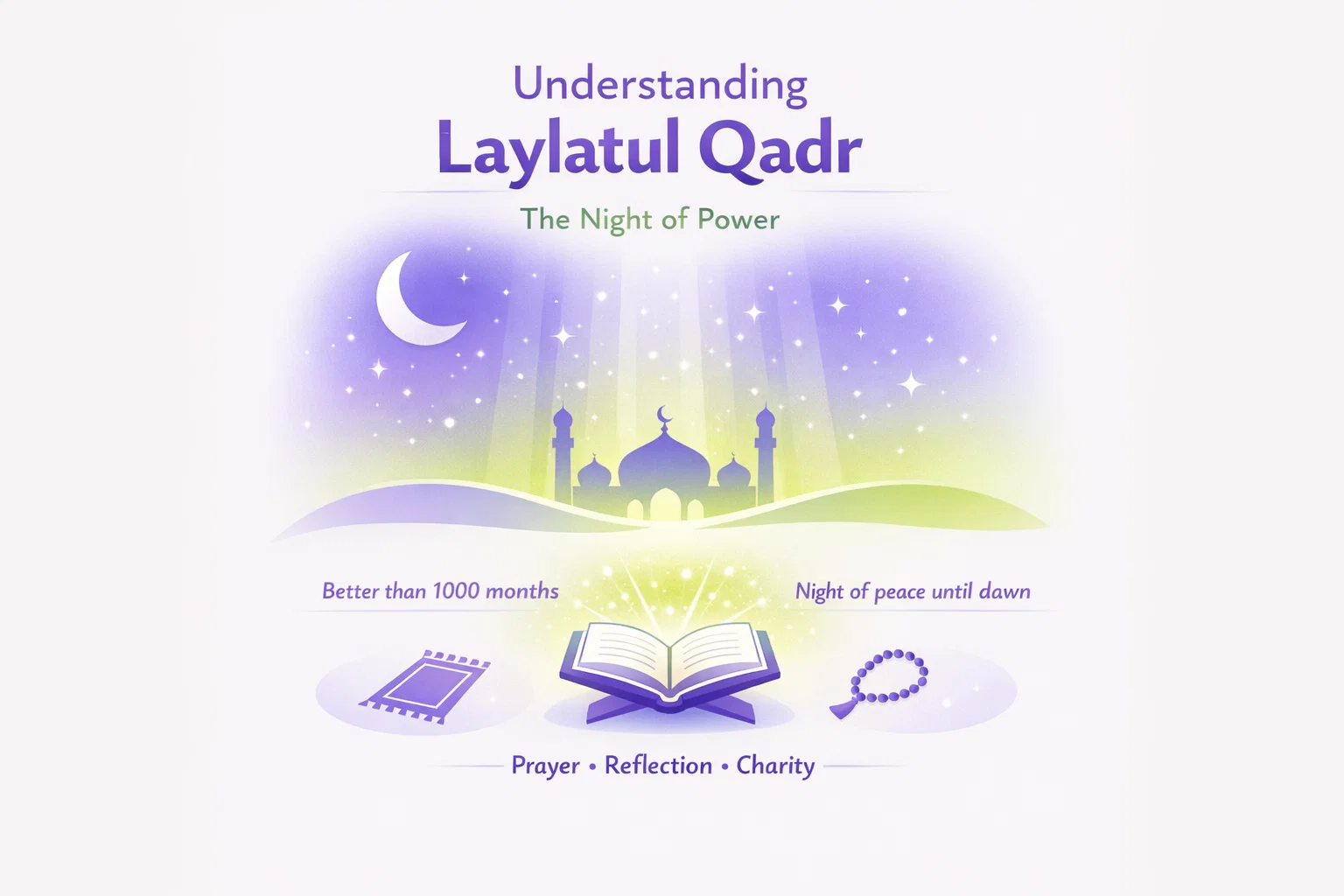
Laylatul Qadr, also known as the Night of Power in Islam, is mentioned directly in the Quran in Surah Al-Qadr. Allah describes this night as “better than a thousand months.” This means that worship performed on this single night is more valuable than worship performed over 83 years. For Muslims, this represents an extraordinary opportunity for spiritual gain.
What Makes Laylatul Qadr Special?
On this blessed night, the Quran was first revealed to the Prophet Muhammad (peace be upon him) through the Angel Jibreel. It is a night when angels descend in abundance by permission of their Lord, carrying peace and blessings until dawn. The spiritual atmosphere during this night is unlike any other, and Muslims who experience it often describe a sense of peace, clarity, and connection to the divine.
The Reward of Laylatul Qadr
The Prophet Muhammad (peace be upon him) said: “Whoever stands in prayer during Laylatul Qadr out of faith and seeking reward, his previous sins will be forgiven.” (Sahih Bukhari). This hadith highlights the immense mercy available on this night. Combined with sincere charity, the rewards multiply even further. For UK Muslims, this presents a powerful motivation to plan ahead and ensure nothing prevents us from seeking this night.
Signs of Laylatul Qadr
While the exact night remains hidden, some signs have been mentioned in Islamic tradition. The night tends to be moderate in temperature, neither too hot nor too cold. The morning sun rises without apparent rays. The moon appears like a half plate. However, these signs are subtle, and the true essence of the night is known only to Allah. This is why consistent worship across all ten nights remains the best approach.
The Prophet’s Practice During the Last 10 Nights
Understanding how the Prophet Muhammad (peace be upon him) spent the Ramadan last 10 days provides a model for our own worship. His practice during these nights was characterised by intensity, devotion, and complete focus on Allah. Let us examine his example closely.
I’tikaf: Spiritual Retreat
The Prophet (peace be upon him) would perform I’tikaf during the last ten nights of Ramadan. I’tikaf means secluding oneself in the mosque for worship, cutting off from worldly distractions to focus entirely on devotion. Many Muslims ask how many days is itikaf: the full practice during Ramadan lasts ten days, though shorter periods are also valid. For those unable to commit to the full ten days, even a day or two can bring immense spiritual benefit.
For UK Muslims with work and family commitments, I’tikaf may seem challenging. However, many mosques across the UK facilitate I’tikaf during these nights. Contact your local mosque to learn about their arrangements. Even if you cannot perform I’tikaf in the mosque, you can create a similar atmosphere at home by dedicating specific time and space for worship.
Intensified Worship
Aisha (may Allah be pleased with her) reported: “When the last ten nights of Ramadan began, the Prophet would tighten his waist wrapper, stay awake at night, and wake his family.” (Sahih Bukhari). This hadith illustrates how he intensified his efforts. He reduced his sleep, increased his prayer, and encouraged his family to do the same. This is the model we should follow, even if our intensity differs from his.
Waking Family Members
An important lesson from the Prophet’s practice is that he did not worship alone. He woke his family members to join him in night prayers. This teaches us that the last ten nights are an opportunity for collective worship. Encourage your family to join you in Tahajjud, Quran recitation, and remembrance of Allah. This creates a supportive environment and multiplies rewards for everyone.
Charity During the Last 10 Nights: Following the Prophet’s Example
Ibn Abbas (may Allah be pleased with him) described the Prophet Muhammad (peace be upon him) as “the most generous of people, and he was most generous during Ramadan.” (Sahih Bukhari). The Prophet’s generosity during Ramadan last ashra (the final ten days) exceeded even his usual extraordinary giving. This example sets the standard for Muslims seeking to maximise their charity during this blessed period.
Why Charity Matters in the Last 10 Nights
Giving last 10 nights charity carries special significance for several reasons. First, the rewards for good deeds during Ramadan are multiplied, and Laylatul Qadr amplifies this further. A single act of charity on the Night of Power could equal 83 years of continuous giving. Second, charity purifies the soul and removes sins. Combined with fasting and prayer, it completes the spiritual transformation of Ramadan.
Third, giving during these nights connects us to the global Muslim community. Our last ten nights donation reaches families in Gaza, Yemen, Syria, and other regions facing hardship. While we worship in comfort, our charity provides food, water, and hope to those who struggle. This connection embodies the spirit of Ramadan: unity, compassion, and care for the Ummah.
Types of Charity to Give
There are several forms of charity you can prioritise during the last ten nights:
- Zakat: If your Zakat is due during Ramadan, consider paying it during the last ten nights to maximise rewards. Ensure you calculate correctly using our Zakat Calculator guide, then schedule your payment for one of these blessed nights.
- Sadaqah: Voluntary charity holds immense value during these nights. Last 10 nights sadaqah can be given in any amount, and the intention matters more than the quantity. Small, consistent giving is beloved to Allah.
- Sadaqah Jariyah: Ongoing charity such as sponsoring a water well or supporting education projects continues to benefit you long after Ramadan ends. These projects align perfectly with the spirit of the last ten nights.
- Fidya and Kaffarah: If you have missed fasts or need to pay expiation, the last ten nights are an excellent time to fulfil these obligations.
How to Automate Your Last 10 Nights Donations
One of the biggest challenges UK Muslims face during the last ten nights is balancing worship with giving. You want to donate on Laylatul Qadr, but you also want to focus on prayer without distractions. The solution is to automate last 10 nights donations using a trusted platform.
Why Automate Your Giving?
When you automate last 10 nights donations, you solve a practical problem. During these blessed nights, you may be engaged in Tahajjud until suhoor, then fasting during the day. You might sleep through some nights due to exhaustion. By setting up automated donations, your charity is processed every night without any action required from you. This means your record of deeds never stops growing.
The Prophet Muhammad (peace be upon him) said: “The most beloved of deeds to Allah are those that are most consistent, even if they are small.” (Sahih Bukhari). Automation embodies this principle perfectly. Rather than giving a large amount once, you give consistently across all ten nights, ensuring you catch Laylatul Qadr with certainty.
How Our Automation Works
Your Impact Foundation offers a simple automation system for last 10 night donation. Here is how it works: You choose your daily amount, select the projects you want to support, and confirm your setup. Our system then processes your donation automatically each night of the last ten. You can choose to give the same amount every night, or give more on the odd nights when Laylatul Qadr is most likely.
Setting up takes just a few minutes through our automated donation page. Once complete, you receive confirmation and daily notifications when your donation is processed. This gives you peace of mind and allows you to focus entirely on worship.
A Practical Worship Schedule for the Last 10 Nights
For UK Muslims with work and family responsibilities, having a structured approach to the last ten nights helps maximise worship while maintaining essential duties. Below is a suggested schedule that balances devotion with practicality. Adjust it according to your circumstances.
| Time | Activity | Notes |
| After Iftar | Maghrib prayer, light meal, rest | Prepare your body for the night |
| Isha time | Isha and Taraweeh prayers at mosque | Pray in congregation if possible |
| After Taraweeh | Quran recitation, adhkar, dua | Focus on reflection and connection |
| Short rest | Sleep for 2-3 hours before Tahajjud | Set multiple alarms |
| Last third | Tahajjud, extensive dua, istighfar | Best time for worship |
| Suhoor | Light meal, Fajr prayer | End with Fajr in congregation |
| Morning | Quran, adhkar, rest as needed | Balance worship with recovery |
Table 1: Sample Daily Schedule for the Last 10 Nights
Essential Duas for the Last 10 Nights of Ramadan
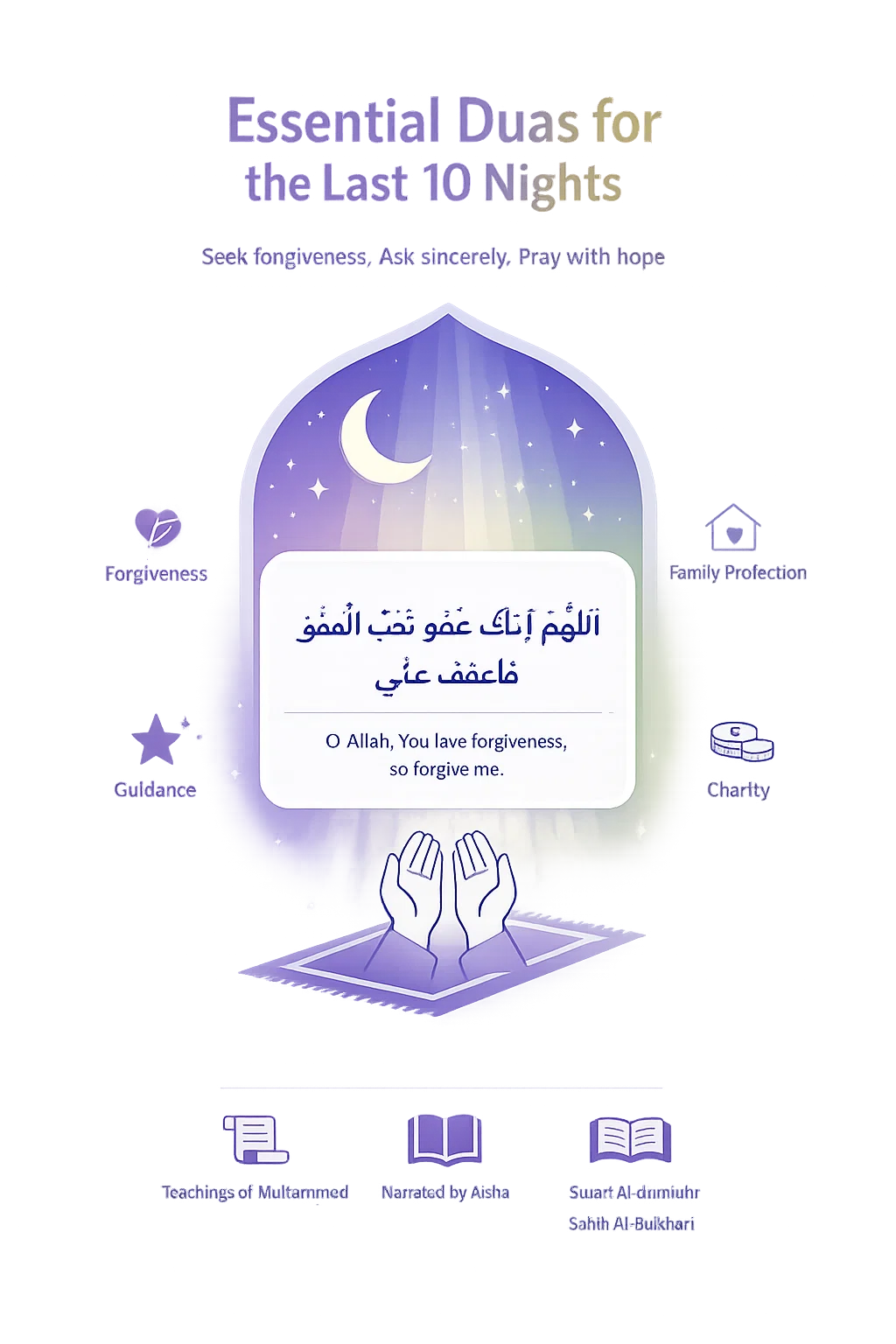
Making dua during these blessed nights is essential. The Prophet Muhammad (peace be upon him) taught us specific last 10 nights of Ramadan dua that we should recite. The most famous is the dua for Laylatul Qadr, which Aisha (may Allah be pleased with her) asked the Prophet to teach her.
The Dua for Laylatul Qadr
Allahumma innaka ‘afuwwun tuhibbul ‘afwa fa’fu ‘anni
Translation: “O Allah, You are Forgiving and love forgiveness, so forgive me.” (Sunan At-Tirmidhi)
This simple yet powerful dua should be recited frequently throughout the last ten nights. It acknowledges Allah’s attribute of forgiveness and asks Him to extend that forgiveness to us. The beauty of this dua lies in its humility and directness.
Other Recommended Duas
In addition to the Laylatul Qadr dua, use these nights to make personal supplications. Ask Allah for forgiveness, guidance, good health, success in this life and the next, and protection for your family. Make dua for the Ummah, for those suffering in Gaza, Yemen, Syria, and around the world. These nights are opportunities to have your prayers answered, so ask generously and with complete faith.
The last third of the night is particularly special for dua. During this time, Allah descends to the lowest heaven and asks: “Who is calling upon Me, that I may answer him? Who is asking of Me, that I may give him? Who is seeking My forgiveness, that I may forgive him?” (Sahih Bukhari). Set your alarm and wake up for this blessed time.
How to Maximise Rewards During the Last 10 Nights
Making the most of the last ten nights ramadan requires intention, planning, and consistent action. Here are practical strategies to help you maximise your rewards during this blessed period.
- Set Clear Intentions: Before the last ten nights begin, write down what you want to achieve. Whether it is completing the Quran, giving a certain amount in charity, or praying Tahajjud every night, clear intentions help you stay focused.
- Prepare Your Space: Create a clean, quiet space for worship. Have your Quran, prayer mat, and any other items ready. This removes distractions and allows you to focus immediately when you begin worship.
- Automate Your Charity: Set up your last ten nights donation before the nights begin. This ensures you never miss giving on Laylatul Qadr, even if you are asleep or deep in worship.
- Reduce Worldly Distractions: Take time off work if possible. Limit social media and unnecessary phone use. Tell family and friends that you will be less available. These small steps create space for meaningful worship.
- Pray in Congregation: If you are not performing I’tikaf, try to pray Taraweeh and Tahajjud at the mosque. The atmosphere of collective worship strengthens your own devotion and connects you to the community.
- Stay Hydrated and Rested: Physical preparation matters too. Drink water between Iftar and Suhoor, eat nutritious foods, and rest when needed. This helps you sustain worship across all ten nights.
Where to Give Your Last 10 Nights Charity
Choosing where to direct your last 10 nights charity is important. You want to ensure your donation reaches those who truly need it, in accordance with Islamic principles. Your Impact Foundation offers several options for UK Muslims seeking to give during these blessed nights.
Emergency Food Aid
Your donation can provide food packs to families in Gaza, Yemen, and Syria. Each pack contains essential items such as flour, rice, oil, lentils, and dates. For many families, these food packs mean the difference between hunger and nourishment. During the last ten nights, consider how your charity provides iftar to those who would otherwise break their fast with nothing.
Water Projects
Clean water is a fundamental need that many of us take for granted. By contributing to water projects, you provide Sadaqah Jariyah that continues to benefit communities for years. Each time someone drinks from a well you helped build, you receive reward. This makes water projects particularly suited for the last ten nights, when rewards are multiplied.
Orphan Sponsorship
The Prophet Muhammad (peace be upon him) said: “I and the one who sponsors an orphan will be in Paradise like this,” holding his two fingers together. Sponsoring an orphan during the last ten nights combines the reward of caring for vulnerable children with the multiplied blessings of this period. Your support provides food, education, healthcare, and hope.
Prepare Your Heart for the Last 10 Nights
The last 10 nights of Ramadan represent the culmination of a month of spiritual striving. As these nights approach, prepare not just your schedule but your heart. Reflect on your Ramadan journey so far. Consider what you want to achieve in these final nights. Most importantly, approach these nights with humility, sincerity, and hope in Allah’s mercy.
Remember that Allah does not expect perfection. He expects sincere effort. If you can only manage one night of intense worship, that night counts. If you can only give a small amount in charity, that amount is multiplied. The key is to do what you can with a pure heart, seeking Allah’s pleasure alone.
Your Impact Foundation is here to support your journey. Whether you want to set up automated donations, sponsor an orphan, or contribute to emergency relief, we ensure your charity reaches those who need it most. Our 100% donation policy guarantees that every penny of your Zakat and Sadaqah goes directly to those in need.
Do not leave your rewards to chance.
About Your Impact Foundation
Your Impact Foundation is a UK-registered charity (Number 1192710) dedicated to providing humanitarian relief to communities affected by poverty, conflict, and disaster. We operate with a strict 100% donation policy, ensuring that every penny of your Zakat and Sadaqah reaches those in need. Our work spans emergency food aid, water projects, orphan sponsorship, and sustainable livelihood initiatives.
We are committed to transparency, accountability, and Sharia compliance in all our operations. Our distribution methods are reviewed by qualified Islamic scholars, and our financial reports are publicly available. When you give through Your Impact Foundation, you can trust that your charity is handled with the integrity and care it deserves.
For more information about our work or to verify our charity registration, visit the Charity Commission website. Together, we can make a lasting difference in the lives of those who need it most.