Key Takeaways on Donating Zakat to a Muslim Charity in the UK
- Legal Framework: Donating Zakat in the UK is legal, provided the charity is registered with the Charity Commission and adheres to both UK and Islamic regulations.
- No Special Permission Needed: You don’t need special government permission to donate Zakat, but the charity must comply with UK laws, including anti-money laundering and counter-terrorism rules.
- Shariah Compliance: Zakat must be distributed strictly according to Islamic guidelines, targeting eligible recipients only and separate from general donations like Sadaqah.
- Charity Verification: Ensure the charity is registered and has a transparent Zakat distribution policy for a secure and lawful donation.
When donating Zakat to a Muslim charity in the UK, it’s essential to understand the legal framework governing charitable donations. While there are no specific government rules unique to Zakat, there are important regulations to ensure your donation is Shariah-compliant and meets UK charity standards.
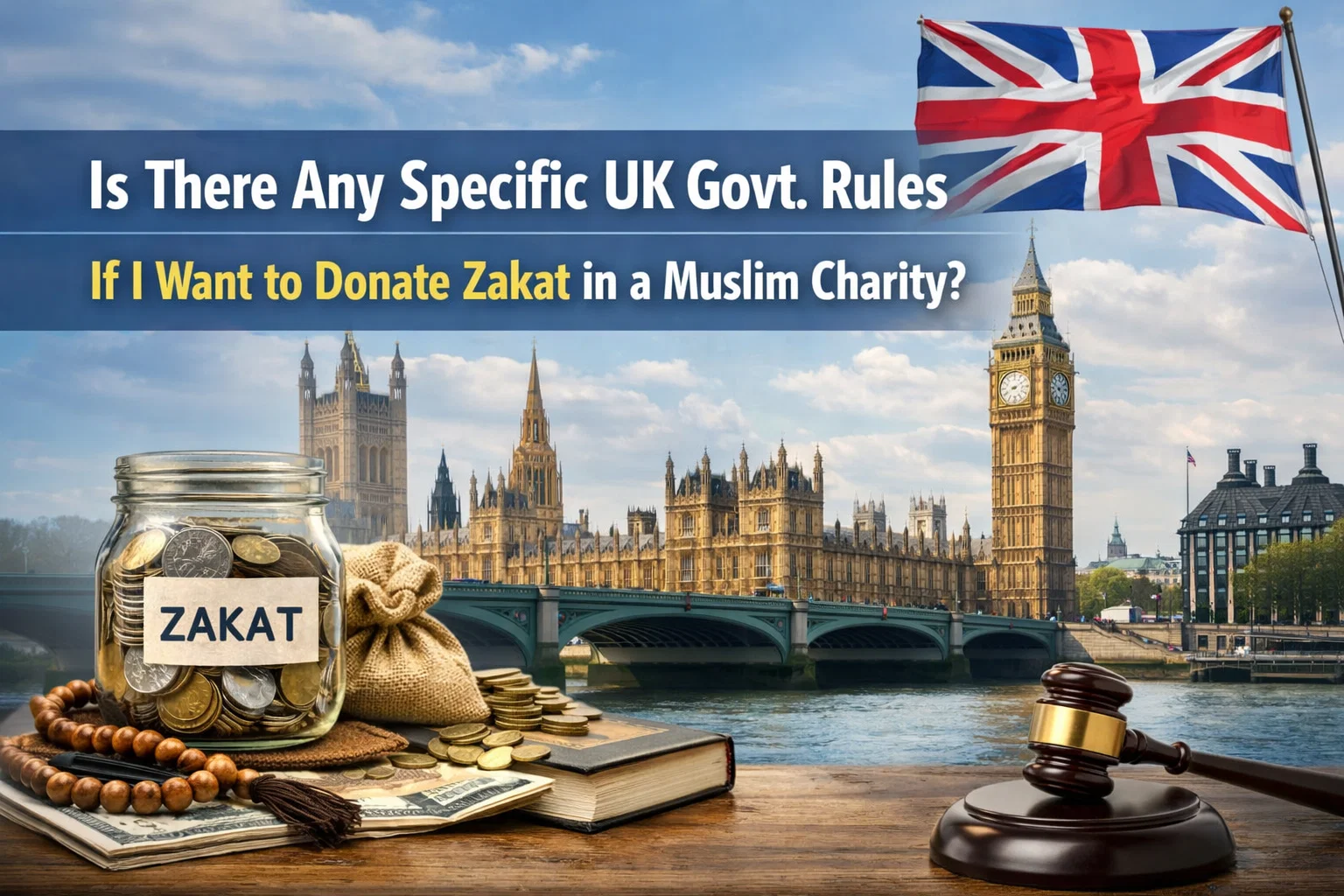
UK-based charities that accept Zakat must be registered with the Charity Commission, ensuring transparency and adherence to anti-money laundering and counter-terrorism laws. Moreover, these charities must follow Islamic guidelines for Zakat distribution, ensuring that your Zakat reaches those who are eligible under Surah At-Tawbah (9:60), and the funds are used properly.
This article will guide you through the rules and best practices for donating Zakat in the UK, ensuring that your donation supports the right causes and complies with both UK charity regulations and Islamic principles.
UK Charity Law Applies Equally to All Charities
When you donate to a Muslim charity in the UK, it’s crucial to understand that all charitable organizations, regardless of their religious or cultural background, are subject to the same UK charity laws. These laws ensure that charities operate with full transparency, accountability, and integrity. While Muslim charities may have specific guidelines for distributing funds like Zakat, the fundamental legal requirements they must follow are consistent with any other charity registered in the UK.
Charity Registration with the Charity Commission
The first thing to check when donating to any charity, including Muslim charities, is whether the organization is registered with the Charity Commission for England and Wales. The Charity Commission regulates all UK charities, ensuring they meet the required standards for governance and financial management.
- Why is this important? A registered charity must provide annual financial reports, adhere to strict governance rules, and comply with laws on money laundering and counter-terrorism financing. This is especially important when dealing with Zakat donations, as donors need assurance that their contributions are used for charitable purposes, and not for illegal activities.
- What happens if the charity is not registered? A charity that is not registered with the Charity Commission cannot legally operate in the UK as a charity. It may not be able to offer gift aid or fulfill the rigorous standards set out by UK law for the transparency of donations. If a charity doesn’t meet the required standards, it risks being delisted or penalized.
Zakat and Sadaqah Fund Separation
Muslim charities must follow Shariah principles for distributing Zakat and Sadaqah. The UK government does not have separate rules for Zakat donations, but charities must maintain clear financial separation between Zakat and Sadaqah funds. This is to ensure that Zakat is distributed according to Islamic guidelines, such as supporting those who fall under the categories outlined in Surah At-Tawbah (9:60).
- What the Law Says: UK charity law stipulates that the use of funds must be clearly documented and reported. Muslim charities must ensure that Zakat funds are used exclusively for eligible recipients, and not for non-Zakat related purposes. Failure to do so can result in legal consequences, as the funds would be misused, violating both UK law and Islamic teachings.
Anti-Money Laundering (AML) & Counter-Terrorism Legislation
UK charities, including those that accept Zakat, must adhere to strict anti-money laundering (AML) and counter-terrorism financing (CTF) laws. The Terrorism Act 2000 and the Proceeds of Crime Act 2002 impose significant responsibilities on charities to ensure they are not being exploited to fund criminal activities.
- Why This Matters for Zakat Donations: Given that Zakat funds can sometimes involve large sums of money, it’s important that Muslim charities implement measures to monitor and verify donors and recipients. Charities must ensure that donations, including Zakat, are not diverted for unlawful purposes, and they should regularly audit their operations to ensure compliance with UK law and Shariah standards.
- How Charities Comply: Muslim charities that accept Zakat donations must carry out Know Your Customer (KYC) procedures for donors. This ensures that the funds are coming from legitimate sources and are being sent to recipients who meet the Zakat eligibility criteria. A charity that complies with AML and CTF regulations will have transparent financial audits and donor verification processes.
Gift Aid and Tax Benefits for UK Donors
One of the main advantages of donating to a UK-registered charity is the ability to claim Gift Aid. This is a tax relief that allows charities to claim back 25% of the donation from HMRC (Her Majesty’s Revenue and Customs). However, there are certain conditions that Muslim charities must meet to ensure that Zakat donations are eligible for Gift Aid.
- Key Condition: To claim Gift Aid on a donation, the donor must be a taxpayer in the UK. The charity must also be registered with the Charity Commission and provide a clear breakdown of how donations are being spent. If a Muslim charity does not meet these conditions, the donor will not be able to claim Gift Aid.
- Gift Aid and Zakat: While Zakat is a form of obligatory charity, it cannot be used directly to claim Gift Aid. However, Sadaqah (voluntary charity) can be eligible for Gift Aid, provided the conditions are met. This means Muslim charities must clearly separate Zakat and Sadaqah funds in their financial reports to ensure that the voluntary donations can benefit from Gift Aid.
Public Accountability and Annual Reporting
UK charity law demands that all registered charities, including Muslim charities accepting Zakat, provide an annual report to the Charity Commission. This report must detail how funds have been spent, including the allocation of Zakat donations.
- Transparency Requirements: This report ensures that donors can track how their donations, including Zakat, are used. Muslim charities must make sure that they disclose the full allocation of Zakat funds, ensuring they comply with Shariah principles while maintaining public trust.
Is Donating Zakat or Sadaqah Legal in the UK?
When it comes to donating Zakat or Sadaqah in the UK, both types of charitable giving are perfectly legal and widely encouraged within both the Islamic community and broader society. The UK’s legal framework supports charitable giving, including donations for religious purposes, and as long as these donations comply with UK charity law, they can be accepted by Muslim charities and used appropriately.
Zakat is one of the Five Pillars of Islam, making it a compulsory act of giving for Muslims. In the UK, Muslim charities are allowed to collect Zakat donations and distribute them in accordance with Islamic guidelines, as long as they meet all the necessary legal requirements set by the UK charity laws.
Sadaqah, unlike Zakat, is a voluntary form of charity that Muslims can give at any time. Sadaqah can be donated for a wide range of causes, including building hospitals, providing education, or helping those in need. The UK government recognizes Sadaqah as legal under the same charitable giving laws as other forms of charity.