A Crisis of Unprecedented Scale
The numbers are almost impossible to comprehend. According to Gaza’s Ministry of Social Development, Gaza orphans 2026 now number 64,616 children. This figure has nearly quadrupled since the conflict began. Most of these children lost their fathers – the primary breadwinners for Palestinian families.
Among these orphans, 55,157 children lost their provider during the war. They face not only emotional devastation but economic catastrophe. Without a father’s income, families plunge into poverty almost overnight. The scale of this tragedy has no modern parallel.
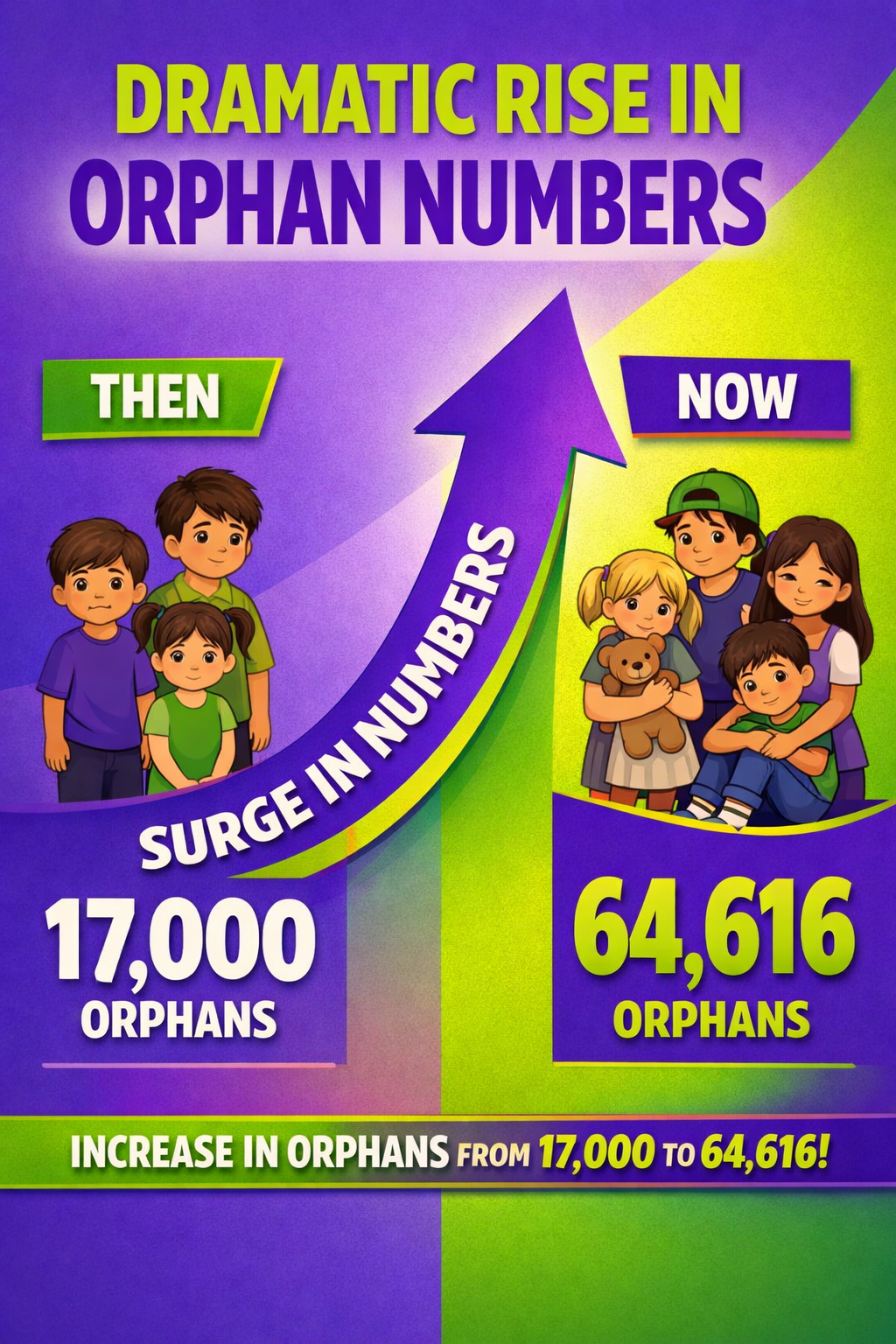
International observers call it the world’s largest orphan crisis proportionally. Al Jazeera has described it as unprecedented in modern history. The speed at which these numbers have grown shocks even experienced humanitarian workers.
Where Are Gaza’s Orphans Now?
Orphans in Gaza are scattered across the devastated coastal territory. Many live in overcrowded displacement camps. Some shelter in damaged buildings. Others stay with extended family members who are already struggling themselves.
The Gaza Governorate recorded the highest percentage of orphans. This area alone has 21,125 orphaned children – approximately 32.7% of the total. Khan Younis and Rafah also host significant numbers. Wherever you look, the pattern repeats. Children without parents, struggling to survive.
Learn how you can help by reading our pillar page “Sponsor an Orphan in Gaza: Transform a Life Today”]
The Tent Cities
More than two million people remain displaced within Gaza. Most shelter in makeshift tents along beaches and in camps. These flimsy structures offer little protection from the elements. Winter storms have destroyed many tents entirely. Some orphans have now lost their shelter multiple times.
The conditions in these camps are harrowing. Families crowd into small spaces. Privacy is non-existent. Sanitation facilities are overwhelmed. Disease spreads rapidly in such environments. For orphaned children without adult protection, these conditions are especially dangerous.
Resource: Read IRC’s report on Gaza’s humanitarian situation
The Hidden Crisis: Unaccompanied Children
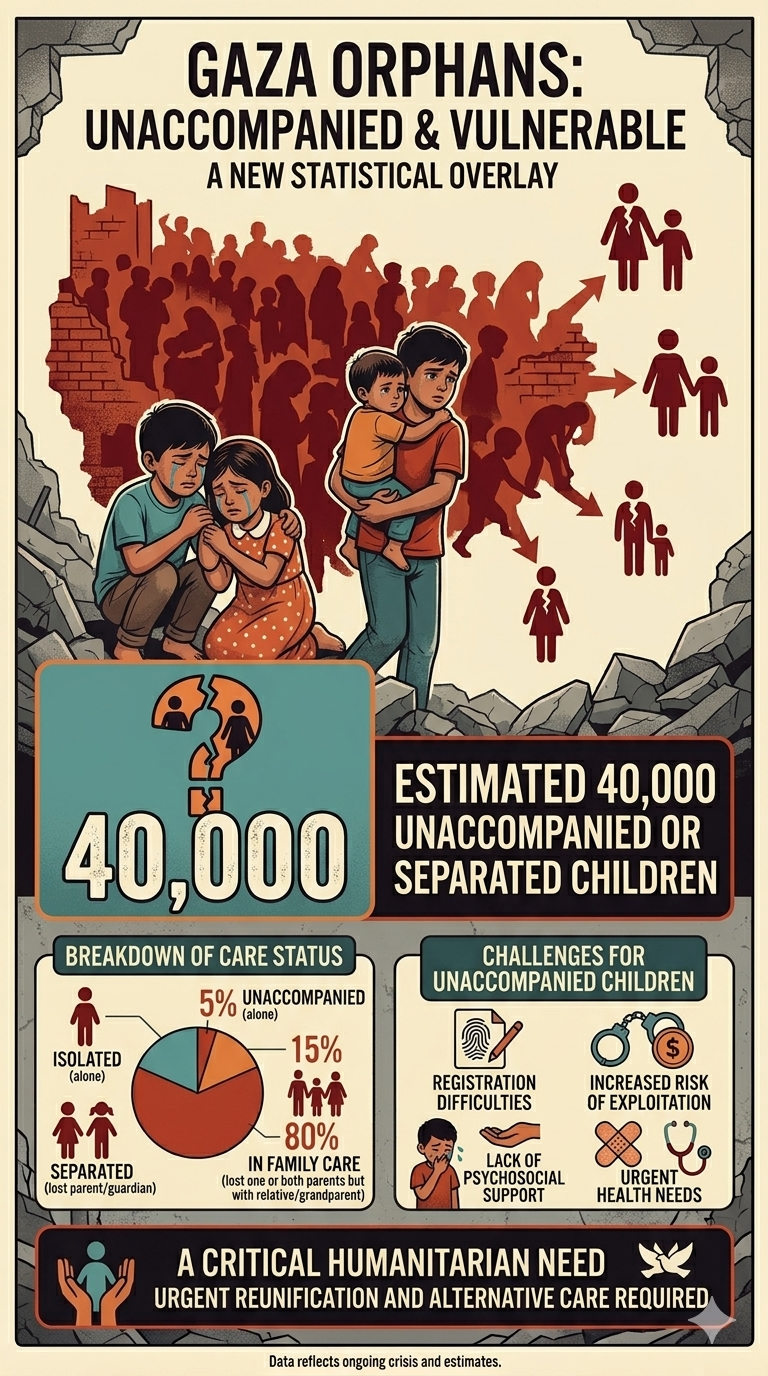
Perhaps the most heartbreaking statistic concerns unaccompanied children. UNICEF estimates that 17,000 children in Gaza are unaccompanied or separated from their families. These children have no adult to care for them. They are entirely alone.
The term “WCNSF” has entered humanitarian vocabulary. It stands for “Wounded Child, No Surviving Family.” These children have lost everyone. They have no parents, no siblings, no extended family to claim them. The psychological impact defies description.
Humanitarian organisations struggle to track these children. Some are too young to know their own names. Others are too traumatised to speak. UNICEF works to reunite separated children with relatives. But for many, no family members remain alive.
The Widowed Mothers of Gaza
Behind every orphan is often a widowed mother trying desperately to cope. According to authorities, more than 16,000 women have been widowed in Gaza. These mothers now bear sole responsibility for their children’s survival.
The challenges they face are immense. Many have never worked outside the home. They lack skills, resources, and support networks. In Gaza’s devastated economy, jobs are scarce. Even those with qualifications struggle to find work.
A Mother’s Struggle
One widow, Ibtisam Ghalia, described her reality to The Guardian. She and her four children live on the brink of starvation. With no income and limited aid, she cannot provide basic necessities. Her story is repeated across thousands of households.
Another widow told Middle East Eye: “When will Baba come back?” Her young son asks this question every day. She has no answer for him. The pain of loss combines with the stress of survival. These mothers need support as urgently as their children.
Resources: Read about Gaza’s widows and orphans in Middle East Eye]
Living Conditions in 2026
The physical conditions facing Gaza orphans 2026 are appalling. Infrastructure across the territory lies in ruins. Water systems, electricity networks, and sewage treatment plants have been destroyed. Children live among rubble and contamination.
Winter’s Cruel Impact
The winter of 2025-2026 brought new suffering. Storms and freezing temperatures killed at least five displaced Palestinians. Among them was a one-year-old boy who died of hypothermia. Strong winds caused walls to collapse onto tents. There was nowhere safe to shelter.
Save the Children reported that children in Gaza are being killed by collapsing buildings and freezing cold. Tents meant to protect families from the elements have failed. Aid restrictions prevent families from reinforcing their shelters. More storms continue to threaten.
The Summer Ahead
As temperatures rise, new dangers emerge. Heat-related illness, dehydration, and disease threaten children’s health. Water scarcity becomes even more acute. The lack of functioning healthcare facilities means treatable conditions become fatal. Orphaned children, without adults to advocate for them, are especially vulnerable.
Read about what sponsorship provides in “Where Your £35 Goes: A Breakdown of Orphan Care
Healthcare Challenges
Gaza’s healthcare system has collapsed. Hospitals have been destroyed or are barely functioning. Medical supplies run dangerously low. For orphans in Gaza, accessing healthcare is nearly impossible.
Children suffer from untreated injuries, chronic illnesses, and psychological trauma. Many have disabilities that require ongoing care. Without sponsorship or family support, they cannot access the treatment they need. Some conditions worsen daily due to lack of care.
Mental health support is equally scarce. The psychological trauma these children carry is profound. Many have witnessed the deaths of family members. They suffer nightmares, anxiety, and depression. Without intervention, these wounds will last a lifetime.
Food Insecurity and Malnutrition
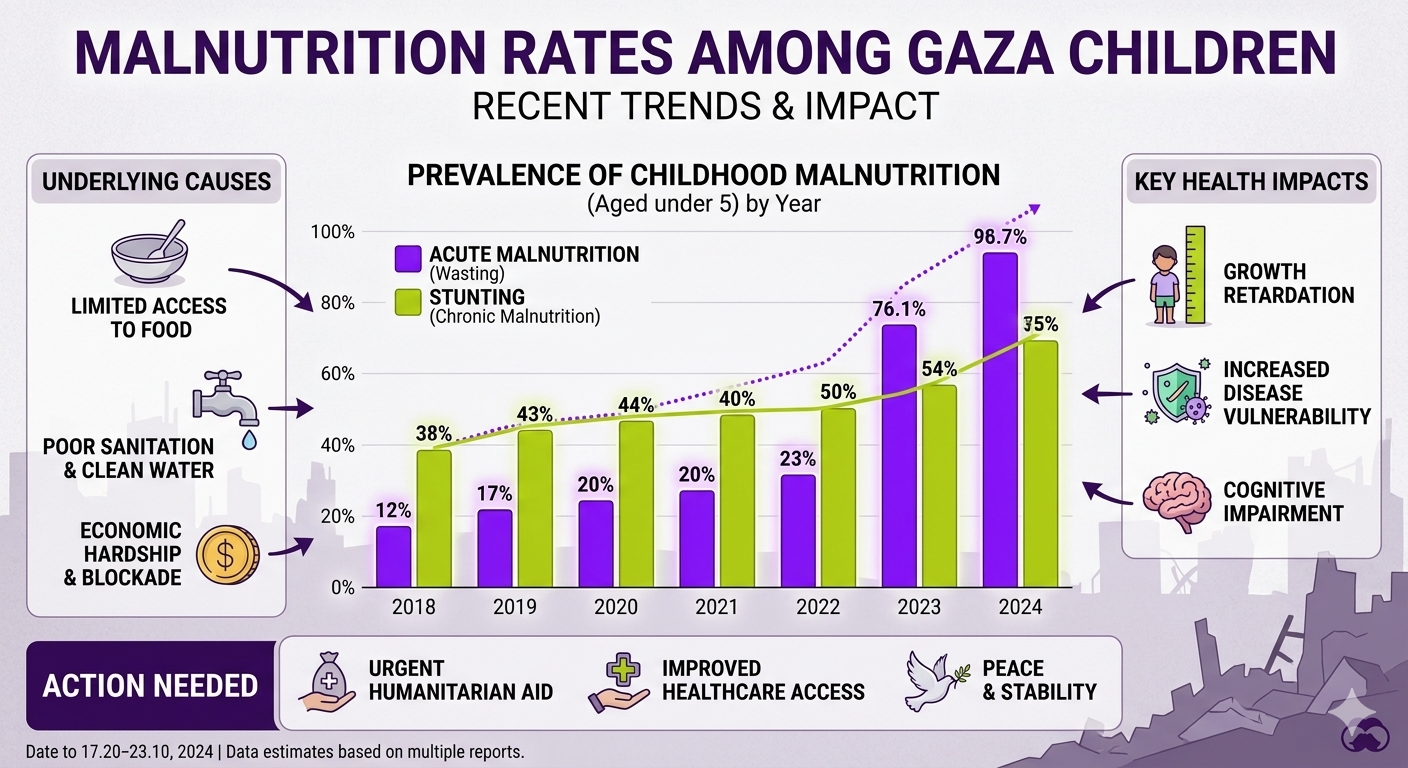
Hunger stalks Gaza orphans 2026. Four out of five children in Gaza entered 2026 facing catastrophic levels of hunger. The figures from Save the Children paint a grim picture. Malnutrition stunts growth, damages organs, and impairs brain development.
For orphaned children, the situation is worse. Without a provider, they depend entirely on aid distributions. These are often irregular and insufficient. Some children eat only one meal a day. Others go longer without food. The long-term health consequences will persist for decades.
Education Disrupted
Education offers hope for the future. But for orphans in Gaza, school is often a distant memory. According to UNICEF, more than 64,000 children have been killed or injured. Homes, hospitals, and schools have been destroyed.
Those schools that remain standing often serve as shelters. Classrooms are packed with displaced families. Learning spaces have disappeared. Teachers are among the casualties. The educational infrastructure lies in ruins.
Orphaned children face additional barriers. Without parents to pay for supplies, they cannot attend even informal classes. Without adults to ensure they attend, many simply stop going. A generation risks losing their education entirely.
Learn about education’s impact in “The Impact of Education: Sponsoring a Gaza Student
The Regional Breakdown
Understanding where orphans in Gaza are located helps target assistance. The Ministry of Social Development has provided detailed figures:
Gaza Governorate
- 21,125 orphaned children (32.7% of total)
- Highest concentration in the territory
- Severe infrastructure damage
- Limited access to services
Khan Younis
- Significant orphan population
- Major displacement camp locations
- Ongoing humanitarian operations
Rafah
- Previously hosted large displacement camps
- Many families displaced multiple times
- Infrastructure heavily damaged
Northern Gaza
- Extreme isolation and deprivation
- Limited humanitarian access
- Children cut off from services
Each area presents unique challenges. Sponsoring organisations must navigate access restrictions, security concerns, and logistical barriers. Your support enables this vital work.
What Happens Without Help?
The consequences of inaction are severe. Gaza orphans 2026 face multiple threats without intervention:
Exploitation and Abuse
Unaccompanied children are vulnerable to exploitation. Without adult protection, they face higher risks of abuse, trafficking, and forced labour. Some may be recruited by armed groups. Others fall victim to criminal networks. The dangers are real and immediate.
Child Labour
Desperate to survive, some orphans enter the workforce. In Gaza’s devastated economy, this often means dangerous or exploitative work. Children work in construction, salvage operations, and informal trading. They sacrifice education and childhood for survival.
Early Marriage
For orphaned girls, early marriage may seem like the only option. Families struggling financially may marry daughters early. This protects them in some ways but ends their education and childhood. The long-term consequences affect entire communities.
Lost Potential
Every orphan who lacks support represents lost potential. These children could become doctors, teachers, engineers, and leaders. Without intervention, they become statistics instead. The generational impact of this crisis will last for decades.
Learn about ongoing support in “How to Support Gaza’s Children After Ramadan Ends
Signs of Hope Amidst Devastation
Despite the overwhelming challenges, hope persists. Humanitarian organisations continue their work. Local communities support orphaned children. Individual donors like you make a difference every day.
UNICEF has successfully reunited some separated children with family members. Eleven toddlers were recently reunited with their families after medical evacuation. This demonstrates that positive outcomes are possible with sustained effort.
Sponsored children receive consistent support. They attend school, eat regular meals, and access healthcare. Their stories show what intervention can achieve. With your help, more children can experience this transformation.
How You Can Make a Difference
The scale of the crisis can feel overwhelming. But every sponsored child represents a life transformed. When you sponsor an orphan, you provide:
- Regular nutritious meals
- Access to education
- Healthcare and medical treatment
- Psychological support
- Safe shelter and basic necessities
- Hope for the future
Your monthly contribution creates stability in chaos. It tells a child that someone cares. It offers the practical support they desperately need.
Start your journey with our pillar page “Sponsor an Orphan in Gaza: Transform a Life Today“
Take Action Today
The reality for orphans in Gaza is heartbreaking. But it is not hopeless. With your support, these children can rebuild their lives. They can overcome the trauma they have experienced. They can grow into healthy, educated adults.
The need is now. The children are waiting. Will you answer?
FAQ Section
How many orphans are there in Gaza in 2026?
According to Gaza’s Ministry of Social Development, as of April 2026, there are 64,616 orphaned children in Gaza. This represents nearly a fourfold increase since the conflict began. The majority lost their fathers, who were the primary breadwinners.
What is an unaccompanied child?
An unaccompanied child is a minor who has been separated from both parents and is not being cared for by an adult. In Gaza, approximately 17,000 children are estimated to be unaccompanied or separated from their families. These children face the highest risks.
How many widows are there in Gaza?
More than 16,000 women have been widowed in Gaza as a result of the conflict. These widows now bear sole responsibility for caring for their children in extremely difficult circumstances. They need support alongside their orphaned children.
Where do Gaza’s orphans live?
Gaza’s orphans live in various conditions across the territory. Many shelter in displacement camps in makeshift tents. Others stay with extended family members. Some live in damaged buildings. The Gaza Governorate has the highest concentration of orphaned children.
What are the biggest challenges facing Gaza’s orphans?
Gaza’s orphans face multiple challenges including lack of food, shelter, healthcare, and education. They suffer psychological trauma from loss and displacement. Unaccompanied children face additional risks of exploitation and abuse. Without intervention, these challenges compound over time.
Can I really make a difference?
Yes, absolutely. Sponsoring an orphan provides consistent, reliable support that changes a child’s life. Your contribution ensures a child has food, education, healthcare, and someone who cares. Many sponsored children have gone on to successful lives because someone chose to help.