
Summary: what you need to know
An emergency fund is the financial mechanism that separates charities who arrive in the first 72 hours from those who arrive weeks later. It is a pre-positioned reserve — funded by ongoing donations, deployed within hours of a crisis, and replenished through public appeals.
For donors in the UK, supporting an emergency fund — whether through a one-off or monthly gift — is one of the most impactful things you can do. Your money does not sit waiting for a disaster to be newsworthy enough to generate an appeal. It is ready. It moves fast. And in a genuine emergency, speed is everything.
Donate to Your Impact Foundation’s emergency fund UK →
When a 7.7 magnitude earthquake flattened communities in Myanmar in March 2025, aid teams were on the ground within hours. When floods swept through Pakistan, food parcels were moving before the water had fully receded. When the Gaza famine deepened overnight, emergency food kitchens were already operational.
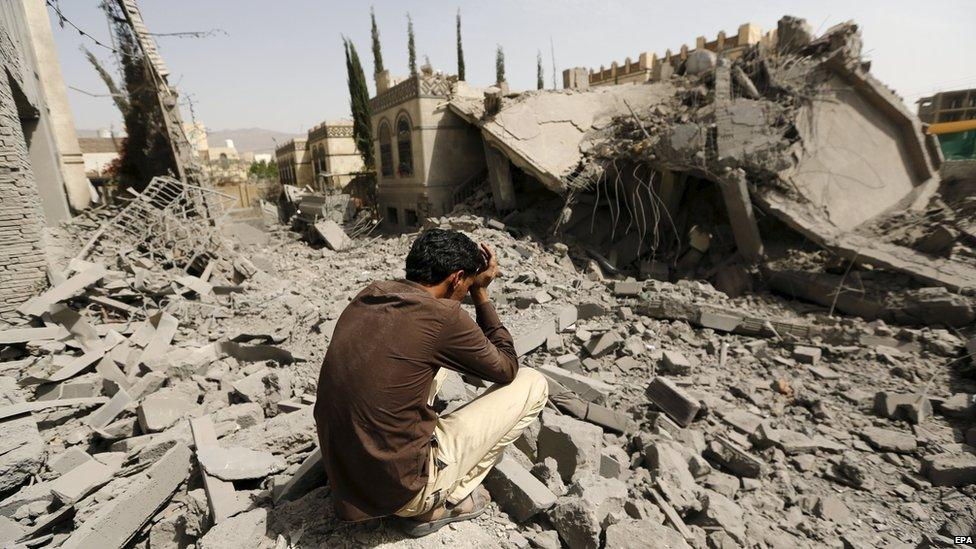
None of that speed happens by accident. It happens because of something most donors have never heard of — the emergency fund.
This article explains exactly what a charity emergency fund is, why it exists, how it works, and why your donation to one is often more powerful than a gift tied to a specific campaign.
What is an emergency fund? The short answer
A charity emergency fund — sometimes called a disaster fund, rapid response fund, or emergency relief fund — is a pot of pre-positioned money that a humanitarian organisation holds in reserve specifically to deploy when a crisis strikes.
Unlike donations raised in response to a specific appeal (which take days or weeks to collect, process, and transfer), emergency fund money is already in the system. It is sitting ready. The moment a disaster is confirmed, the authorisation to release it takes hours — not weeks.
Think of it like a fire station. The firefighters do not wait until a building is on fire to recruit staff, buy equipment, or plan routes. Everything is ready before the call comes. A charity emergency fund works the same way — it is the financial equivalent of keeping the fire engine fuelled and the crew on standby.
Why charities need emergency funds: the problem with reactive fundraising
Most people assume that when a disaster hits, they donate, and the money immediately reaches survivors. In reality, the process is far more complex — and far slower — than that.
Here is what actually happens when a disaster strikes and a charity does not have an emergency fund:
- The disaster occurs
- The charity assesses the situation and determines what is needed
- A fundraising appeal is designed, approved, and launched
- Donations begin to come in — slowly at first, then building
- Funds are processed, cleared, and transferred to partners
- Partners receive the money and begin procurement
- Supplies are purchased, transported, and distributed
In the best case, this process takes two to three weeks. In a slow appeal, it can take months.
Meanwhile, the families caught in the disaster are going without food, clean water, shelter, and medical care — right now. In a sudden-onset disaster like an earthquake or flood, the first 72 hours are the most critical. People trapped under rubble, or exposed to contaminated water, or in severe medical shock, cannot wait three weeks for an appeal to gather pace.
In the immediate aftermath of a disaster, aid teams rely on disaster funds to launch an emergency response and get critical help to people as soon as possible. Without a pre-funded emergency reserve, the gap between disaster and response costs lives.
Flexible funding enables humanitarian organisations to respond up to 40% faster to sudden-onset emergencies compared to restricted funding mechanisms. That is not a marginal improvement. In a crisis, 40% faster can mean the difference between reaching families before starvation sets in — or arriving too late.
How a charity emergency fund works in practice
The mechanics vary between organisations, but the core principle is the same. Here is how Your Impact Foundation’s emergency fund operates:
Step 1 — Pre-positioning funds Donations made to the emergency fund are held in reserve — not tied to a specific country or crisis type. This unrestricted status is what gives the fund its speed and flexibility.
Step 2 — Crisis confirmation When a disaster breaks — an earthquake, a famine escalation, a conflict displacement, a flood — our team assesses the scale, location, and type of need within hours.
Step 3 — Fund activation Within hours of a confirmed crisis, we release emergency funds to our trusted on-the-ground partners. These partners already have distribution infrastructure, verified supplier relationships, and existing community trust. They do not need to build from scratch.
Step 4 — Immediate deployment Food packs move. Medicine trucks are loaded. Community kitchens are activated. Families receive aid — typically within 72 hours of the crisis breaking.
Step 5 — Public appeal launch While the emergency response is already underway, we launch a public fundraising appeal to replenish the fund and scale up the response. Donors give knowing that aid is already flowing — not that it is yet to begin.
This model means the emergency fund is never truly empty. It is a revolving reservoir — deployed fast, replenished through public generosity, and ready again for the next crisis.
What makes a good charity emergency fund? Four things to look for
Not all emergency funds operate the same way. If you are deciding where to direct your emergency fund donation, here are the four characteristics that separate effective funds from ineffective ones:
1. Speed of deployment
The best emergency funds can release money within 24 to 72 hours of a crisis being confirmed. IFRC-DREF requests can be approved within 24 hours and disbursed in less than 72 hours — a standard that reflects what genuine rapid response looks like. When evaluating a charity, ask: how quickly does your emergency fund actually reach people?
2. Pre-established partner networks
Speed without infrastructure is meaningless. Lifesaving emergency work is made possible because generous individuals give to emergency funds and crisis appeals, ensuring charities can respond immediately to disasters — but only when those charities already have teams, partners, and supply chains in place. An emergency fund held by a charity with no existing on-the-ground presence will still take weeks to translate into real aid.
3. Unrestricted, flexible use
Unrestricted funding — sometimes called ‘where most needed’ giving — allows humanitarian organisations to direct resources to the areas of greatest urgency, cover underfunded crises that don’t receive media attention, and reduce administrative burden so more resources reach beneficiaries. An emergency fund should not be restricted to a single country or crisis type. The next disaster is never predictable.
4. Full transparency and accountability
Emergency appeal funds are usually restricted to the purposes set out in the appeal, and charities must use them only for those stated purposes and keep donors informed of any changes. A trustworthy emergency fund comes with clear reporting: where money went, what it purchased, and how many people it reached. Your Impact Foundation publishes full impact reports on every emergency response and holds UK Charity Commission registration (No. 1192710), ensuring complete accountability.
Emergency funds vs. emergency appeals: what is the difference?
These two terms are often confused. Here is the distinction:
| Facts | Emergency fund | Emergency appeal |
|---|---|---|
| When it exists | Before a crisis — ongoing reserve | After a crisis — launched in response |
| How it is funded | Ongoing donations from supporters | One-off public fundraising campaign |
| Speed | Hours | Days to weeks |
| Flexibility | Any crisis, any location | Specific disaster only |
| Best for | First 72 hours — immediate response | Scaling up the response over weeks and months |
Both matter. The emergency fund saves lives in the critical first window. The emergency appeal funds the sustained, longer-term response. A well-run charity uses both — and uses them in sequence.
DEC member charities know very quickly how much money they can expect from appeals, and this helps them rapidly build up a large-scale response. They do not have to submit plans or applications before using DEC funds because they have already shown they work to the highest standards. This is the power of combining a pre-funded emergency reserve with a rapid public appeal.
The crises where emergency funds have made the difference
Gaza famine emergency
The humanitarian crisis in Gaza represents one of the most severe tests of emergency response infrastructure in recent years. When famine conditions escalated rapidly, the need was not for a new fundraising campaign to be planned and launched — it was for food to move immediately.

Your Impact Foundation’s emergency fund enabled us to activate our Gaza partners within hours of escalation confirmation, delivering emergency food packs and hot meals through community kitchens before a public appeal had raised a single pound. The appeal that followed scaled what was already working — it did not start from zero.
If you want to support the ongoing Gaza emergency, you can donate to our Gaza famine appeal here.
Yemen — a decade-long crisis requiring sustained readiness
Yemen has been in humanitarian crisis for over a decade. The nature of protracted crises like Yemen is that need does not arrive in a single dramatic wave — it builds, intensifies, and fluctuates. An emergency fund allows organisations to respond to escalations within an ongoing crisis without waiting for public attention to spike. When a surge in acute malnutrition was reported in a particular region of Yemen, our emergency fund allowed us to redirect food aid within days — no new appeal required.
Syria, Sudan, and natural disasters
From Syria to Sudan to Pakistan earthquake response, the pattern repeats: no one knows when or where the next disaster will happen, or whether it will be a flood, earthquake or a famine — which is why a monthly donation, no matter the amount, helps ensure teams are ready to act. Emergency funds are the practical mechanism that turns that readiness into reality.
Why monthly donations are the most powerful way to support emergency relief
One-off donations to a specific appeal are valuable. But a regular monthly donation to an emergency fund is often more powerful — and here is why:
Predictability enables pre-positioning. When a charity knows it will receive £10,000 next month, it can negotiate supplier contracts, maintain partner relationships, and pre-position supplies in high-risk regions. One-off donations arrive unpredictably and cannot be planned around.
Monthly giving replenishes the fund continuously. Every time the emergency fund is deployed, it needs replenishing. Monthly donors are the mechanism that keeps it filled — not just after a high-profile disaster, but during the “quiet” periods when forgotten crises continue to unfold.
It covers crises that do not make headlines. Major disasters attract public attention and emergency appeals. But dozens of slow-burning crises — in Sudan, in the Sahel, in parts of Asia — receive little media coverage and therefore generate little appeal income. Emergency fund donations reach these people too.
The compounding effect. A monthly donor who gives £15 per month provides £180 per year — enough to fund emergency food for several families. Over five years, that same donor has contributed £900 to emergency relief, potentially reaching dozens of families across multiple crises they will never even hear about.
If you are a UK taxpayer, adding Gift Aid to your donation means we can claim an additional 25p for every £1 you give — at no extra cost to you. A £15 monthly gift becomes £18.75 of emergency aid automatically.
Set up a regular emergency fund donation here.
Are emergency fund donations Zakat-eligible?
Yes — in many cases, emergency fund donations are fully permissible as Zakat, provided the fund is directed to people who meet the Islamic criteria for Zakat recipients.
The populations most served by humanitarian emergency funds — displaced families in Gaza, Yemen, Sudan, and Syria; people who have lost their homes, income, and livelihoods to conflict or disaster — are overwhelmingly among the poor and destitute (fuqara and masakeen) who are the primary categories of eligible Zakat recipients.
Your Impact Foundation distributes Zakat in a fully Shariah-compliant manner, with 100% of Zakat donations reaching eligible individuals. Our emergency fund distributions in active crisis zones are Zakat-eligible, and we maintain full transparency on how and where Zakat is directed.
Emergency fund donations can also be made as Sadaqah — voluntary charity — or as Sadaqah Jariyah, ongoing charity that continues to benefit others. Contributions that fund community kitchens, clean water projects, or long-term nutritional programmes all carry the potential for ongoing reward.
Learn more about giving Zakat through Your Impact Foundation.
How to donate to an emergency fund in the UK
If you want to make an emergency fund donation or give emergency relief donations that are ready to deploy the moment a crisis strikes, here are the steps:
1. Choose a registered UK charity. Look for Charity Commission registration — for Your Impact Foundation, that is No. 1192710. Registration is the baseline guarantee of accountability and legal compliance.
2. Look for on-the-ground presence. The fund is only as fast as the partners holding it. Your Impact Foundation works exclusively through verified local partners with existing operational infrastructure in crisis zones.
3. Give unrestricted or to the emergency fund specifically. Designating your donation to the emergency fund — rather than to a specific country or appeal — gives the charity maximum flexibility to direct your money where the need is greatest.
4. Consider a monthly gift. As described above, regular giving is the most powerful way to sustain emergency readiness over time. Even £5 per month makes a meaningful contribution.
5. Add Gift Aid. If you are a UK taxpayer, Gift Aid increases the value of your donation by 25% at no cost to you.
Donate to Your Impact Foundation’s emergency aid fund today.
Frequently asked questions
What is a charity emergency fund?
A charity emergency fund is a pre-positioned financial reserve held by a humanitarian organisation specifically to fund immediate disaster response. Unlike appeal-based fundraising, which takes days or weeks to gather, emergency fund money is already available and can be deployed within hours of a crisis being confirmed.
Why do charities need emergency funds rather than just running appeals?
Because the most critical window in any disaster — the first 72 hours — cannot wait for an appeal to generate income. Pre-funded emergency reserves allow charities to put food, medicine, and shelter in motion immediately, saving lives that would otherwise be lost in the gap between disaster and fundraised response.
What is the difference between an emergency fund and an emergency appeal?
An emergency fund is a standing reserve that exists before any specific crisis. An emergency appeal is a fundraising campaign launched after a disaster to fund the ongoing and scaled-up response. Both serve different purposes: the fund covers the immediate window; the appeal covers the sustained response.
Are emergency fund donations Zakat-eligible?
Yes, where the fund is directed to populations that meet the Islamic criteria for Zakat recipients — which includes displaced, impoverished, and food-insecure families in Gaza, Yemen, Sudan, Syria, and similar crisis zones. Your Impact Foundation distributes all Zakat in a fully Shariah-compliant manner.
How quickly does an emergency fund donation reach people in need?
Through Your Impact Foundation’s emergency fund, our target is to have aid on the ground within 72 hours of a crisis being confirmed. This is made possible by our pre-established local partner network, which means we scale existing operations rather than building new ones from scratch.
Is a monthly donation to an emergency fund better than a one-off donation?
Both help. But a monthly donation is often more impactful because it provides predictable income that allows pre-positioning of supplies, sustained readiness during quiet periods, and coverage of crises that do not attract high-profile appeal donations.
How do I know my emergency fund donation is being used properly?
Your Impact Foundation is registered with the Charity Commission (No. 1192710), publishes impact reports for all emergency responses, and operates under full financial transparency. Every emergency deployment is tracked and reported.
Your Impact Foundation is a UK-registered charity (No. 1192710) delivering rapid emergency response across Gaza, Yemen, Syria, Sudan, Pakistan, and beyond. All Zakat is distributed in a fully Shariah-compliant manner with 100% reaching eligible recipients.