Quick Answer: Key Differences
What is the difference between Zakat and Sadaqah and Lillah? Zakat is obligatory charity (2.5% of qualifying wealth) that every eligible Muslim must pay annually. Sadaqah is voluntary charity given at any time, in any amount, to please Allah. Lillah means “for Allah” and refers to donations given specifically for religious causes like mosques, Islamic schools, or Quran distribution. Understanding these differences ensures Muslims fulfil their religious obligations correctly and maximise their spiritual rewards through appropriate giving.
The distinction between Zakat vs Sadaqah vs Lillah has significant implications for how Muslims structure their charitable giving. Each type of charity carries different rules, intentions, and purposes. This comprehensive guide explains what is Lillah, defines Sadaqah, clarifies Zakat requirements, and helps you understand which type of giving applies to different situations—ensuring your charity reaches its intended recipients in the correct manner.
What is Zakat? Definition and Meaning
Zakat Definition
Zakat is the third pillar of Islam and represents obligatory charity that every financially capable Muslim must pay. The word “Zakat” comes from the Arabic root “zaka,” meaning “to purify,” “to grow,” or “to increase.” This purification refers to both the cleansing of wealth and the spiritual growth of the giver.
Zakat Definition in Islamic Terms: Zakat is the compulsory giving of a set proportion (2.5%) of one’s wealth to those in need, provided the wealth exceeds the Nisab threshold and has been held for one lunar year (Hawl). It is an act of worship, not merely a tax or social welfare contribution.
Who Must Pay Zakat?
Zakat becomes obligatory when a Muslim meets the following conditions:
1. Being Muslim Only Muslims are obligated to pay Zakat, as it is an act of Islamic worship.
2. Sanity and Adulthood The person must be of sound mind and have reached puberty. However, children with significant wealth have Zakat due on their assets, which guardians pay on their behalf.
3. Possessing Nisab The person must possess wealth equal to or exceeding the Nisab threshold. Current Nisab values (May 2026):
| Standard | Amount | Approximate GBP Value |
|---|---|---|
| Silver Nisab | 595 grams | £430-£460 |
| Gold Nisab | 85 grams | £5,500-£6,000 |
4. Holding Period (Hawl) The wealth must have been in your possession for one complete lunar year (approximately 354 days).
What Wealth is Subject to Zakat?
Zakat applies to:
- Cash and savings – Money in bank accounts, cash at home
- Gold and silver – Jewellery, coins, bullion
- Investments – Stocks, shares, bonds, cryptocurrencies
- Business inventory – Trade goods and merchandise
- Livestock – Cows, camels, sheep (for farmers)
- Agricultural produce – Crops and harvests
Zakat Recipients: The Eight Categories
The Quran specifies eight categories of people eligible to receive Zakat (Surah At-Tawbah 9:60):
- The poor (Fuqara) – Those with no means to support themselves
- The needy (Masakin) – Those with insufficient means
- Zakat administrators – Those employed to collect and distribute Zakat
- Those whose hearts are to be reconciled – New Muslims or those inclined toward Islam
- Those in bondage – Slaves and captives seeking freedom
- Those in debt – People unable to pay legitimate debts
- In the cause of Allah – Those striving for religious purposes
- Wayfarers – Travelers stranded without resources
Can Zakat Be Given to Any Cause?
No. Zakat cannot be given to just any charitable cause. It must be given to eligible recipients from the eight categories. This is a critical difference between Zakat and Sadaqah—Zakat has strict rules about who can receive it, while Sadaqah can be given to anyone in need.
Zakat Cannot Be Given To:
- Your parents, grandparents, or children
- Your spouse
- Non-Muslims (majority opinion)
- Institutions that don’t qualify (general charities not serving the eight categories)
- Mosque construction (majority opinion)
- Funeral expenses
What is Sadaqah? Definition and Meaning
Sadaqah Definition
Sadaqah refers to voluntary charity given freely to please Allah and help those in need. Unlike Zakat, Sadaqah has no fixed amount, no specific time requirement, and can be given to any person or cause in need.
Sadaqah Definition in Islamic Terms: Sadaqah is any act of giving—whether money, goods, time, or kindness—offered voluntarily to seek Allah’s pleasure and benefit others. It purifies the soul, protects from calamity, and brings immense spiritual rewards.
Types of Sadaqah
Sadaqah encompasses a broad range of charitable acts:
Monetary Sadaqah:
- Giving money to the poor and needy
- Donating to humanitarian causes
- Supporting orphans and widows
- Contributing to food aid programmes
Non-Monetary Sadaqah:
- A smile for your brother
- Removing harm from the road
- Helping someone in need
- Sharing knowledge
- Offering guidance
- Speaking kindly
The Prophet (PBUH) said:
“Every good deed is charity. Verily, it is a good deed to meet your brother with a cheerful face, and to pour what is left from your bucket into the vessel of your brother.” (Tirmidhi)
Sadaqah Jariyah: Ongoing Charity
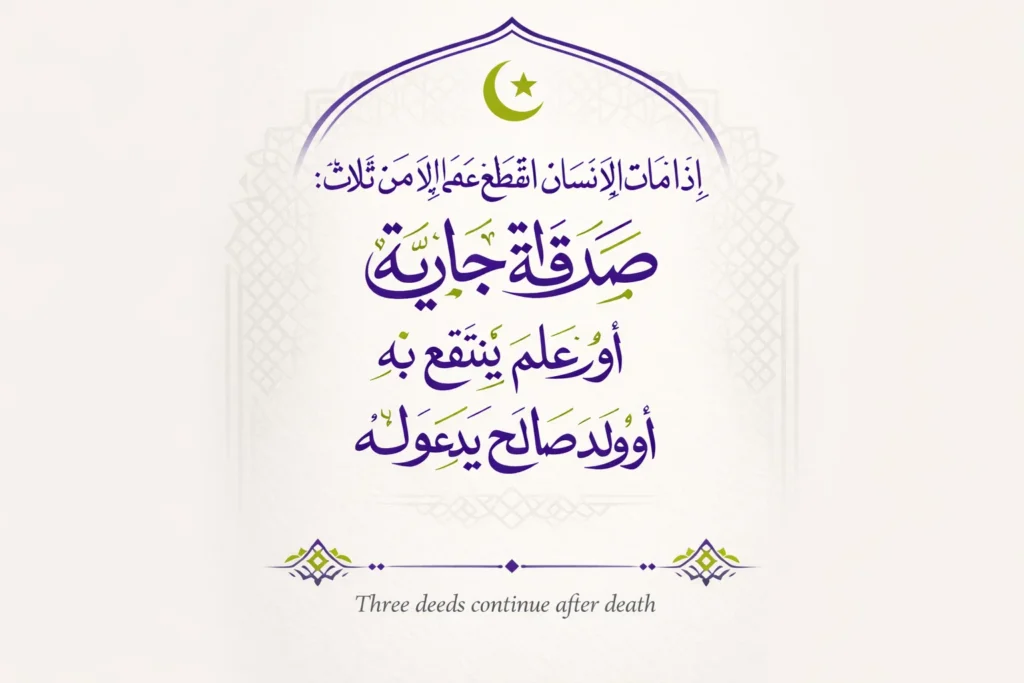
Sadaqah Jariyah is continuous charity that continues to benefit the giver even after death. The Prophet (PBUH) said:
“When a person dies, their deeds end except for three: ongoing charity (Sadaqah Jariyah), knowledge that is benefited from, and a righteous child who prays for them.” (Muslim)
Examples of Sadaqah Jariyah:
- Building a well or water source
- Planting trees
- Building mosques or schools
- Teaching beneficial knowledge
- Sponsoring an orphan
- Funding Quran distribution
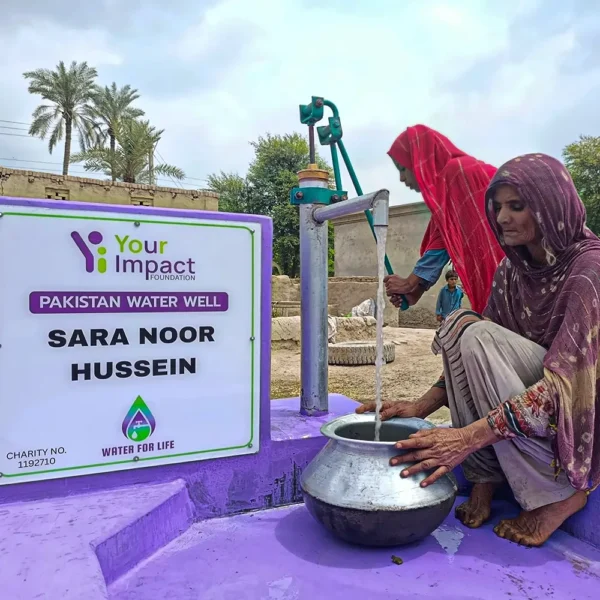
Build a Water Well, Change Lives Forever
One Donation. Clean Water for Life. Give Today. Every two minutes, a child dies from a water-related illness. 2.1 billion people still lack access to safe drinking water. When you build a water well, you provide clean water to an entire community for generations.
Who Can Receive Sadaqah?
Unlike Zakat, Sadaqah can be given to:
- Anyone in need, regardless of religion
- Family members (except those you are already obligated to support)
- Friends and neighbours
- Charitable organisations
- Community projects
- Animal welfare causes
What is Lillah? Meaning and Purpose
Lillah Meaning
Lillah meaning in Arabic is “for Allah” or “for the sake of Allah.” The term “Lillah” (لله) is a contraction of “li-Allah,” where “li” means “for” and “Allah” means “God.” When a donation is designated as Lillah, it means the funds are given specifically for religious causes and institutions dedicated to serving Allah’s cause.
Lillah Definition in Islamic Terms: Lillah refers to voluntary donations given specifically for religious purposes, such as building mosques, funding Islamic schools, printing Quran copies, supporting Islamic centres, or maintaining religious institutions. The intention is purely for Allah’s sake.
What is Lillah Used For?
Lillah donations are typically used for:
- Mosque construction and maintenance – Building new mosques, repairs, utilities
- Islamic education – Madrasas, Islamic schools, educational materials
- Quran distribution – Printing and distributing copies of the Quran
- Islamic centres – Community halls, youth programmes
- Religious events – Islamic conferences, lectures, programmes
- Supporting Islamic scholars – Those who teach and preserve Islamic knowledge
- Burial funds – Muslim cemetery maintenance and funeral costs
Lillah vs Sadaqah
While both are voluntary, there is a distinction:
| Aspect | Lillah | Sadaqah |
|---|---|---|
| Meaning | “For Allah” | “Truth/righteousness” |
| Primary Purpose | Religious causes | General charity |
| Recipients | Mosques, Islamic institutions | Any person in need |
| Focus | Building and maintaining religious infrastructure | Helping individuals |
Can Zakat Be Used for Lillah Purposes?
This is a matter of scholarly debate:
Majority Opinion: Zakat cannot be used for building mosques or general Lillah purposes. Zakat must be given to the eight eligible recipients, and mosque construction does not fall under these categories.
Alternative View: Some scholars allow Zakat to be used for “Fi Sabilillah” (in the cause of Allah), which they interpret to include mosque construction, though this is not the majority opinion.
Recommendation: To fulfil your religious obligations correctly, use separate funds for Lillah (mosques, Islamic centres) and direct Zakat only to eligible recipients from the eight categories.
Zakat vs Sadaqah: Key Differences
Difference Between Zakat and Sadaqah
The difference between Zakat and Sadaqah is fundamental to Islamic charity:
| Aspect | Zakat | Sadaqah |
|---|---|---|
| Status | Obligatory (Fard) | Voluntary (Nafl) |
| Amount | Fixed (2.5% of qualifying wealth) | Any amount |
| Timing | Annual (after Hawl) | Any time |
| Eligibility Required | Must meet Nisab and Hawl | No requirements |
| Recipients | Eight specific categories | Anyone in need |
| Intention | Must intend Zakat | General charity intention |
| Punishment for Not Paying | Sinful to neglect | No sin for not giving |
| Wealth Effect | Purifies remaining wealth | Additional blessing |
Zakat vs Sadaqah Comparison Table
| Question | Zakat Answer | Sadaqah Answer |
|---|---|---|
| Is it compulsory? | Yes, for eligible Muslims | No, entirely voluntary |
| How much to give? | 2.5% of qualifying wealth | Whatever you wish |
| When to give? | Once per lunar year | Anytime, any frequency |
| Who can receive? | 8 specific categories only | Anyone in need |
| Can family receive? | No, not dependants | Yes, extended family |
| Can non-Muslims receive? | Generally no | Yes |
| Is intention required? | Yes, specific intention | General good intention |
| What if I don’t give? | Sinful, must make up | No sin |
Compulsory Charity in Islam vs Voluntary Charity
Compulsory Charity in Islam
Compulsory charity in Islam refers primarily to Zakat—the obligatory annual payment that every eligible Muslim must make. This obligation is established by:
- Quran: “And establish prayer and give Zakat.” (Quran 2:43)
- Sunnah: The Prophet (PBUH) sent collectors to gather Zakat from Muslims
- Consensus: All scholars agree on its obligation
Zakat is a right of the poor in the wealth of the rich. Neglecting it without excuse is a major sin. The caliph Abu Bakr waged war against those who refused to pay Zakat after the Prophet’s death, demonstrating its compulsory nature.
Voluntary Charity in Islam
Voluntary charity in Islam encompasses all giving beyond the obligatory:
Sadaqah: General voluntary charity given to anyone in need, in any amount, at any time.
Lillah: Voluntary donations specifically for religious causes and institutions.
Waqf: Endowment of property or assets for charitable purposes in perpetuity.
Fidyah and Kaffarah: Compensatory payments for missed religious obligations (fasting, broken oaths).
Sadaqah al-Fitr: Charity given at the end of Ramadan before Eid prayer.
Types of Charity in Islam: Complete Overview
| Type | Obligation | Purpose | Recipients |
|---|---|---|---|
| Zakat | Obligatory | Purification, obligation | 8 categories |
| Sadaqah | Voluntary | General charity | Anyone in need |
| Lillah | Voluntary | Religious causes | Mosques, Islamic institutions |
| Sadaqah al-Fitr | Obligatory (Ramadan) | Eid charity | Poor Muslims |
| Fidyah | Compensatory | Missed fasts | Poor Muslims |
| Kaffarah | Compensatory | Broken oaths/sins | Specified recipients |
| Waqf | Voluntary | Ongoing charity | Various causes |
| Sadaqah Jariyah | Voluntary | Continuous reward | Various causes |
How to Calculate and Pay Your Zakat
Zakat Calculation Steps
Step 1: Determine Your Zakatable Assets Add up all qualifying wealth: • Cash in hand and bank accounts • Gold and silver (current market value) • Investments (stocks, shares, crypto) • Business inventory • Money owed to you
Step 2: Deduct Liabilities Subtract: • Immediate debts you owe • Overdue bills and payments • Money you have borrowed
Step 3: Compare to Nisab Check if your net Zakatable assets exceed the Nisab threshold.
Step 4: Calculate 2.5% If above Nisab, calculate 2.5% of your total Zakatable wealth.
Zakat Calculator Example
| Asset | Amount |
|---|---|
| Cash in bank | £15,000 |
| Gold jewellery | £8,000 |
| Stocks and shares | £12,000 |
| Money owed to you | £2,000 |
| Total Assets | £37,000 |
| Less: Debts owed | (£3,000) |
| Net Zakatable Wealth | £34,000 |
| Nisab (silver) | £450 |
| Above Nisab? | ✅ Yes |
| Zakat Due (2.5%) | £850 |
Where to Give Your Charity
Zakat Donation
When giving Zakat, ensure: • The recipient qualifies under one of the eight categories • The organisation distributes Zakat correctly • You make intention that this is Zakat • You receive confirmation for your records
Sadaqah Donation
Sadaqah can be given to: • Humanitarian relief organisations • Food aid programmes • Orphan sponsorship • Medical assistance • Education projects • Any cause benefiting those in need
Lillah Donation
Lillah is best given to: • Local mosque construction or maintenance • Islamic schools and education centres • Quran printing and distribution • Islamic community centres
Frequently Asked Questions
What is the difference between Zakat and Sadaqah?
The main difference between Zakat and Sadaqah is that Zakat is obligatory for all eligible Muslims (2.5% of qualifying wealth annually), while Sadaqah is voluntary charity given at any time in any amount. Zakat has strict rules about who can receive it (eight categories), while Sadaqah can be given to anyone in need.
What is Lillah?
Lillah means “for Allah” and refers to voluntary donations given specifically for religious causes such as mosque construction, Islamic schools, Quran distribution, and maintenance of religious institutions.
Can I give Zakat to build a mosque?
The majority of scholars hold that Zakat cannot be used for mosque construction. Zakat must be given to the eight eligible recipients specified in the Quran. Use Lillah or general Sadaqah for mosque projects.
Can Zakat be given to non-Muslims?
The majority opinion is that Zakat cannot be given to non-Muslims. However, Sadaqah can be given to anyone regardless of religion.
Is Sadaqah compulsory?
No, Sadaqah is entirely voluntary. Unlike Zakat, there is no sin for not giving Sadaqah, though it is highly recommended and brings immense rewards.
What is the Nisab for Zakat?
The Nisab is the minimum threshold of wealth that makes Zakat obligatory. It is currently equivalent to 595 grams of silver (approximately £430-£460) or 85 grams of gold (approximately £5,500-£6,000).
Can I give Sadaqah to my family?
Yes, you can give Sadaqah to extended family members, provided they are not your dependants whom you are already obligated to support (parents, spouse, children).
What is Sadaqah Jariyah?
Sadaqah Jariyah is ongoing charity that continues to benefit the giver even after death. Examples include building wells, planting trees, building mosques, and teaching beneficial knowledge.
How is Lillah different from Sadaqah?
Lillah is specifically for religious causes (mosques, Islamic education), while Sadaqah is general charity that can be given to any person or cause in need.
Do I need to pay Zakat on jewellery?
Yes, gold and silver jewellery are subject to Zakat at 2.5% of their current market value, provided your total wealth exceeds the Nisab threshold.
Make Your Charity Count Today
Understanding the difference between Zakat and Sadaqah and Lillah ensures your charitable giving reaches the right recipients in the correct manner. Zakat purifies your wealth and fulfils your obligation. Sadaqah brings additional blessings and helps those in need. Lillah supports the institutions that serve our faith.
Whether you are calculating your obligatory Zakat, giving voluntary Sadaqah, or contributing Lillah for religious causes, your generosity makes a real difference in the lives of others.
Calculate and pay your Zakat today.
Give Sadaqah to support those in need.
Support humanitarian aid through Your Impact Foundation.
UK Charity No. 1192710 | 100% Donation Policy | Direct Aid Access