Babies in Gaza remain vulnerable to malnutrition, poor dietary diversity, illness and disrupted infant-feeding support. The latest 2026 nutrition data shows why targeted support for infants and mothers remains essential.
If you are looking for baby milk for Gaza, your donation can support emergency nutrition assistance through a dedicated humanitarian programme.
Donate today: Baby Milk for Gaza
Important: Breastfeeding remains the recommended feeding option whenever it is possible and safe. Infant formula is not a universal replacement for breast milk. In emergencies, breast-milk substitutes should be provided only when needed and through appropriate nutrition and health systems.
The Infant Health Emergency in Gaza in 2026
Gaza’s nutrition situation has changed during 2026, but the humanitarian need has not disappeared.
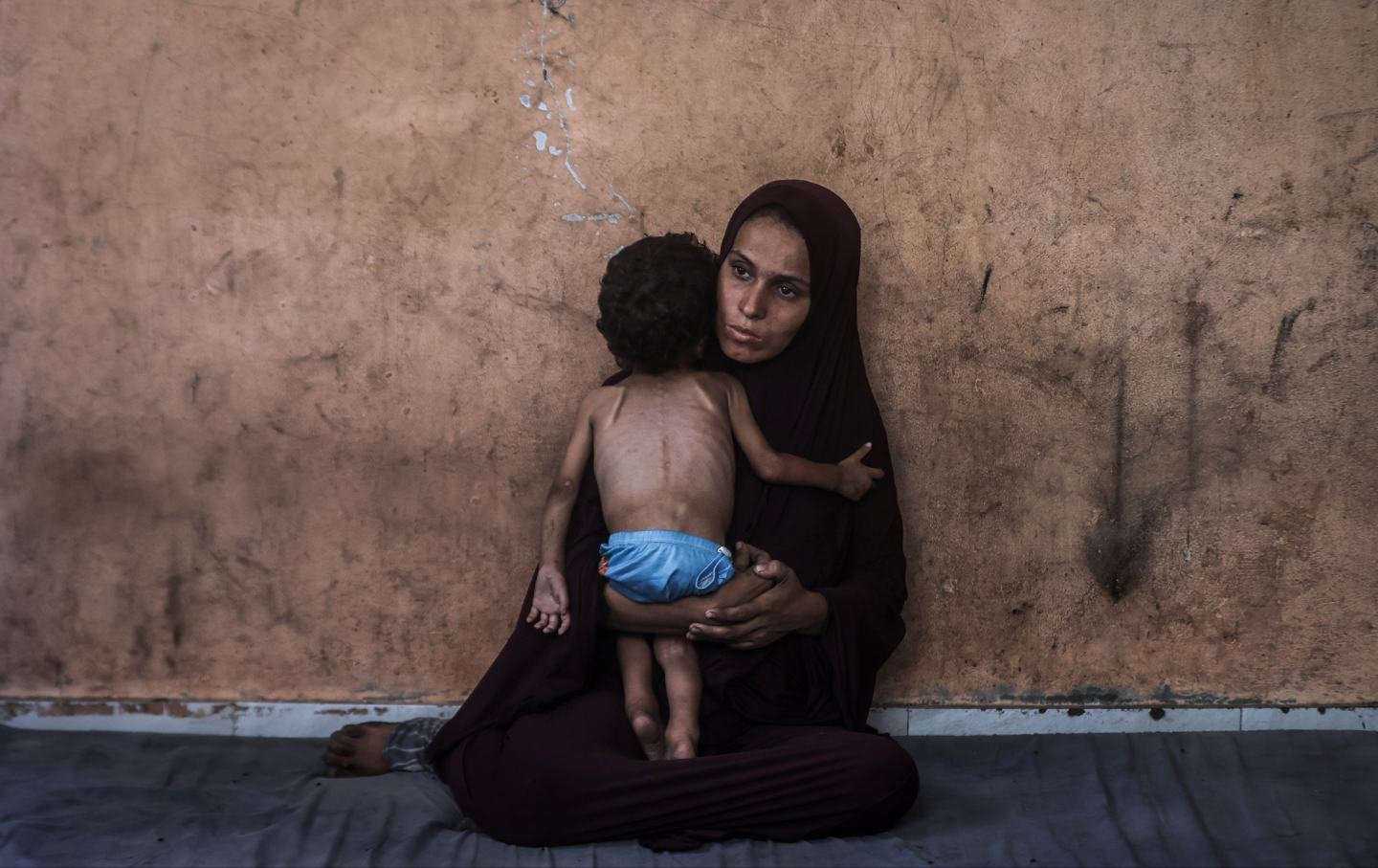
A June 2026 SMART nutrition survey covering accessible areas of Gaza found that 12.2% of children under five were stunted. It also found that only 22.4% of children aged 6–23 months received a minimum acceptable diet. More than one-third of children under five had experienced diarrhoea during the two weeks before the survey.
The survey also found maternal malnutrition among women of reproductive age. OCHA reported that 7.2% of pregnant and lactating women surveyed had maternal malnutrition, while 9.4% of non-pregnant, non-lactating women were malnourished.
These figures matter because infant nutrition does not exist separately from maternal health, food availability, safe water, healthcare and living conditions.
Infants under six months need particular protection
Very young babies are especially vulnerable during emergencies.
OCHA reported that, during the first half of June 2026, infants under six months were being admitted for inpatient malnutrition care when they were at risk of poor growth. Some infants were also enrolled to receive ready-to-use infant formula.
Earlier in April, humanitarian partners reported that 924 infants were newly enrolled to receive ready-to-use infant formula, alongside nutrition treatment for children and pregnant and breastfeeding women.
This illustrates an important point: emergency milk is a targeted intervention for infants who need it, not a replacement for breastfeeding support.
Gaza’s food insecurity remains fragile
The IPC’s July 2026 analysis found that more than 1.2 million people, or 59% of Gaza’s population, continued to face Crisis-level food insecurity or worse between mid-April and the end of June.
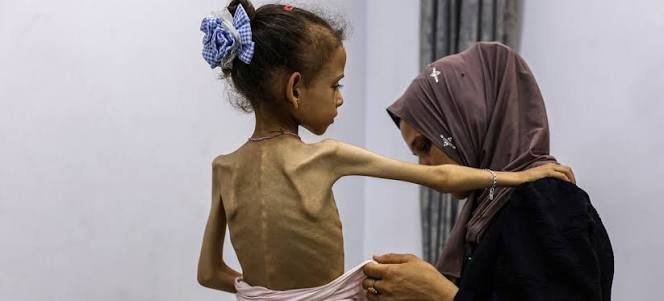
The analysis projected that this could rise to 1.4 million people, or 67% of the population, between July and December 2026 if conditions deteriorated. It also estimated that 74,200 children aged 6–59 months and 24,600 pregnant and breastfeeding women would require treatment through April 2027.
These figures demonstrate why sustained nutrition programmes remain important even when individual indicators improve.
Why Breastfeeding Mothers Need Support
A common misconception during humanitarian crises is that mothers experiencing food insecurity automatically cannot produce breast milk.
That is not how breastfeeding works.
UNICEF explains that even when mothers are malnourished, they can often continue producing nutritionally adequate breast milk. In emergency settings, breastfeeding can remain the safest option because it does not require potentially contaminated water or equipment for preparation.
That means an effective Gaza infant nutrition programme should support both mothers and babies.
Support the mother, not just the baby
A mother who is pregnant or breastfeeding may herself need:
- Nutritional support
- Clean drinking water
- Micronutrient supplementation
- Healthcare
- Breastfeeding counselling
- Safe spaces for infant feeding
- Food assistance
- Mental health and psychosocial support
OCHA reported that thousands of pregnant and breastfeeding women in Gaza were being screened for malnutrition and enrolled in targeted nutrition support during 2026. Humanitarian partners also provided infant and young child feeding counselling to caregivers.
Supporting the mother can therefore be one of the most important ways to protect infant nutrition.
When infant formula becomes medically necessary
There are circumstances where an infant cannot receive enough breast milk or cannot be breastfed.
UNICEF’s guidance recognises that some infants are not breastfed or are only partially breastfed and may require targeted support. In those situations, breast-milk substitutes may be procured as part of an overall humanitarian infant-feeding response.
This is why responsible emergency milk programmes should work through trained health and nutrition personnel rather than simply distributing formula indiscriminately.
How Therapeutic Baby Milk Supports Vulnerable Infants
The phrase “baby milk” can describe several different products, and they should not be treated as interchangeable.
Infant formula
Infant formula is a breast-milk substitute intended for infants who cannot receive sufficient breast milk.
In an emergency, powdered formula also requires safe preparation. WHO guidance highlights the importance of safe water, clean preparation equipment, correct preparation temperatures and appropriate storage.
That makes logistics particularly important in a setting where water, sanitation and healthcare infrastructure may be disrupted.
Ready-to-use infant formula
Ready-to-use infant formula is supplied as a prepared liquid and does not require reconstitution with water.
Humanitarian nutrition programmes may use it for infants who meet specific criteria. OCHA’s 2026 Gaza reporting records infants being enrolled to receive ready-to-use infant formula as part of targeted nutrition support.
Therapeutic milk is different
Therapeutic milk used in the treatment of severe acute malnutrition is not simply ordinary infant formula.
Specialised therapeutic products are used under clinical or nutrition-programme supervision. WHO and UNICEF guidance stresses that treatment of severe malnutrition requires appropriate clinical management and trained personnel.
Therefore, a donation page should avoid suggesting that ordinary commercial formula can independently treat severe acute malnutrition.
What Your Donation Can Help Provide
A baby milk for Gaza donation can support a wider infant nutrition response rather than representing a guaranteed quantity of formula for one individual baby.
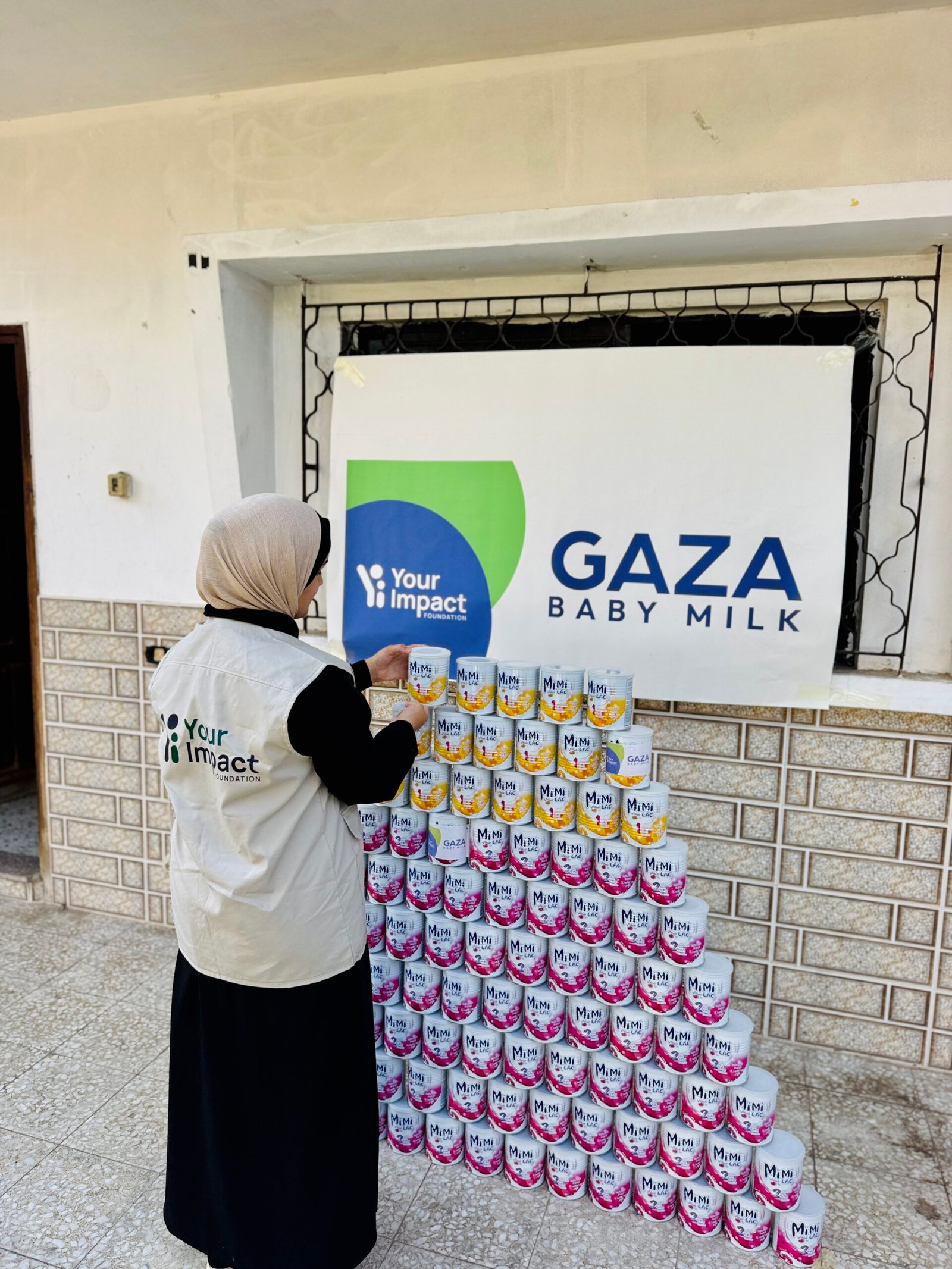
Depending on the programme and current needs, funding may support:
- Infant formula for eligible infants
- Ready-to-use infant formula where appropriate
- Maternal nutrition support
- Infant and young child feeding counselling
- Nutrition screening
- Referral and treatment services
- Safe distribution and transport
- Other essential nutrition supplies
The exact assistance depends on beneficiary needs, programme capacity, procurement and humanitarian access.
Why targeted distribution matters
Emergency infant feeding requires more than purchasing tins of formula.
Humanitarian workers need to identify which infants require breast-milk substitutes, assess feeding circumstances, provide safe preparation guidance and maintain a reliable supply.
UNICEF specifically advises against indiscriminate donations of infant formula because inappropriate distribution can undermine breastfeeding and create safety problems in emergencies.
A responsible infant formula Gaza donation therefore supports a coordinated response rather than simply sending products without assessment.
Our Direct Aid Delivery Route
Your Impact Foundation states that its Baby Milk for Gaza programme sources commercially produced infant formula and distributes it through its local partner network inside Gaza. The organisation says the programme is already operational and that donations support ongoing procurement and distribution. View the Baby Milk for Gaza programme.
From donation to delivery
The basic humanitarian pathway is:
Donation → Procurement → Local logistics → Beneficiary assessment → Distribution → Nutrition support
Each stage matters.
Funds first need to be converted into appropriate supplies. Those supplies then need to enter the relevant humanitarian supply chain and reach communities where they are needed.
Beneficiary selection is equally important because not every infant needs formula. Appropriate infant-feeding support depends on the baby’s circumstances and the mother’s ability to breastfeed.
Why local distribution networks matter
Gaza’s humanitarian environment can make access unpredictable.
OCHA continues to report operational and access challenges affecting humanitarian work. Nutrition programmes therefore depend on functioning distribution networks, available supplies and humanitarian access.
This is why donating to an established programme can be more effective than attempting to organise an independent shipment of infant formula.
How Your Donation Feeds a Baby
When you donate to an emergency milk programme, the impact is not simply the purchase of a tin.
Your contribution can help sustain the wider system needed to identify vulnerable infants, procure suitable products and distribute them safely.
Baby Milk for Gaza — Emergency Infant Formula Distribution Appeal
Gaza’s babies cannot wait. When a mother cannot feed her child, formula is not a choice — it is survival.
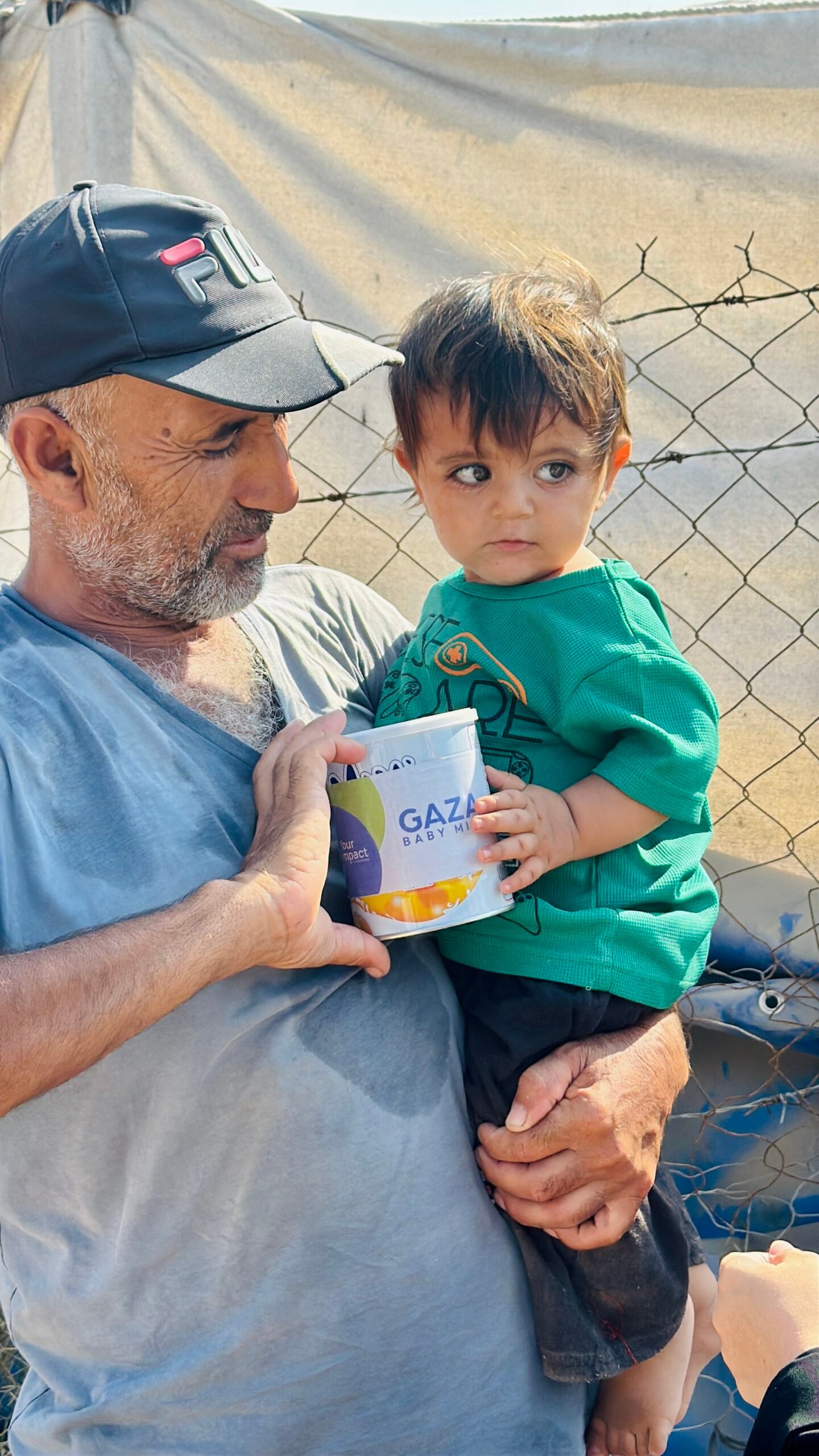
In Gaza right now, thousands of infants are going without adequate nutrition. Only enough ready-to-use infant formula remained for 400 children for a month, while nearly 10,000 infants under six months required supplementary feeding. Mothers desperate to keep their babies alive are mixing water with tahini, herbs, and crushed biscuits — substances that can cause severe illness and death in young infants.
Your Impact Foundation is on the ground. We are procuring and distributing sealed, commercially manufactured powdered infant formula — baby milk — directly to families with infants across Gaza, through our trusted local partner network.
One donation. One tin of baby milk. A baby fed.
Donate to our baby milk appeal now.
If the charity has verified specific donation amounts, those amounts can be displayed beside the donation button.
However, do not promise that a fixed amount will always purchase a specific number of tins or feed one baby for a specific number of days unless the charity’s current procurement data supports that claim.
Prices, transportation costs, availability and beneficiary needs can change rapidly during humanitarian emergencies.
The strongest donation message is therefore:
Give what you can. Your contribution helps sustain targeted infant nutrition support for vulnerable families in Gaza.
One donation can support more than formula
A well-designed emergency milk appeal should not reduce infant nutrition to formula alone.
Your contribution may help sustain the wider response, including:
- Nutrition screening
- Maternal support
- Infant-feeding counselling
- Safe feeding supplies
- Appropriate infant formula
- Ready-to-use nutritional products
- Local transportation and distribution
This broader approach reflects current humanitarian nutrition guidance.
Can You Donate Baby Milk to Palestine?
Yes, but individual donors should avoid sending random formula products directly into an emergency zone.
The safer approach is to support an established humanitarian programme that can assess which infants require breast-milk substitutes and source appropriate products through its supply chain.
If you want to donate baby milk Palestine relief, you can support Your Impact Foundation’s dedicated programme through its official Baby Milk for Gaza donation page.
Is Baby Milk Zakat Eligible?
Baby milk can be funded through Zakat when the intended beneficiaries meet the conditions for Zakat.
The Qur’an identifies the poor and needy among the recognised Zakat recipient categories in Surah At-Tawbah 9:60. Read Qur’an 9:60.
For an infant-feeding programme, the relevant question is therefore not simply whether the product is “baby milk.” The key issue is whether the family receiving the assistance is eligible for Zakat and whether the charity’s distribution process satisfies the applicable Islamic requirements.
How does Zakat reach an infant?
An infant does not need to personally own the donated formula.
Where a parent or guardian is an eligible poor or needy recipient, assistance can be provided for the household’s essential needs, including infant nutrition.
For specific jurisprudential questions, Muslims should consult a qualified scholar or the charity’s Shariah adviser.
Can I use Zakat for an emergency milk appeal?
If the programme confirms that the beneficiaries are Zakat-eligible and the distribution meets its Zakat policy, your Zakat may be directed towards the appeal.
Your Impact Foundation specifically states that its Baby Milk for Gaza programme is Zakat-eligible because its intended beneficiaries are among the poor and needy. Read the charity’s explanation of Zakat eligibility for baby milk.
Do not assume that every infant formula appeal is automatically Zakat-eligible. The eligibility of the recipients and the charity’s distribution arrangement matter.
Donate Baby Milk for Gaza Today
Gaza’s infant nutrition crisis requires sustained, targeted support.
The latest 2026 evidence shows that malnutrition, poor dietary diversity and maternal nutrition problems remain serious concerns. Humanitarian partners continue to screen children, support mothers and provide targeted infant-feeding assistance.
If you want to help, make your donation through the official programme.
Your donation can help sustain access to appropriate nutrition for vulnerable infants and their families.
Frequently Asked Questions
How can I donate baby milk for Gaza?
The simplest option is to donate through an established humanitarian programme that can procure and distribute infant-feeding supplies according to assessed needs. You can support the Your Impact Foundation Baby Milk for Gaza appeal.
Is there really a baby milk crisis in Gaza in 2026?
Gaza continues to face serious nutrition vulnerabilities in 2026. The June SMART survey found significant stunting, poor dietary diversity and maternal malnutrition in accessible areas. Humanitarian partners also continued providing targeted support to infants and mothers.
Why can’t all babies in Gaza simply receive infant formula?
Because formula is not appropriate or necessary for every baby. WHO and UNICEF recommend protecting and supporting breastfeeding, especially during emergencies. Formula may be needed for infants who cannot receive enough breast milk, but it must be supplied and prepared safely.
Does donating formula help breastfeeding mothers?
A responsible infant-feeding programme can support mothers as well as infants. Humanitarian nutrition responses may provide maternal nutrition assistance, breastfeeding counselling and other support alongside targeted infant-feeding interventions. OCHA reported these types of services across Gaza during 2026.
What is an emergency milk appeal?
An emergency milk appeal raises funds to support urgent infant-feeding needs during a humanitarian crisis. Depending on the programme, donations may fund appropriate infant formula, ready-to-use products, nutrition services, maternal support and distribution costs.
Is powdered infant formula safe in Gaza?
Powdered infant formula can be used safely when it is appropriate for the infant and prepared according to proper guidance. However, safe preparation requires suitable water, clean equipment, correct preparation and storage. These requirements can be difficult to maintain during emergencies.
What is the difference between baby formula and therapeutic milk?
Infant formula is a breast-milk substitute for infants who need it. Therapeutic milk is a specialised product used in the clinical management of severe acute malnutrition. They should not be treated as the same product or as interchangeable treatments.
Can I donate baby milk as Zakat?
Potentially, yes. If the beneficiaries are eligible Zakat recipients and the charity’s distribution process meets the relevant Shariah requirements, Zakat can support infant nutrition. Your Impact Foundation states that its Baby Milk for Gaza programme is Zakat-eligible. Read its Zakat guidance.
What is the best way to help babies in Gaza?
Support a programme that combines appropriate infant-feeding assistance with maternal nutrition, screening, counselling and safe distribution. Current humanitarian guidance emphasises protecting breastfeeding while providing targeted support for infants who cannot be adequately breastfed.
Help Protect Gaza’s Most Vulnerable Infants
A baby cannot wait for a humanitarian crisis to end before receiving adequate nutrition.
But helping infants safely requires more than sending formula. It requires supporting mothers, protecting breastfeeding, identifying infants who need additional feeding and maintaining safe humanitarian supply chains.
Your donation can help sustain that work.
Give what you can. Help provide targeted nutrition support to vulnerable infants and families in Gaza.