
Giving zakat to relatives is one of the most commonly asked questions among Muslims in the UK, and the answer carries both spiritual encouragement and clear boundaries in Islamic law. So, can you give Zakat to family? The short answer is yes — you can give zakat to family members, provided they fall within the eight Quranic categories of zakat recipients and are not your immediate dependents.
In fact, many scholars consider giving zakat to relatives to be more rewarding than giving it to strangers, because it serves a dual purpose: fulfilling the obligation of zakat and maintaining family ties (silat al-rahim), both of which are heavily emphasised in Islam.
The Prophet Muhammad (peace be upon him) said: “Charity given to a poor person is charity, but charity given to a relative is charity and maintaining kinship ties” (Sunan al-Tirmidhi, Hadith 658). However, the rules around who qualifies for zakat within your family are specific, and misunderstanding them can lead to your zakat being invalid. This guide covers every scenario so you can distribute your zakat with confidence.
What Does the Quran Say About Who Can Receive Zakat?
Before addressing can I give zakat to my relatives, it is essential to understand the foundational Quranic framework for all zakat distribution.

Allah (SWT) explicitly defines the eight categories of people who are eligible to receive zakat in Surah At-Tawbah, verse 60: “Zakat expenditures are only for the poor and for the needy and for those employed to collect [zakat] and for bringing hearts together [for Islam] and for freeing captives [or slaves] and for those in debt and for the cause of Allah and for the [stranded] traveller — an obligation [imposed] by Allah. And Allah is Knowing and Wise” (Quran 9:60, Sahih International).
These eight categories — known as asnaf al-zakat — are the definitive criteria established by the Quran itself. Anyone who falls outside these categories, regardless of how deserving they may seem, is not eligible for zakat. When we ask who can you give zakat to, the answer must always begin with this verse.
A relative who is poor and does not possess wealth equal to or above the Nisab threshold falls squarely within the first two categories (al-fuqara and al-masakin) and is therefore a valid recipient. A relative who is wealthy, even if they are struggling, does not qualify. The Quranic categories are non-negotiable and form the baseline for every zakat distribution decision.
Can I Give Zakat to My Poor Relatives?
Yes — can I give zakat to my poor relatives is not only permitted but actively encouraged in Islamic scholarship. If your relative is genuinely poor (does not own wealth equal to the Nisab threshold) or is needy (has some wealth but not enough to cover their basic needs for one year), they qualify as valid zakat recipients under the first two categories in Surah At-Tawbah 9:60. This includes brothers, sisters, aunts, uncles, cousins, nieces, nephews, and other extended family members who are struggling financially.
The encouragement to prioritise relatives in charity is deeply rooted in the Sunnah. The Prophet (peace be upon him) told his companion Salman ibn Amir (may Allah be pleased with him): “Give charity to your relatives first” — a clear directive recorded in the hadith collections (Sahih al-Bukhari, Hadith 1417; Sunan Abi Dawud, Hadith 1677). Imam al-Nawawi, one of the most respected scholars of the Shafi’i school, stated that giving zakat to relatives is superior to giving it to non-relatives because it combines the reward of zakat with the reward of upholding family bonds (Sharh Sahih Muslim, Kitab al-Zakat).
However, there is a critical distinction. When you ask can you give zakat to poor relatives, the permissibility depends entirely on which relatives we are talking about. Not every family member qualifies as a zakat recipient, even if they are financially struggling, because Islamic law distinguishes between relatives you are financially responsible for and those you are not.
Who Is Not Eligible for Zakat Within Your Family?
Understanding who is not eligible for zakat within your family is just as important as knowing who qualifies. Islamic law draws a clear line between relatives whom you are obligated to maintain and relatives whom you may optionally support. You cannot give your zakat to the following family members, because doing so would effectively mean giving zakat to yourself — since you are already Shariah-bound to provide for them:
Your parents and grandparents (all ascending relatives). You are required by Islamic law to financially support your parents if they are in need, regardless of your own financial situation. If you give them zakat, the obligation of maintenance remains, so you have not truly given your zakat away — it has circulated back to your own duty. The majority of scholars across all four madhhabs agree on this prohibition.
Your children and grandchildren (all descending relatives). Similarly, you are Shariah-obligated to maintain your children and grandchildren. If they are poor, you must support them from your general wealth. Giving them zakat does not discharge your zakat obligation because the wealth is effectively staying within your own dependents’ circle.
Your spouse. The marital relationship creates a mutual financial obligation. You are required to provide for your spouse, and your spouse is required to support you if needed. Zakat cannot be given between spouses because the same principle applies — you are already responsible for their financial wellbeing.
These three categories — ascending relatives (parents, grandparents), descending relatives (children, grandchildren), and spouses — are the only family members to whom zakat to relatives is explicitly prohibited. Every other relative — siblings, aunts, uncles, cousins, in-laws, nieces, nephews, and more distant family members — is eligible to receive your zakat if they meet the standard criteria of poverty or need.
Can You Give Zakat to Poor Relatives Who Are Not Your Dependents?
Yes, and this is where many UK Muslims find practical benefit. Can you give zakat to poor relatives who are not your dependents — such as your brother, sister, aunt, uncle, or adult cousin — is not only permissible but highly meritorious. These relatives do not fall under your obligatory maintenance responsibility, so they are treated the same as any other eligible zakat recipient from the broader community.
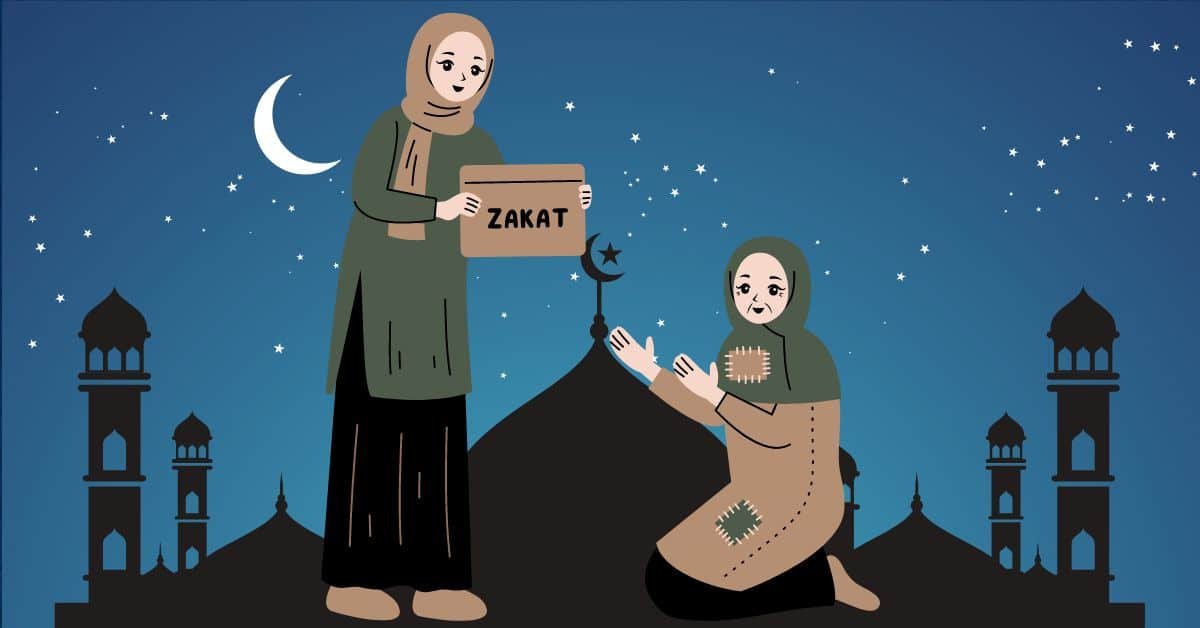
Consider a common scenario in British Muslim families. Your sister is a single mother working part-time and struggling to cover her rent and household bills. She does not possess wealth equal to the Nisab threshold. In this case, can I give zakat to my relatives like her? Absolutely. She is a valid recipient under the category of al-masakin (the needy). Your zakat helps her directly, and you earn the additional reward of maintaining family ties. The same applies to an elderly uncle who has no pension savings, a cousin who has lost their job, or a nephew studying at university with no income.
The Fiqh Council of North America and leading UK-based scholars have consistently affirmed this ruling. The key principle is simple: if the relative is not someone you are already obligated to financially maintain (parent, child, or spouse), and they qualify under the Quranic categories of zakat recipients, then giving zakat to relatives is both valid and recommended.
Giving Zakat in Islam: The Broader Principles of Distribution
Giving zakat in islam is not merely a financial transaction — it is an act of worship that purifies your wealth, strengthens the Muslim community, and demonstrates gratitude to Allah (SWT) for His provisions. When distributing zakat, whether to relatives or to others, several important principles must be observed.
First, intention (niyyah) is essential. Zakat must be given with the explicit intention of fulfilling the obligation of zakat. If you give money to a relative with the intention of a general gift (hibah) or voluntary charity (sadaqah), it does not count as your zakat. You must specifically intend that this payment is your zakat for that lunar year.
Second, the recipient must be Muslim. Zakat is a specifically Islamic obligation, and it is distributed exclusively among Muslims. Non-Muslim relatives cannot receive zakat, although you may give them voluntary sadaqah from your general wealth.
Third, the recipient must be a free person (not enslaved) and of sound mind. These conditions are universally agreed upon by the scholars of all four madhhabs.
Fourth, when asking who qualifies for zakat, the recipient’s financial status is the primary criterion. They must either be poor (al-fuqara — those with no wealth or income) or needy (al-masakin — those with some wealth but insufficient to meet their basic needs for one year). If your relative has savings above the Nisab threshold, a comfortable salary, or valuable assets, they do not qualify even if they complain about financial difficulty.
Who Can You Give Zakat to Outside Your Family?
While this guide focuses on can you give zakat to family, it is worth briefly addressing the broader question of who can you give zakat to beyond your relatives. The eight categories in Surah At-Tawbah 9:60 include people you may not normally consider:
- The poor (al-fuqara) and the needy (al-masakin) — individuals or families living below the Nisab threshold, whether they are relatives or not.
- Those employed to collect zakat (al-amilina alayha) — the administrators and workers involved in zakat collection and distribution. This is why donating your zakat through a registered UK charity like Your Impact Foundation is valid, as the charity handles collection and distribution on your behalf.
- Those whose hearts are to be reconciled (al-mu’allafatu qulubuhum) — new Muslims or individuals whose support would benefit the Muslim community.
- Those in bondage (fi al-riqab) — historically for freeing slaves; today, scholars apply this to freeing people from various forms of modern exploitation and captivity.
- Those in debt (al-gharimun) — individuals burdened with debts that exceed their assets, provided the debt was not incurred for sinful purposes.
- In the cause of Allah (fi sabil Allah) — supporting charitable projects, Islamic education, dawah work, and community services.
- The wayfarer (ibn al-sabil) — a traveller who is stranded and in need of financial assistance.
A registered UK charity such as Your Impact Foundation (Charity No. 1192710) distributes zakat across many of these categories, ensuring your obligation is fulfilled correctly. You can donate your zakat through Your Impact Foundation here.
Practical Examples: Giving Zakat to Relatives in Real UK Scenarios
To make the rulings clear, here are practical scenarios that many British Muslim families encounter when navigating can you give zakat to my poor relatives:
Scenario 1: Your elderly father has a small state pension but struggles to pay his heating bills. You cannot give him zakat because he is your father (ascending relative). You must support him from your general wealth as part of your maintenance obligation.
Scenario 2: Your brother lost his job and has exhausted his savings. He has three children and cannot pay his rent. You can give him zakat because he is your sibling, not your dependent. He qualifies as needy under the Quranic categories.
Scenario 3: Your adult daughter is going through a divorce and has no income. You cannot give her zakat because she is your descendant. You are obligated to maintain her from your general wealth. However, if another relative (such as her uncle or aunt) wants to give her zakat, that is permissible because she is not their dependent.
Scenario 4: Your cousin is a university student with no income and no savings. You can give her zakat. She is not your dependent, and she qualifies as poor (al-fuqara) under the Quranic categories.
Scenario 5: Your sister-in-law (your spouse’s sister) is a widow with young children and no income. You can give her zakat. She is not your spouse, not your descendant, and not your ascendant — she is a relative you are not obligated to maintain, and she meets the criteria of need.
These examples illustrate that the rulings around zakat to relatives are practical and designed to ensure zakat reaches those who genuinely need it while respecting the existing obligations of family maintenance.
What If You Are Unsure Whether Your Relative Qualifies?
If you are uncertain whether a relative qualifies for zakat, the safest approach is to give your zakat through a reputable UK charity that has the expertise to verify eligibility and distribute to valid recipients. Your Impact Foundation (Charity No. 1192710) collects zakat and distributes it carefully among verified eligible recipients across the UK and internationally, covering categories such as the poor, the needy, those in debt, and charitable causes. This approach gives you peace of mind that your zakat obligation has been discharged correctly.
Additionally, you may separately give voluntary sadaqah to any family member — including your parents, children, and spouse — from your general wealth at any time. Voluntary sadaqah has no restrictions on who can receive it, and it carries its own immense reward. The restriction on giving zakat to immediate dependents applies specifically to the obligatory zakat, not to optional acts of generosity.
Pay Your Zakat Today Through Your Impact Foundation →
FAQs
Can I give zakat to my brother or sister?
Answer: Yes. Siblings are not your dependents under Islamic law, so you can give zakat to a brother or sister who is poor or needy, provided they meet the standard eligibility criteria — they must be Muslim, free, of sound mind, and possess wealth below the Nisab threshold. In fact, giving zakat to siblings is considered more rewarding than giving to non-relatives because it combines the reward of zakat with the reward of maintaining family ties, as mentioned in the hadith recorded in Sunan al-Tirmidhi (Hadith 658).
Can I give zakat to my parents?
Answer: No. You cannot give zakat to your parents or grandparents. Islamic law obligates you to financially maintain your parents if they are in need, regardless of your own circumstances. Since you are already responsible for supporting them, giving them zakat would mean the wealth effectively stays within your own obligation. You must support your parents from your general wealth instead. However, you can give them voluntary sadaqah at any time.
Can I give zakat to my children?
Answer: No. Just like parents, your children and grandchildren are your dependents in Islamic law. You are Shariah-obligated to provide for them, so zakat cannot be given to them. Any financial support you give to your children counts as maintenance, not zakat. If your child is truly in need and you give them money, it must come from your general wealth as part of your parental responsibility, not from your zakat allocation.
Can I give zakat to my aunt or uncle?
Answer: Yes. Aunts and uncles are extended relatives whom you are not obligated to maintain financially. If your aunt or uncle is poor, needy, or in debt, they qualify as valid zakat recipients. The same applies to cousins, nieces, nephews, and other extended family members. As long as the relative is not your ascendant (parent/grandparent), descendant (child/grandchild), or spouse, they are eligible to receive your zakat.
Who qualifies for zakat according to the Quran?
Answer: The Quran defines eight categories of zakat recipients in Surah At-Tawbah 9:60: the poor (al-fuqara), the needy (al-masakin), those employed to collect zakat, those whose hearts are to be reconciled, those in bondage, those in debt, those in the cause of Allah, and the wayfarer. Anyone who falls within these categories and meets the basic conditions (being Muslim, free, of sound mind, and possessing wealth below the Nisab) qualifies to receive zakat — whether they are your relative or a stranger.
Who is not eligible for zakat?
Answer: Zakat cannot be given to: your parents and grandparents (ascending relatives), your children and grandchildren (descending relatives), your spouse, non-Muslims, wealthy individuals who possess wealth above the Nisab threshold, the family of the Prophet Muhammad (peace be upon him) (Banu Hashim), and your own dependents whom you are already obligated to maintain. If you are uncertain about someone’s eligibility, donating through a verified charity ensures your zakat is distributed correctly.
Can I give zakat to relatives who are in debt?
Answer: Yes, if the relative is in debt and that debt exceeds their total assets — and they are not your dependent (parent, child, or spouse) — they qualify as valid zakat recipients under the category of al-gharimun (those in debt), as mentioned in Surah At-Tawbah 9:60. The debt must have been incurred for a permissible purpose, not for sinful activity. Many UK Muslims have relatives struggling with personal debts, and directing zakat to them is both permissible and socially beneficial.