
Masjid al-Aqsa is Islam’s third holiest site, the first Qibla of the Muslim Ummah, and the destination of the Prophet Muhammad’s ﷺ miraculous Night Journey — yet millions of Muslims know shockingly little about it. This comprehensive guide presents 30 essential facts about Masjid al Aqsa, from its Qur’anic foundations and prophetic history to the realities of the ongoing occupation. Every fact is backed by Qur’an, hadith or verified historical sources.
Whether you are a student of knowledge, a parent teaching your children, or a Muslim who wants to deepen their connection to this blessed site, these 30 facts will transform your understanding of Masjid al-Aqsa — and explain why the land of Palestine and its people remain central to the heart of every believer.
What Is Masjid Al-Aqsa? — The Basic Facts About Masjid Al Aqsa (Facts 1–5)
Fact 1: Masjid al-Aqsa means “the farthest mosque” in Arabic
The name al-Aqsa (الأقصى) comes from the Arabic root aqsa, meaning “farthest.” It is called “the farthest” because it was the farthest place of worship from Makkah at the time the early Muslim community knew of. The Qur’an refers to it directly by this name in Surah Al-Isra, verse 1: “Glory be to the One Who took His servant by night from the Sacred Mosque to the Farthest Mosque whose surroundings We have blessed.” (Qur’an 17:1). This single verse establishes Masjid al-Aqsa’s status as a divinely named sanctuary.
Fact 2: Masjid al-Aqsa is NOT one building — it is an entire 35-acre compound
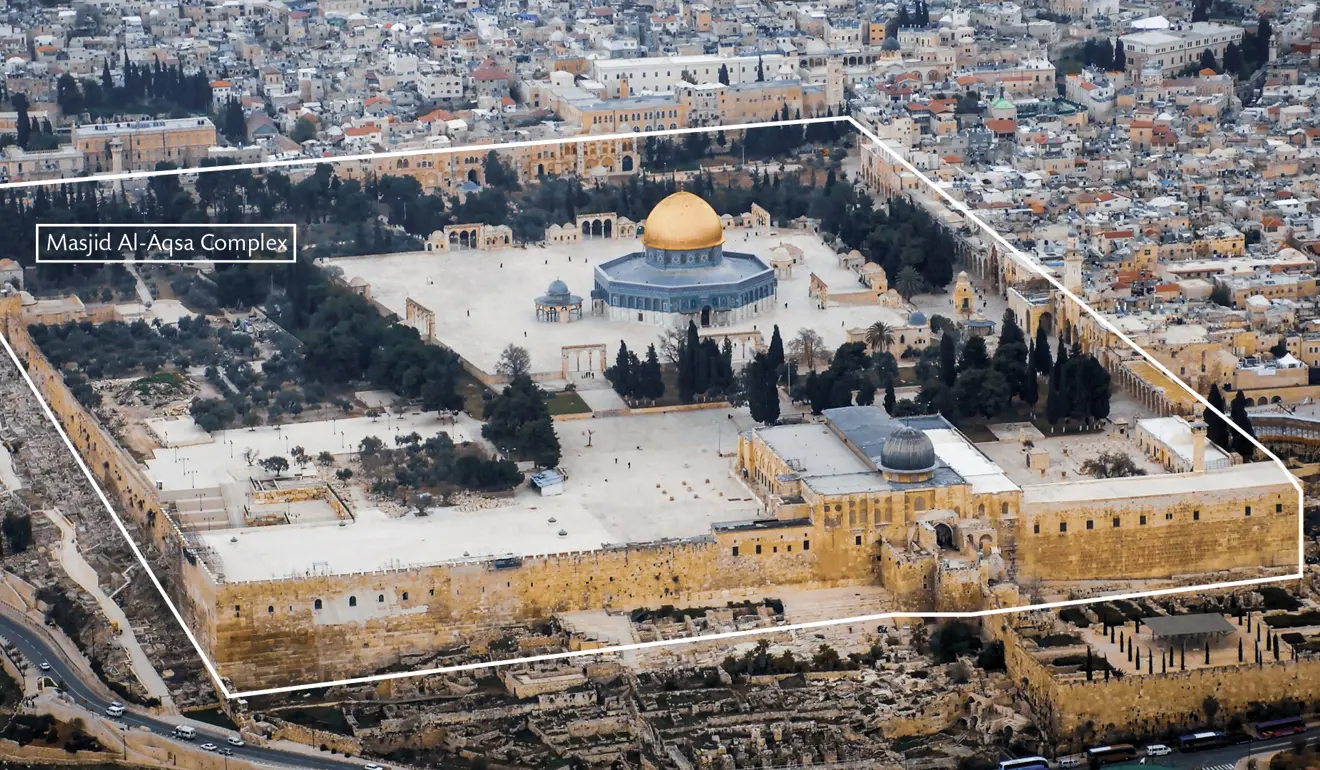
One of the most widespread misconceptions is that Masjid al-Aqsa refers only to the silver-domed prayer hall visible in photographs. In reality, Al-Masjid al-Aqsa encompasses the entire 144,000-square-metre compound within the walls of Al-Haram al-Sharif (the Noble Sanctuary). The compound includes open courtyards, prayer halls, domes, minarets, museums, wells, gardens and archaeological sites. According to historical sources, the entire walled area — including the Dome of the Rock, the Qibli Mosque, the Marwani Prayer Hall and over 15 gates — is considered Masjid al-Aqsa. This is critically important because any attempt to claim that only one structure within the compound is “the real Al-Aqsa” undermines the Islamic claim to the entire site.
Fact 3: It is the third holiest site in Islam
Masjid al-Aqsa holds the position of the third holiest site in Islam after Masjid al-Haram in Makkah and Masjid an-Nabawi in Madinah. The Prophet ﷺ said: “Do not set out on a journey except to three mosques: this mosque of mine (Madinah), the Sacred Mosque (Makkah), and Al-Aqsa Mosque.” [Sahih al-Bukhari 1186; Sahih Muslim 1397]. This hadith elevates Masjid al-Aqsa to a status shared by no other mosque on earth. Travelling specifically to visit Masjid al-Aqsa for worship is a sunnah that carries unique reward.
Fact 4: The Dome of the Rock and Al-Aqsa Mosque are two separate buildings
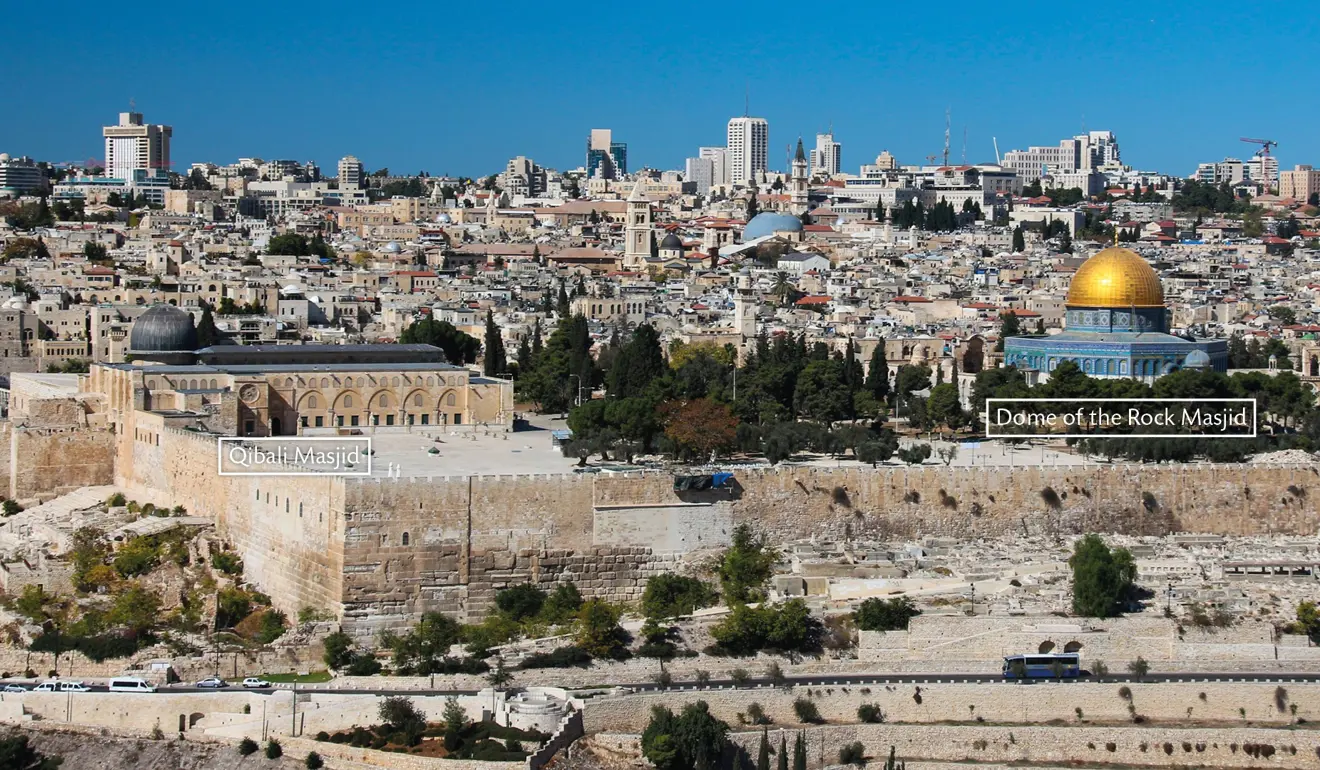
Many people confuse the golden Dome of the Rock with Masjid al-Aqsa. They are completely different structures within the same compound. The Dome of the Rock is an octagonal shrine completed in 691 CE by Caliph Abd al-Malik ibn Marwan, built over the rock from which the Prophet ﷺ ascended to the heavens during Al-Mi’raj. It is not a mosque — it is a commemorative shrine. The actual Al-Aqsa Mosque (also called the Qibli Mosque) is the silver-domed congregational mosque at the southern end of the compound, where worshippers perform daily prayers. Both are part of Masjid al-Aqsa — but neither alone is “all” of Masjid al-Aqsa.
Fact 5: Masjid al-Aqsa was built 40 years after the Kaaba
According to hadith, the foundations of Masjid al-Aqsa were laid just 40 years after the building of the Kaaba in Makkah. Abu Dharr ﷺ reported: “I said, ‘O Messenger of Allah, which mosque was first built on earth?’ He said, ‘Al-Masjid al-Haram.’ I said, ‘Then which?’ He said, ‘Al-Masjid al-Aqsa.’ I said, ‘How much time between them?’ He said, ‘Forty years.'” [Sahih al-Bukhari 3186; Sahih Muslim 520]. This makes Masjid al-Aqsa one of the oldest places of worship on earth, with a history spanning thousands of years from the time of Prophet Ibrahim ﷺ and Prophet Adam ﷺ.
The Qur’anic & Prophetic Connection — Isra and Mi’raj (Facts 6–10)
Fact 6: Masjid al-Aqsa is the destination of the Prophet’s ﷺ Night Journey
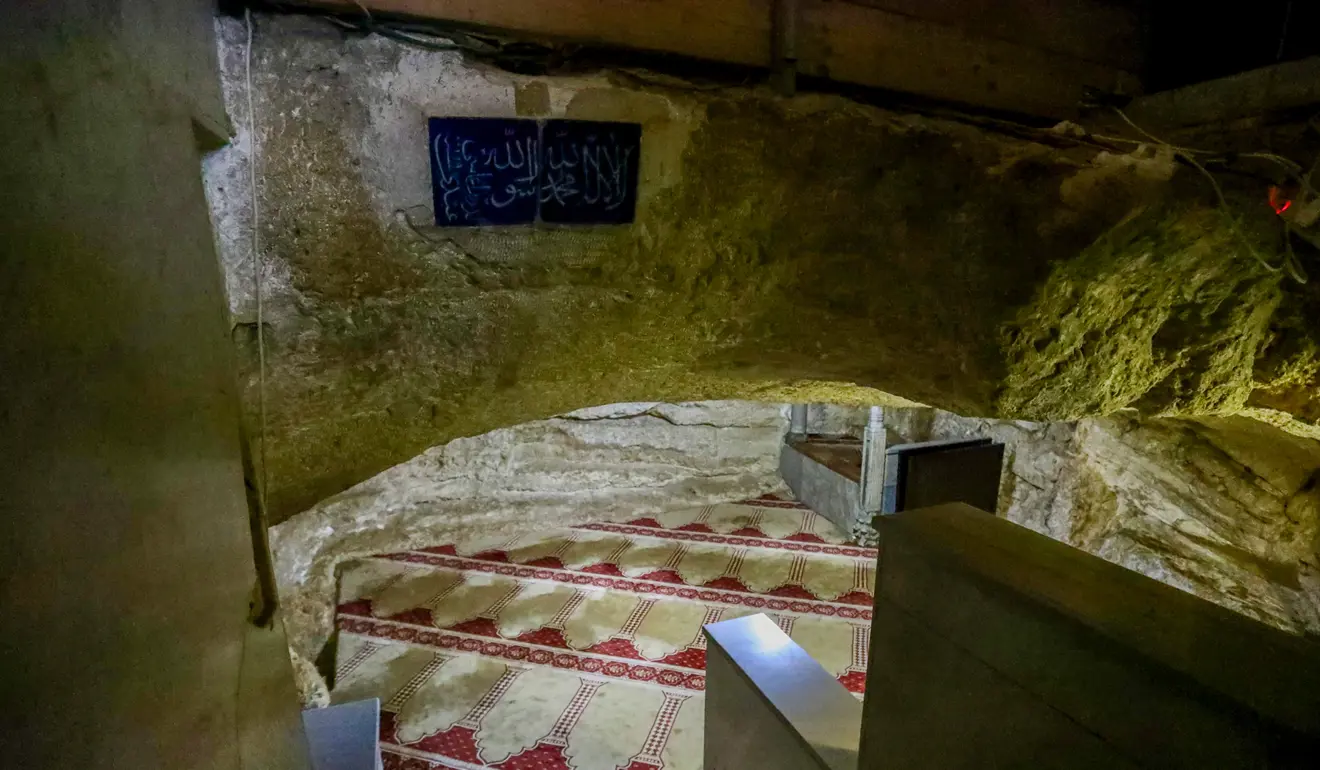
The single most important event in Masjid al-Aqsa’s spiritual history is Al-Isra wal-Mi’raj — the Night Journey and Ascension. According to Islamic tradition, the Angel Jibril ﷺ woke the Prophet Muhammad ﷺ and mounted him on the Buraq, a winged steed, travelling from Makkah to Jerusalem in a single night. The Qur’an opens Surah Al-Isra with this event: “Glory be to the One Who took His servant by night from the Sacred Mosque to the Farthest Mosque whose surroundings We have blessed, to show him of Our signs.” (Qur’an 17:1). This journey established Masjid al-Aqsa as the launching point for the Prophet’s ﷺ ascension through the seven heavens.
Fact 7: Masjid al-Aqsa was the first Qibla of Islam
For approximately 16 to 17 months after the Prophet’s ﷺ migration to Madinah, Muslims prayed facing Masjid al-Aqsa in Jerusalem, not the Kaaba in Makkah. This was the first Qibla (direction of prayer) of the Muslim Ummah, making Masjid al-Aqsa the direction in which the companions of the Prophet ﷺ offered their daily prayers, buried their dead, and oriented themselves in worship. The Qibla was changed to Makkah after the revelation of Surah Al-Baqarah, verse 144: “We have certainly seen the turning of your face toward the heaven, and We will surely turn you to a Qibla with which you will be pleased. So turn your face toward al-Masjid al-Haram.” (Qur’an 2:144). The fact that Allah ﷻ chose Masjid al-Aqsa as the first direction of prayer — even before the Kaaba — speaks to its immense spiritual rank.
Fact 8: The Prophet ﷺ led ALL the prophets in prayer at Masjid al-Aqsa
During the Night Journey, after arriving at Masjid al-Aqsa, the Prophet Muhammad ﷺ was asked to lead all the previous prophets and messengers in prayer. Ibn Abbas ﷺ narrated that the Prophet ﷺ said: “I was taken on the Night Journey to Bayt al-Maqdis, and when we arrived, Jibril pointed to me and said: ‘This is your Qibla.’ He gathered for me all the prophets, from Adam to Isa, and I led them in prayer.” [Sahih Muslim 172]. This moment — where every prophet who ever lived stood behind Muhammad ﷺ in prayer at Masjid al-Aqsa — symbolises the finality of his prophethood and the unity of the prophetic message. There is no other place on earth where this gathering occurred.
Fact 9: The five daily prayers were gifted to the Ummah from Masjid al-Aqsa
It was during the Mi’raj — the ascension from Masjid al-Aqsa through the heavens — that Allah ﷻ originally ordained fifty daily prayers for the Ummah. The Prophet ﷺ accepted them, then on his descent, Prophet Musa ﷺ advised him to return and ask Allah ﷻ to reduce the number, saying his own Ummah could not bear that many. The Prophet ﷺ went back and forth several times until the number was reduced to five daily prayers — but with the reward of fifty. The Prophet ﷺ said: “I returned to Musa and he said, ‘What did you do?’ I said, ‘He reduced them to five.’ Musa said, ‘Go back to your Lord and ask for further reduction.’ I said, ‘I feel shy before my Lord.'” [Sahih al-Bukhari 349; Sahih Muslim 163]. This means that every salah you pray — five times a day — was ordained at Masjid al-Aqsa.
Fact 10: Praying one salah at Masjid al-Aqsa earns 500 times the reward
Abu Darda ﷺ reported that the Prophet ﷺ said: “A prayer in Al-Masjid al-Haram is equal to one hundred thousand prayers, a prayer in my mosque (Madinah) is equal to one thousand prayers, and a prayer in Al-Aqsa Mosque is equal to five hundred prayers.” [Sahih al-Bukhari 1185; Musnad Ahmad 23171]. No other mosque on earth carries this specific reward multiplier — only Makkah and Madinah surpass it. This makes every prayer at Masjid al-Aqsa a profoundly valuable act of worship that most Muslims in the world can only dream of performing in the current occupation.
Prophets Connected to Masjid Al-Aqsa (Facts 11–15)
Fact 11: Prophet Ibrahim ﷺ was the first to establish a place of worship at the site
Prophet Ibrahim ﷺ (Abraham), the father of the prophets, was among the first to establish a place of worship at the location of Masjid al-Aqsa. Islamic tradition holds that after building the Kaaba with his son Ismail ﷺ in Makkah, Ibrahim ﷺ travelled to the land of Bayt al-Maqdis (Jerusalem) and established a place of worship there. His son Prophet Ishaq ﷺ (Isaac) and grandson Prophet Yaqub ﷺ (Jacob) continued to live and worship in this blessed land. The foundations laid by Ibrahim ﷺ make Masjid al-Aqsa one of the oldest continuously sacred sites in human religious history.
Fact 12: Prophets Musa, Dawud, Sulaiman and Isa all have direct connections to Masjid al-Aqsa
The land of Bayt al-Maqdis is the burial or preaching ground of numerous prophets. Prophet Musa ﷺ (Moses) is buried near Bayt al-Maqdis according to hadith. Prophet Dawud ﷺ (David) and his son Prophet Sulaiman ﷺ (Solomon) ruled and built extensively at the site — Sulaiman’s ﷺ construction of the original temple complex is described in the Qur’an as a magnificent structure (Surah Saba 34:13). Prophet Zakariyyah ﷺ and Prophet Yahya ﷺ (John) also lived and preached in the area. According to Islamic eschatology, Prophet Isa ﷺ (Jesus) will return to earth and will rule from or near Bayt al-Maqdis. When you connect to Masjid al-Aqsa, you are connecting to the land of the prophets.
Fact 13: Over 70 prophets are buried in and around the blessed land of Palestine
The land surrounding Masjid al-Aqsa — Palestine and its environs — holds the remains of more than 70 prophets and righteous figures, according to Islamic tradition. Palestine is described in hadith as the “land of gathering” (ard al-mahshar) — the place where people will be gathered on the Day of Judgement. The Prophet ﷺ said: “The Hour will not be established until you fight the Jews, and the Hour will not be established until the stone will say: ‘O Muslim! There is a Jew behind me; come and kill him.'” — and this will happen near Bayt al-Maqdis [Sahih al-Bukhari 2926; Sahih Muslim 2922]. This land is not merely a historical site — it is the theatre of the end of the world.
Fact 14: The Prophet ﷺ said: “Set out specifically for three mosques”
As mentioned in Fact 3, the hadith “Do not set out on a journey except to three mosques” [Sahih al-Bukhari 1186] establishes a unique ruling: it is spiritually recommended to travel specifically for worship to Masjid al-Aqsa, just as it is to Makkah and Madinah. This is not said about any other mosque. The implication is that Masjid al-Aqsa holds a rank in Islamic cosmology that demands pilgrimage-level devotion. Before the occupation restricted access, Muslims from across the Ummah would travel for days simply to pray two rak’ahs at Masjid al-Aqsa.
Fact 15: The Qur’an calls Masjid al-Aqsa’s surroundings “blessed”
Allah ﷻ describes the land around Masjid al-Aqsa as blessed (mubarakah) in the opening verse of Surah Al-Isra: “Whose surroundings We have blessed” (Qur’an 17:1). The blessing of this land is mentioned repeatedly throughout the Qur’an. Allah ﷻ tells Prophet Musa ﷺ: “O my people, enter the Holy Land which Allah has assigned to you” (Qur’an 5:21). Scholars note that Bayt al-Maqdis is explicitly or implicitly referred to in the Qur’an over 70 times through various names and descriptions. This is not ordinary land — it is divinely blessed earth.
The Rich History of Masjid Al-Aqsa — Destruction and Rebuilding (Facts 16–20)
Fact 16: Masjid al-Aqsa has been destroyed and rebuilt multiple times
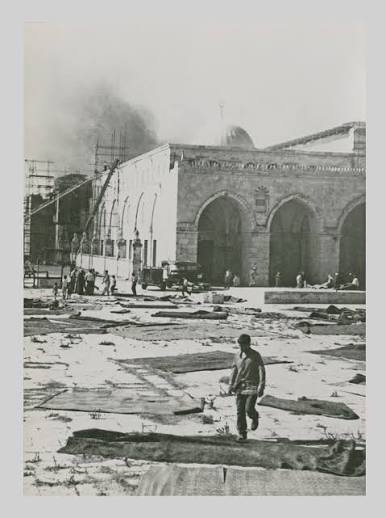
The history of Masjid al-Aqsa is one of extraordinary resilience. The original structures at the site were destroyed by the Romans in 70 CE during the Jewish revolt, then rebuilt. An earthquake in 746 CE devastated the mosque, and it was rebuilt in 758 CE. Another earthquake in 1033 CE destroyed it again, requiring extensive reconstruction. Under the Fatimid, Ayyubid, Mamluk and Ottoman empires, Masjid al-Aqsa was repeatedly renovated, expanded and adorned. Each destruction was followed by a Muslim rebuilding — a testimony to the Ummah’s unbreakable bond with this site.
Fact 17: The Dome of the Rock was completed in 691 CE — and originally looked very different
The Dome of the Rock was completed in 691 CE (72 AH) by the Umayyad Caliph Abd al-Malik ibn Marwan, making it one of the oldest surviving Islamic monuments in the world. However, the original exterior was not gold — it was covered in dark mosaics and copper. The gold-plated dome we see today was added centuries later during the Ottoman period, most notably under Sultan Suleiman the Magnificent in the 16th century. The interior still contains original 7th-century mosaics with Qur’anic inscriptions, making it a living museum of early Islamic art.
Fact 18: Crusaders captured Masjid al-Aqsa in 1099 and occupied it for 88 years
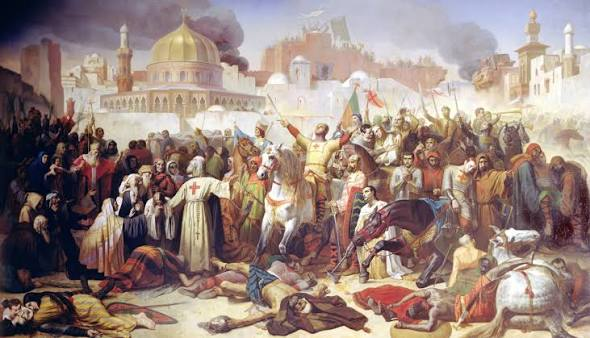
In 1099 CE, during the First Crusade, European forces captured Jerusalem and seized Masjid al-Aqsa. The Crusaders desecrated the mosque — converting the Qibli Mosque into a palace, stabling horses in the Marwani Prayer Hall, and placing a cross on the Dome of the Rock. For 88 years, Muslims were barred from worshipping at Masjid al-Aqsa. This period remains one of the darkest chapters in the site’s history — and a reminder that the Muslim world has faced and overcome the loss of Al-Aqsa before.
Fact 19: Salahuddin al-Ayyubi liberated Masjid al-Aqsa on 2 October 1187
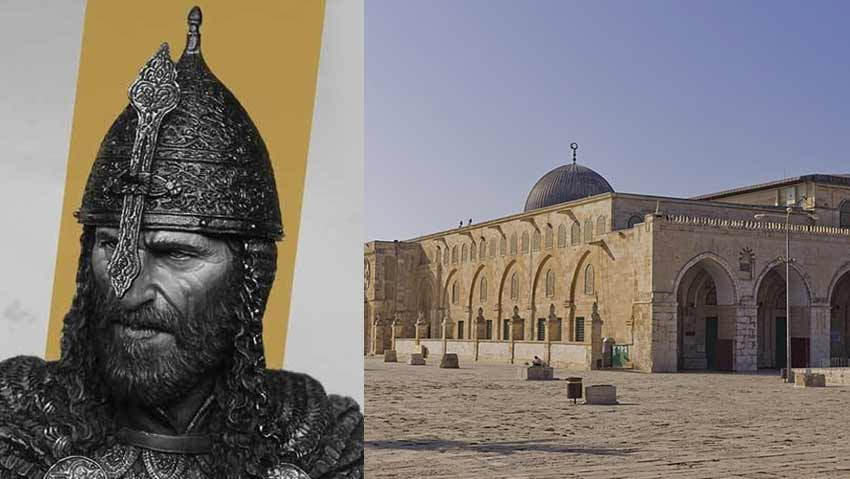
Salahuddin al-Ayyubi — one of the greatest heroes in Islamic history — liberated Masjid al-Aqsa from the Crusaders on 27 Rajab 583 AH (2 October 1187 CE) after the decisive Battle of Hattin. Upon entering the compound, Salahuddin ordered the removal of all Crusader structures from inside the mosques, the restoration of the Qibli Mosque, and the purification of the Dome of the Rock. He refused to take revenge for the 88-year occupation and instead showed extraordinary mercy. His liberation is commemorated every year and serves as a powerful reminder that Al-Aqsa can be freed — because it has been freed before.
Fact 20: The current Al-Aqsa Mosque structure dates largely from Salahuddin’s era
The silver-domed Al-Aqsa Mosque (Qibli Mosque) that stands today is largely the structure rebuilt by Salahuddin al-Ayyubi after the Crusader period, with subsequent additions by the Mamluk Sultan al-Dhaher Baybars in 1246 CE and the Ottoman Sultans. The mosque’s distinctive lead-covered dome, its southern wall with its Crusader-era arches (repurposed after liberation), and its magnificent interior columned prayer hall all bear the architectural fingerprints of multiple Islamic empires. Every stone carries the story of Muslim civilisation’s love for this site.
Masjid Al-Aqsa Under Occupation — The Reality Since 1967 (Facts 21–25)
Fact 21: Israel occupied East Jerusalem and the Al-Aqsa compound in 1967
During the Six-Day War of June 1967, Israeli forces captured East Jerusalem, including the Old City and the Al-Haram al-Sharif compound. Since then, Masjid al-Aqsa has been under Israeli military control — despite international law recognising East Jerusalem as occupied Palestinian territory under UN Security Council Resolution 242. The occupation of Masjid al-Aqsa is not just a political issue — it is a direct assault on one of Islam’s holiest sites, affecting the ability of over 1.9 billion Muslims to access their third holiest place of worship.
Fact 22: Israeli settlers and far-right groups regularly storm the compound
Since 1967, Israeli settlers, backed by military and police, have increasingly stormed the Al-Aqsa compound in organised groups. In a single raid in July 2026, more than 4,200 Israeli settlers and far-right activists entered the compound — one of the largest recorded incursions. These storms are not peaceful visits; they are provocative acts of political theatre designed to assert Israeli sovereignty over the Islamic site. Palestinian worshippers are routinely assaulted, arrested, and denied access during these raids.
Fact 23: Masjid al-Aqsa has been closed to Palestinian worshippers since February 2026
According to reports from Al-Haq and the UN Office for the Coordination of Humanitarian Affairs (OCHA), Masjid al-Aqsa has been effectively shut to Palestinian worshippers since 28 February 2026, in violation of the longstanding status quo arrangements that govern access to the site. The closure prevents Palestinians from praying at their own holy site — a fundamental violation of religious freedom under international law. This is the reality of occupation: it does not merely restrict land — it restricts worship, identity and spiritual connection.
Fact 24: Over 73,000 Palestinians have been killed since October 2023
The humanitarian crisis engulfing Palestine since October 2023 is among the worst in modern history. According to UNRWA and OCHA reports, as of mid-2026, over 73,000 Palestinians have been killed and more than 173,000 wounded in Gaza alone. More than 1.6 million people face crisis or worse levels of acute food insecurity, and over 100,000 children are at risk of acute malnutrition. The same military apparatus that occupies Al-Aqsa is devastating the lives of the people who hold it sacred. The connection between the sanctity of the mosque and the suffering of the Palestinian people is inseparable.
Fact 25: The international community has repeatedly failed to protect Masjid al-Aqsa
Despite numerous UN resolutions (including Resolution 478, which declared Israel’s annexation of East Jerusalem “null and void”), the international community has taken no meaningful action to protect Masjid al-Aqsa or enforce Palestinian religious rights at the site. UN experts have condemned attacks on Palestinian worshippers, and UNESCO has repeatedly classified the Old City of Jerusalem and its walls as a World Heritage Site in Danger. Yet the violations continue with impunity. This failure of the international system places a direct responsibility on Muslims worldwide to educate themselves, raise awareness and support the people of Palestine.
🤲 The children of Palestine are suffering — while Masjid al-Aqsa remains under threat. Sponsor an orphan in Gaza today and honour the land of the prophets with your generosity.
Why Masjid Al-Aqsa Matters Today—And What Every Muslim Must Do (Facts 26–30)
Fact 26: Masjid al-Aqsa’s compound is also a burial ground
The Al-Aqsa compound is not only a place of worship — it also contains graves of companions of the Prophet ﷺ and righteous figures. According to historical sources, over 10,000 companions of the Prophet ﷺ are buried in the broader area of Bayt al-Maqdis (Palestine), with many within or adjacent to the compound. Walking through Al-Aqsa means walking among the graves of the earliest Muslims — those who sacrificed everything for this deen. This adds a dimension of reverence that goes beyond prayer: Masjid al-Aqsa is a cemetery of the righteous.
Fact 27: The Dajjal will be defeated near Bayt al-Maqdis
One of the major signs of the Day of Judgement is the appearance of the Dajjal (the False Messiah). According to authentic hadith, the Dajjal will ultimately be defeated near Bayt al-Maqdis. The Prophet ﷺ said about the Dajjal: “He will appear on the way between Syria and Iraq, and will spread mischief right and left. O servants of Allah, remain firm.” — and the final battle against him will take place near Jerusalem. The Prophet ﷺ said: “The Hour will not be established until the Romans camp at Al-Aqsa…” and the believers will face them there [Sahih Muslim 2898]. Masjid al-Aqsa is not just a historical monument — it is the theatre of the end times.
Fact 28: Masjid al-Aqsa is a living mosque — not just a historical site
While many Muslims think of Masjid al-Aqsa primarily as a historical or political symbol, it is a living, functioning mosque where thousands of worshippers pray daily — when access is not restricted by Israeli authorities. Women and men attend daily prayers, Friday khutbahs are delivered, Islamic classes are held, and children learn to read the Qur’an within the compound’s walls. The occupation has not extinguished the spiritual life of Al-Aqsa — but it has made it extraordinarily difficult for Palestinians to maintain. Resilient worship under occupation is itself a form of resistance and a testimony to the unbreakable bond between Masjid al-Aqsa and the Ummah.
Fact 29: The Qur’an warns of a second corruption at Bayt al-Maqdis
Surah Al-Isra contains a striking prophecy about the land of Palestine: “And We conveyed to the Children of Israel in the Scripture that you will cause corruption on the earth twice, and you will reach great haughtiness. So when the [time for] the first of the two came, We sent against you servants of Ours — those of great military might, and they probed through the homes, and it was an imposed promise. Then We gave you back your turn against them, and We reinforced you with wealth and children and made you more in number. [And We said], ‘If you do good, you do good for yourselves; and if you do evil, [you do it] to yourselves.'” (Qur’an 17:4-7). Scholars interpret this as referring to two periods of corruption by the Children of Israel in the Holy Land — the first leading to destruction by the Babylonians and Romans, and the second being the current occupation.
Fact 30: Every Muslim has a duty to know about, pray for, and support Masjid al-Aqsa
The final and most important fact: every Muslim has a responsibility towards Masjid al-Aqsa. This is not a political stance — it is a religious obligation rooted in Qur’an, hadith and the prophetic example. The Prophet ﷺ connected the Ummah to Al-Aqsa by making it the first Qibla, by leading all prophets there in prayer, and by ascending to the heavens from its ground. Abandoning Al-Aqsa — through ignorance, apathy or silence — means abandoning a piece of the Ummah’s own spiritual foundation. You can fulfil this duty by educating yourself and others, making du’a for the people of Palestine, supporting Palestinian families through verified charities, and never allowing the sanctity of Al-Aqsa to be erased from public consciousness.
🌿 The people of Gaza are starving while Masjid al-Aqsa remains under siege. Donate to the Gaza Famine Appeal through Your Impact Foundation — every pound feeds a hungry family in the Prophet’s ﷺ blessed land.
Frequently Asked Questions About Masjid Al-Aqsa
What is Masjid al-Aqsa?
Masjid al-Aqsa is Islam’s third holiest site, located in the Old City of occupied East Jerusalem. It is not one building but an entire 35-acre compound (Al-Haram al-Sharif) that includes the silver-domed Qibli Mosque, the golden Dome of the Rock, open courtyards, minarets and historical sites. The name means “the farthest mosque” in Arabic. It was the first Qibla of Islam and the destination of the Prophet Muhammad’s ﷺ Night Journey (Isra).
What is the difference between Al-Aqsa Mosque and the Dome of the Rock?
The Al-Aqsa Mosque (Qibli Mosque) is the silver-domed congregational mosque at the southern end of the compound where daily prayers are held. The Dome of the Rock is the golden-domed octagonal shrine at the centre of the compound, built over the rock from which the Prophet ﷺ ascended to the heavens. Both are part of the broader Masjid al-Aqsa compound, but they are separate buildings with different purposes.
Why is Masjid al-Aqsa important in Islam?
Masjid al-Aqsa is important because: it is the third holiest site in Islam, it was the first Qibla of the Muslim Ummah, it is the destination of the Prophet’s ﷺ Night Journey (Isra), the Prophet ﷺ led all previous prophets in prayer there, the five daily prayers were ordained there during Al-Mi’raj, and praying there earns 500 times the reward of regular prayers. The Prophet ﷺ said: “Do not set out on a journey except to three mosques” — including Al-Aqsa [Sahih al-Bukhari 1186].
What happened at Masjid al-Aqsa during Isra and Mi’raj?
During Al-Isra (the Night Journey), the Angel Jibril took the Prophet Muhammad ﷺ from Makkah to Masjid al-Aqsa on the Buraq. There, the Prophet ﷺ led all the previous prophets in prayer. Then, from the rock at the centre of the compound, he ascended through the seven heavens (Al-Mi’raj), met Allah ﷻ, and received the gift of five daily prayers for the Ummah.
Who built Masjid al-Aqsa?
According to hadith, the foundations were laid 40 years after the Kaaba — by Prophet Adam ﷺ and later Prophet Ibrahim ﷺ. The current Dome of the Rock was built in 691 CE by Caliph Abd al-Malik. The Crusaders captured and desecrated the site from 1099 to 1187, when Salahuddin al-Ayyubi liberated it and rebuilt the mosques. The current structure dates largely from Salahuddin’s era, with Ottoman additions.
Is Masjid al-Aqsa under threat today?
Yes. Since Israel’s occupation of East Jerusalem in 1967, Masjid al-Aqsa has faced increasing threats — including regular incursions by Israeli settlers, closures to Palestinian worshippers, restrictions on access, and systematic attempts to undermine the Islamic character of the site. The compound was effectively closed to Palestinians since February 2026. Over 4,200 settlers stormed the site in a single raid in July 2026.